
Building Plumbing Maintenance Kuwait for Properties
Building plumbing maintenance Kuwait services help homes, offices, and shared properties prevent leaks, protect water systems, and address faults clearly.
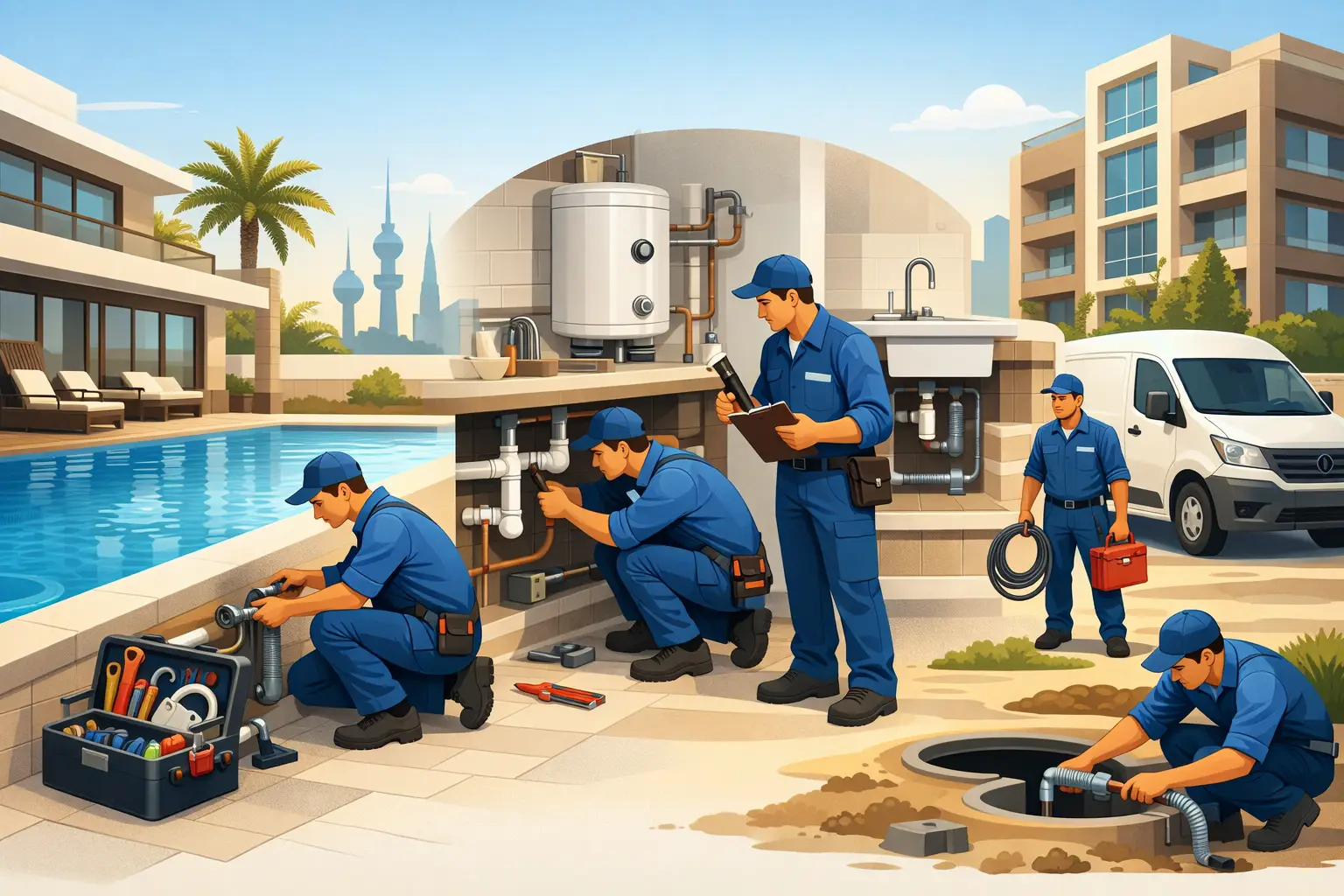
A small wet patch beneath a sink, a drain that empties slowly, or a water bill that rises without explanation can become a larger property problem if it is left unchecked. Building plumbing maintenance Kuwait property owners can rely on is not only about responding when water stops flowing. It is about keeping the pipes, fixtures, drains, and connected water systems in working order before a minor fault disrupts a home, office, or commercial space.
For building managers and landlords, plumbing affects more than convenience. A hidden leak can damage finishes, create tenant complaints, interrupt business activity, and lead to avoidable repair work. For homeowners, regular attention helps protect the parts of the property that are easy to forget until something fails.
Why building plumbing maintenance matters
Plumbing systems work quietly in the background. Water supply lines, drainage pipes, faucets, toilets, valves, pumps, and water heaters are used every day, often by several people in the same building. That level of use causes normal wear over time, especially in shared properties with multiple apartments, offices, or retail units.
The most costly plumbing issues are not always dramatic at the start. A loose connection may leak only when a fixture is used. A partially blocked drain may still work, but slowly. A worn valve may begin to drip before it fails completely. Routine inspections and timely repairs give a qualified plumbing team the opportunity to identify these conditions early and recommend a clear next step.
Kuwait's climate also makes dependable building systems especially valuable. Properties rely on a consistent water supply and functioning drainage throughout the year. When plumbing faults appear, delays can affect daily routines quickly, from bathrooms and kitchens to staff facilities and customer-facing spaces.
What plumbing maintenance should cover
The right scope depends on the property, its age, the number of users, and whether there have been repeated issues. A villa has different needs from an apartment building or a busy office. Still, professional building plumbing maintenance usually focuses on the condition and performance of the key parts of the system.
This can include checking visible pipework and fittings for signs of leaks, inspecting faucets and toilets for poor flow or constant running, and assessing drains that are slow, noisy, or producing unpleasant odors. It may also involve checking water pressure concerns, valves, water heater connections, and plumbing fixtures in kitchens, bathrooms, utility areas, and common spaces.
For larger buildings, the service should consider how individual units connect to shared lines. A recurring blockage in one area may not be limited to one fixture. It can point to a wider drainage issue that needs proper assessment rather than repeated temporary fixes.
A clear maintenance visit should result in straightforward communication. The customer should understand what was checked, what issue was found, whether action is needed now, and which items should be monitored. This is particularly useful for property managers who need to coordinate work across tenants, owners, and building operations.
Planned maintenance versus emergency repairs
Both planned maintenance and repair visits have a role, but they solve different problems. Planned work is intended to reduce disruption. It allows a property owner or manager to inspect known problem areas, address small faults, and schedule work at a more suitable time.
Repair work is needed when there is an active issue, such as a leak, blocked drain, failed fixture, or loss of water flow. In these cases, the priority is to identify the source of the problem, control the impact on the property, and complete the appropriate repair within the agreed service scope.
The practical choice depends on the situation. If a property has no current fault but has older fixtures, recurring drain problems, or several occupied units, planned maintenance makes sense. If water is leaking, drainage is backing up, or a toilet or faucet is not functioning correctly, a plumbing service request should be arranged promptly.
Common signs a property needs plumbing attention
Property users often notice plumbing problems before they can identify their cause. A qualified provider can assess the system safely and determine whether the issue is isolated or connected to a wider concern.
Signs worth reporting include persistent dripping, reduced water pressure, slow drains, repeated clogs, unusual sounds from pipes, water stains on walls or ceilings, damp cabinet interiors, and toilets that continue running after use. A change in water temperature or inconsistent hot water can also require inspection, particularly where a water heater or its connections may be involved.
For landlords and building managers, repeat reports from different tenants should not be treated as separate complaints automatically. Similar issues across several units may indicate that a shared plumbing component needs attention. Recording the location, timing, and type of issue helps the maintenance team assess the situation more efficiently.
Plumbing maintenance for different property types
In villas and apartments, the focus is often on bathrooms, kitchens, water heaters, fixtures, and local drainage. These areas receive frequent daily use, and small leaks can affect cabinetry, flooring, or neighboring rooms before they are noticed.
In apartment buildings, common plumbing concerns may include shared drainage lines, water supply distribution, and fixtures in common areas. Maintenance needs to be organized carefully so that work is clearly communicated and disruption to residents is kept manageable.
Offices and commercial properties have another set of priorities. Restrooms, staff kitchens, customer facilities, and utility spaces need to remain functional during business hours. A blocked drain or leaking fixture can quickly become an operational issue, not just a maintenance task. In these settings, clear service scope and reliable updates matter as much as the repair itself.
What to expect from a managed plumbing service
A professional plumbing service should begin with the reported issue and the affected area. The technician should assess the condition, explain the finding in practical terms, and identify the work required. If the situation needs a broader inspection or additional work, that should be communicated clearly rather than assumed.
Tasleeh provides managed plumbing support as part of its MEP Maintenance Services Kuwait offering, with an approach built around defined service scopes and professional communication. This matters when the property owner is not onsite, when tenants need updates, or when several building systems are being maintained at the same time.
Good service management also means distinguishing between the immediate fault and the cause behind it. Replacing a damaged fixture may resolve the visible problem, for example, but repeated water pressure concerns or recurring drainage issues may require further assessment. The right action depends on the condition of the building and should be based on what is found, not on a one-size-fits-all response.
A practical approach for owners and managers
The simplest way to protect a property is to treat plumbing concerns as maintenance items, not inconveniences to postpone. Keep track of recurring reports, arrange inspection when dampness or drainage problems appear, and schedule checks for areas with frequent use or a history of faults.
Tenants can help by reporting the exact location of a leak, blockage, or unusual sound as soon as it is noticed. Owners and managers can help by sharing whether the issue has happened before and whether nearby units are affected. Those details give the service team a clearer starting point and help avoid unnecessary disruption.
A well-maintained plumbing system is rarely noticed, and that is the point. When water flows properly, drains work as expected, and small faults are handled early, the property remains more comfortable for residents, more practical for staff, and easier to manage over time.