
Can CCTV Cameras Work Outdoors in Kuwait?
Can CCTV cameras work outdoors in Kuwait? Learn which ratings, installation details, and maintenance checks help cameras withstand heat, dust, and rain.
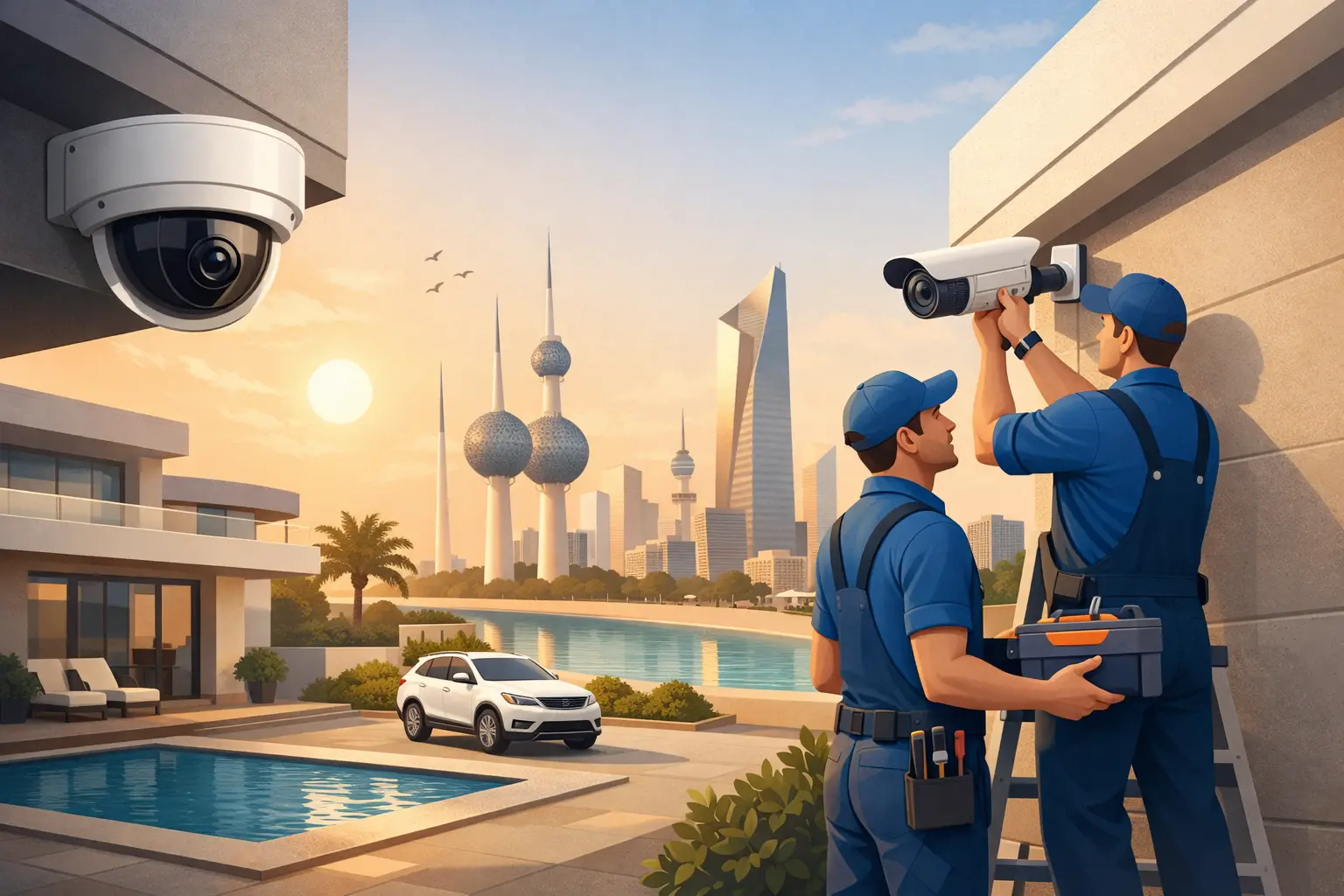
A camera installed above a villa gate or office entrance may look protected, yet Kuwait’s heat, dust, sun exposure, and occasional heavy rain can quickly reveal whether it was designed and fitted for outdoor use. So, can CCTV cameras work outdoors? Yes, but only when the camera, mounting position, cabling, and ongoing maintenance are suitable for the environment.
An indoor camera placed outside is not a short-term solution. It may continue recording for a while, then develop cloudy images, moisture damage, connection faults, or complete failure. Outdoor CCTV needs to be selected and installed as part of a complete security system, not treated as a camera that simply happens to be near a door.
Can CCTV Cameras Work Outdoors in Kuwait’s Climate?
Outdoor CCTV cameras can work reliably in Kuwait when they have the correct weather protection and are professionally installed. The main challenge is not rain alone. Long periods of high temperature, direct sunlight, airborne dust, and sand buildup all affect camera housings, lenses, connectors, and power equipment.
A camera under a shaded entrance canopy faces different conditions from one mounted on an exposed perimeter wall. A parking area camera may also need a wider view, stronger night coverage, and a more protected cable route than a camera at a residential front door. The right setup depends on where the camera will be used and what it needs to monitor.
For homeowners, tenants, landlords, and building managers, the practical question is whether the system will keep producing usable footage when it is needed. A camera that records a washed-out image at noon, misses faces at night, or stops after a dusty week does not provide meaningful security.
What Makes a CCTV Camera Suitable for Outdoor Use?
The camera body should have an appropriate ingress protection, commonly called an IP rating. This rating indicates how well the equipment is protected from dust and water. For an outdoor installation, a camera with a rating designed for dust exposure and rain is generally required. The installation specialist should confirm that the selected equipment matches the location rather than relying on the camera’s appearance.
Temperature tolerance matters as well. Camera components can overheat when mounted in direct sun, particularly on dark exterior walls, metal gates, or roof-level structures. A suitable outdoor unit should be built to operate within the temperature range expected at the site. Positioning it in shade where practical can reduce heat stress without compromising the view.
The lens and infrared night vision also need attention. Outdoor lighting changes throughout the day, from strong glare in the afternoon to low visibility at night. A camera pointing directly toward sunlight may capture poor detail during key hours. At night, nearby walls, glass, reflective signs, or plants can interfere with infrared illumination and create bright glare in the footage.
Just as important, cable entries and junction points must be protected. A weather-resistant camera can still fail if water, dust, or heat reaches poorly sealed connectors. Professional installation considers the full route from camera to recorder, including external cable containment, protected connections, secure mounting, and safe power arrangements.
Common Outdoor CCTV Problems to Watch For
Outdoor camera issues often start as small changes in image quality or reliability. A clear image becoming hazy may be caused by dust on the lens, a damaged seal, or moisture inside the housing. A camera that drops offline intermittently may have a cable, connector, power, or network issue that needs inspection.
Look for signs such as distorted images, condensation behind the lens cover, faded or cracked housing, loose mounting brackets, frequent recording gaps, or a camera that does not switch properly to night mode. Cameras near driveways and gardens may also be blocked gradually by tree growth, landscaping features, or accumulated dust.
Do not open the camera housing or attempt to repair electrical connections yourself. CCTV systems involve power supplies, data cables, recording devices, and sometimes network equipment. Unqualified work can damage the system, affect stored footage, and create electrical risk. A qualified CCTV specialist can identify whether the fault is in the camera, cable, power supply, recorder, or network connection.
Installation Position Is as Important as the Camera
A high-quality outdoor camera will not perform well if it is placed in the wrong location. The goal is to capture useful information, not simply cover the largest possible area. At an entrance, the camera should be positioned to capture faces clearly without being blinded by exterior lights or direct sun. At a gate or driveway, the angle should account for vehicles, headlights, and the distance from the camera to the point of interest.
Mounting height requires balance. A camera mounted too low can be easier to obstruct or damage. One mounted too high may show the top of a person’s head rather than provide an identifiable image. The correct height and viewing angle depend on the entrance, boundary, parking area, or outdoor space being monitored.
It is also worth considering the system’s legal and practical boundaries. Cameras should focus on the property areas that require monitoring, such as entrances, perimeter gates, parking spaces, storage access, or shared building areas. A professional assessment helps avoid blind spots while respecting neighboring properties and the purpose of the security system.
Outdoor CCTV Maintenance Should Not Be Overlooked
Outdoor cameras are exposed equipment, so occasional checks are part of keeping the system useful. Dust can settle on lenses and housings, particularly after windy conditions. Heat can affect external components over time, while outdoor fixtures can loosen due to vibration, weather, or building movement.
A maintenance visit should include checking image clarity, viewing angles, housing condition, mounting security, visible cable protection, recording performance, and remote viewing where applicable. The technician can also confirm whether the date and time on recorded footage are correct. Incorrect timestamps can make footage less useful when reviewing an incident.
Maintenance is especially useful before periods when a property may be vacant, after construction work near the camera, or when landscaping changes have altered the view. For commercial properties, regular checks can support reliable monitoring at entrances, loading areas, offices, and parking locations.
When an Existing Indoor Camera Is Already Outside
If an indoor camera has been installed outdoors, it should be assessed rather than assumed to be acceptable because it still works. The camera may not have sealed components, UV-resistant materials, or the right operating range for external conditions. Its power connection and cable entry may also be exposed.
In some cases, moving the camera to a protected indoor location and installing a purpose-built outdoor unit is the sensible option. In other cases, the system may need changes to the mount, junction enclosure, wiring route, or field of view. The right decision depends on the equipment and the site condition.
What to Expect From a Professional Outdoor CCTV Assessment
A proper assessment starts with the areas you want to monitor and the problems you want the system to address. This may include checking who enters a building, monitoring a gate, covering a driveway, improving visibility around an office entrance, or reviewing activity in an outdoor service area.
The specialist should review exposure to sun, dust, rain, lighting conditions, mounting surfaces, cable routes, and the existing recording setup. They can then advise whether the current cameras are appropriate, whether adjustments are needed, and what work is required to maintain dependable coverage.
For Kuwait properties, outdoor CCTV should be treated as equipment that needs to withstand real site conditions, not just equipment that turns on. If image quality has changed, a camera has been exposed to the elements, or coverage no longer matches the property’s needs, arranging a qualified inspection is the practical next step.