
Car Wash Versus Detailing: What Your Car Needs
Car wash versus detailing explained: compare cleaning depth, timing, and care needs for vehicles facing Kuwait's dust, heat, and daily use conditions.
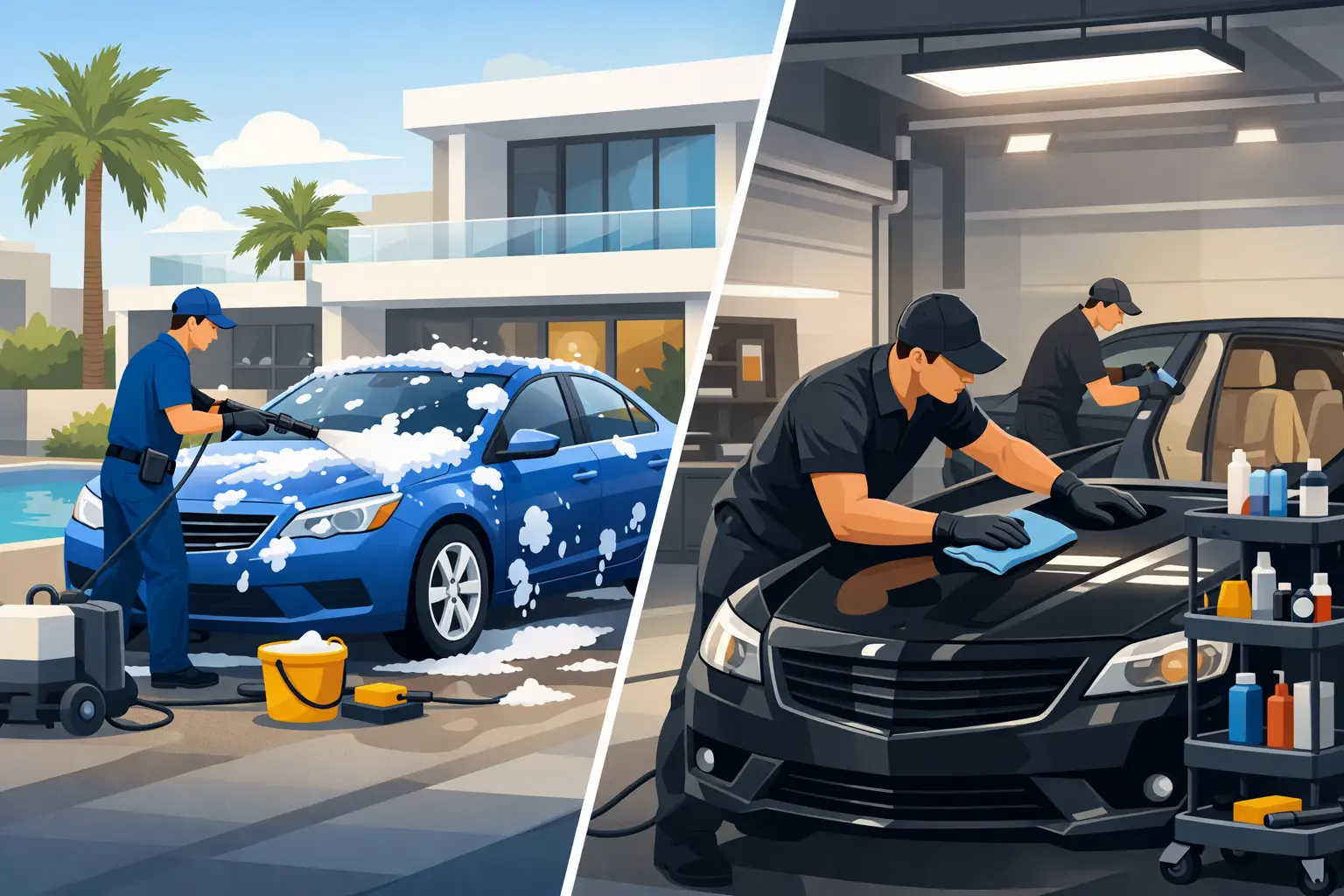
A vehicle can look clean after a quick wash and still have dust trapped in its vents, stains in its seats, and a dull finish affected by sun and road grime. The choice between a car wash versus detailing comes down to what your vehicle needs now: routine surface cleaning or a more thorough restoration and protection service.
For drivers in Kuwait, that distinction matters. Fine dust, high temperatures, strong sunlight, and frequent use can affect paintwork, wheels, glass, cabin surfaces, and air quality inside the car. A regular wash helps manage the visible buildup. Detailing addresses the areas that a routine wash is not designed to reach.
Car Wash Versus Detailing: The Main Difference
A car wash is a maintenance service. Its purpose is to remove recent dirt and improve the vehicle's everyday appearance. Depending on the wash type, it usually covers the exterior body, wheels, tires, windows, and a basic interior vacuum or wipe-down.
Detailing is a deeper, more methodical service with a wider scope. It focuses on cleaning, treating, and protecting surfaces throughout the vehicle. This may include intensive interior cleaning, stain treatment, careful work around vents and trim, wheel and tire treatment, paint decontamination, polishing, and protective coatings where appropriate.
Neither service replaces the other. A wash is useful often because it prevents dirt from accumulating. Detailing is useful periodically because it deals with the buildup, wear, and surface condition that regular washing leaves behind.
What a Standard Car Wash Usually Covers
A standard car wash is the practical choice when the car has ordinary dust, light mud, fingerprints, or recent road film. It is generally intended to make the vehicle presentable again without requiring extended work on each material or surface.
The exterior process commonly includes rinsing, washing the body panels, cleaning wheels, drying, and cleaning exterior glass. Interior work, if included, is usually limited to removing loose debris, vacuuming accessible areas, and wiping basic surfaces.
This is often enough after a dusty commute, a weekend trip, or several days of parked outdoor exposure. Regular washing can also make it easier to spot changes that need attention, such as paint marks, tire damage, leaking fluids, or cracked lights.
A wash has limits, however. It may not remove embedded contaminants from paint, old stains in fabric, lingering odors, sticky residue, deep dirt in carpets, or buildup around buttons, seams, and air vents. Trying to treat those issues as if they are routine washing tasks can lead to disappointing results or damage to sensitive interior finishes.
What Car Detailing Covers
Car detailing takes more time because the work is based on the vehicle's actual condition. A professional service provider should assess whether the main concern is the interior, exterior, paint finish, odors, stains, or a combination of these issues before confirming the scope.
Interior detailing
Interior detailing goes beyond a quick vacuum. It can involve careful cleaning of seats, carpets, floor mats, door panels, dashboard surfaces, cup holders, trunk areas, and hard-to-reach spaces. The goal is to remove accumulated dirt while using products suitable for leather, fabric, plastic, screens, and other materials.
It is particularly useful after children, pets, food spills, frequent passenger use, or long periods without deep cleaning. For office vehicles, family cars, and leased vehicles, a well-maintained interior also improves everyday comfort and helps preserve the vehicle's overall condition.
Odors need a realistic approach. If an odor comes from a spill, moisture, dirty upholstery, or food debris, detailed cleaning can help resolve the source. If it is linked to water entering the vehicle, a blocked drainage area, or an air-conditioning issue, cleaning alone may not fix it. The underlying cause should be checked by an appropriate automotive professional.
Exterior detailing
Exterior detailing focuses on the finish as well as cleanliness. It may include a more careful wash, treatment for bonded surface contaminants, cleaning of intricate wheel areas, polishing to improve the appearance of light surface marks, and applying protection suited to the paint and trim.
Paint correction is not the same as simply making a car shiny. It is a controlled process intended to reduce the appearance of certain defects, such as light swirl marks or dullness. Deep scratches, chipped paint, dents, and damage that has reached the paint layers may need bodywork rather than detailing.
Glass, plastic trim, headlights, and wheels can also benefit from specialized attention. These surfaces age differently and should not all be treated with the same product or method.
When a Car Wash Is the Right Choice
Choose a regular car wash when your vehicle is generally clean but needs routine care. This may be after a period of dusty weather, before an appointment, or when the exterior has everyday road dirt and the cabin only needs a basic refresh.
Frequent washing is especially sensible when dust is visible on the paint, windshield, mirrors, and lights. Dust may seem harmless, but wiping a dry, dusty surface aggressively can drag particles across the paint. A proper wash is a better response than rubbing the vehicle with a dry cloth.
A wash is also the more practical option when you want to maintain the results of a previous detail. Protective treatments and clean surfaces last better when dirt, bird droppings, and road film are removed in a timely way.
Signs Your Car Needs Detailing Instead
Detailing is worth considering when a wash no longer produces a clean, finished result. The clearest sign is when the car looks acceptable from a distance but still feels neglected up close.
Common signs include seats with visible stains, a persistent odor, dusty vents, sticky interior surfaces, sand embedded in carpets, cloudy or marked glass, faded-looking trim, dull paint, or wheels with stubborn brake dust. A vehicle being prepared for a sale, return, family event, or extended trip may also benefit from a detail because appearance and hygiene matter more than usual.
For vehicles parked outdoors in Kuwait, detailing may be needed more often than in milder climates. Heat can bake contaminants onto paint and make interior materials feel dry or worn. Dust enters door edges, trunk seals, wheel arches, and cabin gaps that are easy to overlook during routine cleaning.
The correct frequency still depends on use. A car used daily by a family, driven on construction-adjacent roads, or parked in open areas will need more attention than a vehicle stored in covered parking and driven occasionally.
Protecting the Car Between Services
The gap between washes or detailing appointments has a real effect on the vehicle's condition. Park under cover when practical, remove bird droppings and tree residue promptly, and avoid leaving food, wet items, or waste inside the cabin. Use floor mats that can be cleaned regularly, especially when sand and dust are carried in on shoes.
Be cautious with improvised cleaning products. Household cleaners, rough sponges, and heavily scented sprays can stain, dry out, or leave residue on automotive materials. Screens, leather, fabric, and glossy trim require different care. If a dashboard warning light appears, water enters the vehicle, or there is a strong burning or chemical smell, arrange a mechanical inspection rather than treating it as a cleaning issue.
Choosing the Right Service Scope
Before arranging car care, describe the condition rather than simply asking for a wash or a detail. Mention whether the issue is exterior dust, interior stains, odors, pet hair, paint dullness, heavy wheel buildup, or preparation for resale. Clear information helps the provider recommend an appropriate scope and set realistic expectations.
Ask what areas are included, whether stain or odor treatment is part of the service, and whether any paint defects are unlikely to be removed by cleaning. A professional approach is transparent about what can be improved and what requires separate repair work.
A regular wash keeps a vehicle manageable. Detailing gives neglected or heavily used areas the focused attention they need. Choosing based on the car's condition, rather than its last cleaning date alone, helps protect its appearance and makes every drive more comfortable.