
Chiller Maintenance Kuwait for Reliable Cooling
Chiller maintenance Kuwait helps prevent cooling failures, high energy use, and tenant disruption. Learn the warning signs and service scope for buildings.
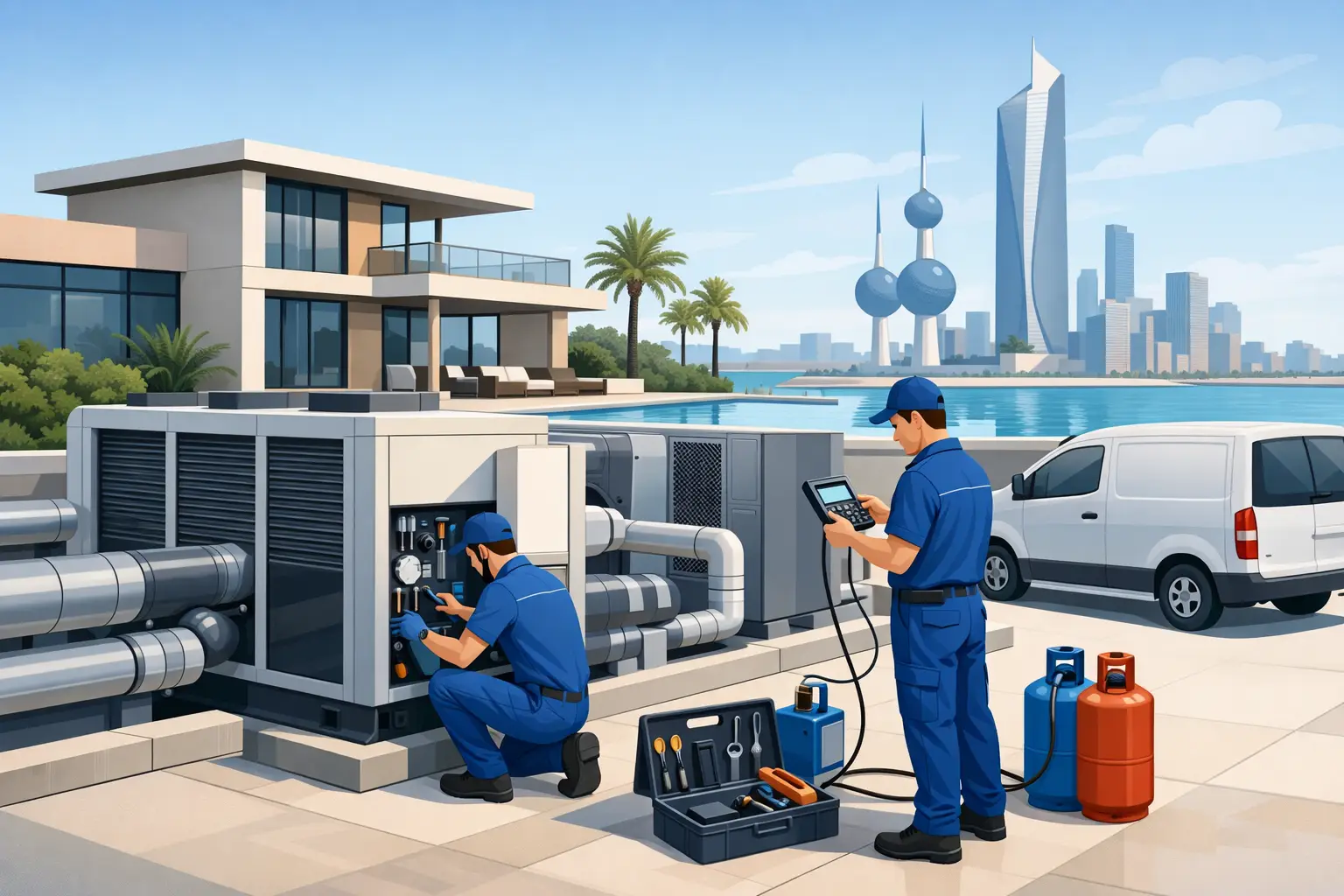
A chiller failure in Kuwait is rarely a small inconvenience. When cooling drops in a villa, apartment building, office, or retail space, indoor temperatures can rise quickly, complaints increase, and business activity may be affected. Regular chiller maintenance Kuwait property owners rely on is designed to identify developing faults before the system reaches that point.
Chillers are central cooling systems, not ordinary room air conditioners. They may serve multiple zones, floors, or units through connected pumps, piping, air handling equipment, and controls. Because several systems depend on the chiller working correctly, maintenance should be planned and handled by qualified HVAC professionals.
Why chiller maintenance matters in Kuwait
Kuwait's long cooling season places sustained demand on commercial and residential HVAC systems. Dust, high outdoor temperatures, water quality concerns, and long operating hours can all affect chiller performance. A system may still appear to be operating while using more electricity, delivering uneven cooling, or placing extra strain on key components.
Preventive maintenance gives a technician the opportunity to review the condition of the equipment, operating readings, water circulation, controls, and visible components. The purpose is not simply to keep the chiller running for another day. It is to maintain stable cooling, reduce avoidable disruption, and help building managers make informed decisions when repairs or replacements are needed.
For landlords and facility teams, this matters beyond equipment condition. Poor cooling can lead to tenant complaints, difficulty maintaining occupied spaces, and pressure on smaller connected units that are trying to compensate. For offices and shops, an uncomfortable indoor environment can affect staff, customers, equipment, and daily operations.
Warning signs a chiller needs attention
A chiller does not always stop without warning. In many cases, there are early signs that cooling performance or system efficiency has changed. Building managers should record these changes rather than waiting for a complete shutdown.
One common sign is inconsistent cooling. Some areas may feel comfortable while others remain warm, even when thermostats are set correctly. This can be caused by several issues, including circulation problems, control faults, blocked heat transfer surfaces, or problems elsewhere in the connected HVAC system. A professional inspection is needed to identify the actual cause.
Higher-than-usual electricity consumption is another reason to schedule a review. Energy use can rise when a chiller works harder to achieve the same cooling output. The cause may be related to operating settings, water flow, cleanliness, mechanical condition, or a developing fault. Utility bills alone do not diagnose the problem, but they can provide a useful prompt for maintenance.
Other warning signs include unusual noise or vibration, recurring alarms, water leaks around equipment or pipes, visible corrosion, frequent cycling, and a noticeable decline in cooling during peak afternoon hours. If the chiller shuts down, trips repeatedly, or is linked to electrical burning smells, the system should be assessed promptly by a qualified service provider. Do not attempt to reset panels, open electrical sections, or interfere with refrigerant components without the appropriate training.
What chiller maintenance usually covers
The exact scope depends on the chiller type, its age, capacity, manufacturer requirements, operating schedule, and whether it serves a single property or a larger building. A well-managed visit should begin with a clear review of the reported issue and the system's current operating condition.
Chiller maintenance commonly includes an inspection of accessible components, checks of operating pressures and temperatures, review of electrical connections and control functions, and inspection of pumps, valves, insulation, and connected water lines where relevant. Technicians may also review filters, strainers, heat transfer surfaces, water treatment records, and drainage arrangements, depending on the system design.
Maintenance can also involve cleaning work where it is appropriate and safe, tightening or correcting components where authorized, and identifying parts that show wear. If the technician finds a fault requiring repair, the customer should receive a clear explanation of the issue, the affected equipment, and the recommended next step. A maintenance visit should not blur the line between routine checks and larger corrective work.
For larger sites, service records are especially useful. They help building managers track repeated faults, compare operating trends, plan maintenance around occupancy, and understand whether a component is becoming unreliable. This is part of the practical value of MEP Maintenance Services Kuwait building operators need: organized work, defined scope, and communication that supports property decisions.
How often should a chiller be serviced?
There is no single schedule that suits every property. A lightly used system in a small building does not face the same demand as a chiller operating daily in a busy office, residential tower, clinic, or retail location. Manufacturer guidance, equipment age, water conditions, operating hours, and the property’s cooling requirements should all shape the maintenance plan.
In Kuwait, many properties benefit from scheduled inspections before the heaviest summer demand, followed by periodic checks during the cooling season. Systems with high occupancy, critical cooling needs, or a history of faults may require closer monitoring. A reactive approach can seem convenient when the unit is still operating, but it often leaves less time to investigate issues before high temperatures put the system under greater pressure.
It is also worth separating routine maintenance from emergency response. Planned maintenance is intended to reduce the likelihood of sudden problems and maintain performance. Emergency work addresses a failure that has already affected cooling. Both have a role, but one cannot replace the other.
What customers should expect from a managed service visit
Before arranging work, provide the service team with useful details: the property type, chiller location, symptoms noticed, when the issue started, any alarm messages, and whether cooling has failed across the whole building or only in certain areas. This helps the visit begin with the right context.
During the inspection, a professional team should work safely around plant rooms, electrical equipment, water systems, and refrigerant-related components. Access requirements, shutdown needs, and potential impact on occupants should be discussed before work begins. In an occupied building, timing matters. Some checks can be completed with minimal disruption, while repairs or testing may require coordination with tenants, security, or building operations.
Afterward, customers should understand what was inspected, what condition was found, and whether follow-up work is recommended. Clear reporting is particularly valuable for landlords, building managers, and businesses that need to communicate maintenance decisions to owners or occupants.
Tasleeh supports essential HVAC maintenance through managed operations with defined service scopes and clear customer communication. For central cooling equipment, the right approach is not a quick visual check. It is a structured assessment by qualified professionals who understand how the chiller connects to the wider building system.
When maintenance becomes a repair decision
Maintenance can reveal issues that cannot be resolved through routine servicing alone. A worn pump, damaged control component, persistent leak, corroded section, or repeated alarm may need corrective work. In older systems, repeated repairs may also prompt a broader review of reliability, operating cost, and expected service life.
That does not mean every finding requires immediate replacement. The appropriate decision depends on the fault, the condition of related components, the system's role in the building, and the risk of interruption if the issue is left unresolved. A clear diagnosis allows the property owner or manager to prioritize work rather than react under pressure during a cooling outage.
The most useful time to arrange a chiller review is before comfort complaints become urgent. If cooling is uneven, energy use has changed, alarms are recurring, or the equipment has not been checked ahead of peak demand, a qualified maintenance assessment can provide the clarity needed to plan the next step.