
Commercial Cleaning Trends Kuwait Businesses Need
Commercial cleaning trends Kuwait businesses are adopting, from hygiene planning and low-water methods to clearer scopes, records, and quality checks.
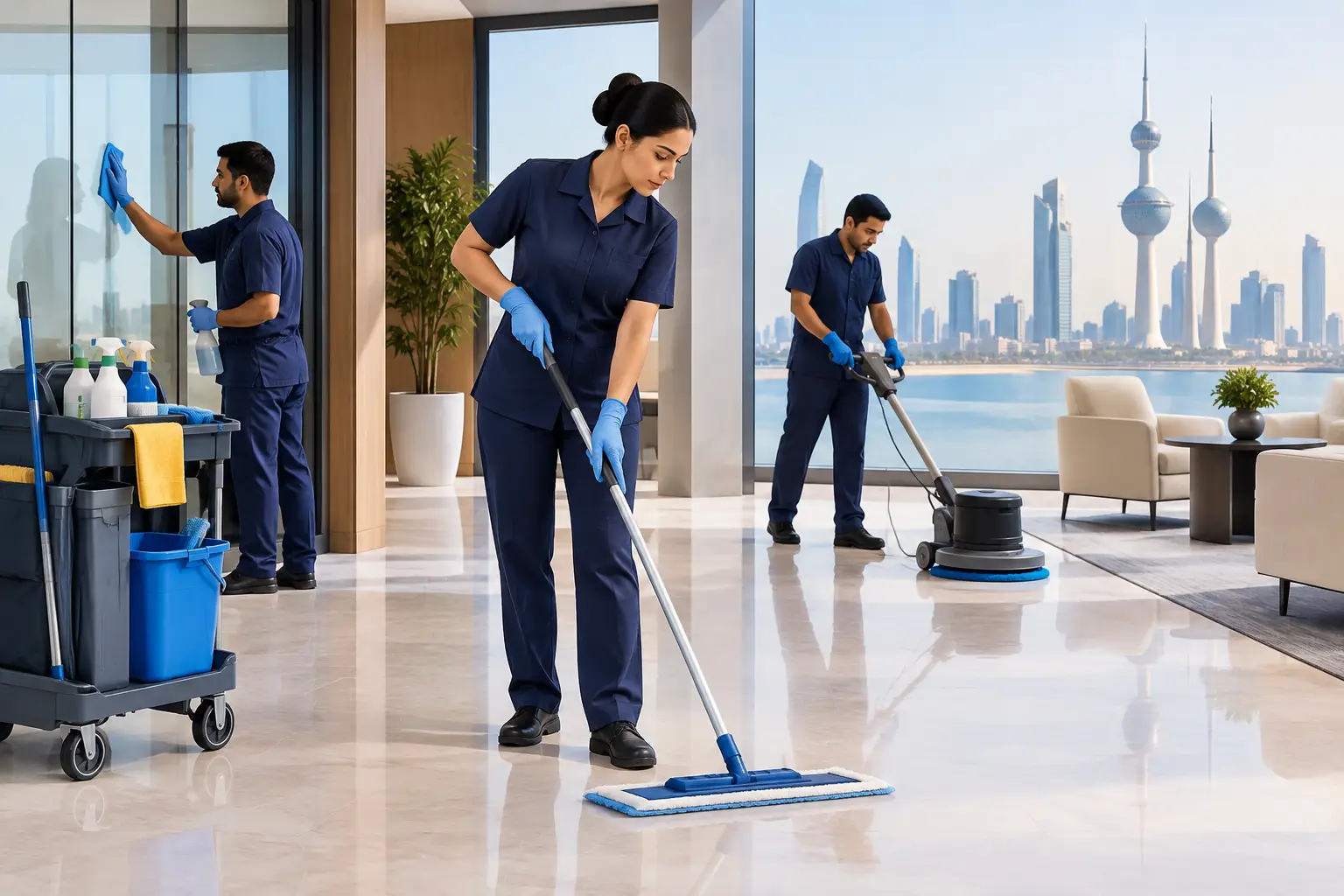
A clean lobby can shape a visitor’s first impression, but commercial cleaning trends Kuwait businesses are following now go well beyond appearance. Offices, retail spaces, residential buildings, clinics, and shared facilities are placing more attention on service scope, hygiene priorities, water use, and proof that cleaning was completed properly.
For building managers and business owners, the change is practical. Cleaning needs to fit the property’s operating hours, visitor traffic, and the condition of the space. A daily cleaning plan that works for a quiet office may not be suitable for a busy reception area, retail store, or multi-tenant building.
Commercial Cleaning Trends Kuwait Businesses Are Watching
Cleaning plans based on how spaces are used
Fixed schedules still have a place, particularly for routine tasks such as restroom cleaning, waste removal, floor care, and pantry cleaning. However, more commercial properties are moving toward cleaning scopes built around actual use of the space.
High-touch and high-traffic areas need more attention than low-use meeting rooms or back-office storage areas. Reception counters, elevator buttons, door handles, restrooms, shared kitchens, and waiting areas can require repeated checks during operating hours. Meanwhile, deeper cleaning of carpets, upholstery, glass, and hard floors may be planned less frequently but carried out more thoroughly.
This approach prevents two common problems: spending time on areas that do not need constant attention, while overlooking areas that quickly become untidy or unhygienic. The right frequency depends on foot traffic, business type, staff numbers, operating hours, and whether the space is open to the public.
Clearer attention to high-touch hygiene
General cleaning and hygiene-focused cleaning are not always the same service. General cleaning usually covers visible dust, waste, floors, surfaces, and restrooms. Hygiene-focused work gives greater attention to surfaces people touch often and areas where shared use is high.
This distinction matters in offices with shared workstations, buildings with multiple tenants, gyms, retail spaces, and customer-facing businesses. Cleaning teams are increasingly expected to follow a clear order of work, use suitable materials for each surface, and avoid cross-contamination between restrooms, pantry areas, and common spaces.
For property managers, a useful cleaning scope should identify which high-touch areas need repeated attention and when. Vague instructions such as “clean the office” can lead to inconsistent results because they do not define priorities.
Low-water methods and better floor care
Kuwait’s climate creates practical cleaning challenges. Dust can enter buildings quickly, especially around entrances, parking areas, loading zones, and outdoor-facing retail units. At the same time, excessive use of water on hard floors can create slip risks, damage unsuitable materials, or leave residue behind.
Low-water cleaning methods, microfiber tools, targeted spot cleaning, and appropriate floor machines are becoming more common where they suit the surface and cleaning task. These methods can reduce unnecessary water use while helping teams control dust and maintain floors more consistently.
The trade-off is that low-water cleaning is not a shortcut for every situation. A neglected tile floor, grease buildup in a commercial pantry, or a heavily soiled entrance may need a deeper scheduled treatment. The service provider should assess the material, level of buildup, and the area’s use before selecting the method.
Cleaning scheduled around business operations
Commercial cleaning is increasingly planned around the building, rather than treated as an activity that happens whenever staff are present. A medical waiting area, a retail shop, and an office with client meetings each have different timing needs.
Many businesses prefer quiet tasks during operating hours and more disruptive work outside peak periods. Floor machine work, intensive restroom cleaning, waste-room cleaning, and deep cleaning may be better arranged before opening, after closing, or during lower-traffic periods. This reduces disruption and helps keep customers, staff, and visitors safe.
A good plan should also account for Ramadan working hours, weekend operating patterns, events, seasonal traffic, and building access rules. These details can affect both the quality of cleaning and the reliability of the schedule.
More visible quality checks and reporting
One of the most useful commercial cleaning trends is simple accountability. Building managers no longer want to rely only on whether a space looks clean at one moment. They want a clearer record of what was completed, what needs follow-up, and where recurring issues are developing.
This may include supervisor inspections, checklists for key zones, incident reporting, photographs where appropriate, and clear communication when a task cannot be completed because of access restrictions or a maintenance issue. The purpose is not paperwork for its own sake. It is to make sure concerns are identified before they become tenant complaints, customer dissatisfaction, or avoidable damage.
For example, repeated water marks near a restroom, persistent odor in a pantry, or dust collecting around air vents may not be a cleaning issue alone. It could point to a plumbing leak, drainage concern, or HVAC maintenance need. Cleaning teams should report visible warning signs rather than repeatedly covering them up.
Where Cleaning and Building Maintenance Meet
Commercial cleaning works best when it is coordinated with the building’s essential systems. A clean facility can still feel poorly maintained if air vents are dusty, restroom fixtures leak, lighting is unreliable, or drainage problems cause unpleasant odors.
This is especially relevant in older buildings and busy commercial spaces. A cleaner may notice water around a toilet base, moisture under a sink, unusual ceiling staining, damaged electrical covers, or weak airflow from an air-conditioning vent. These issues should be reported promptly and assessed by qualified maintenance professionals. They should not be treated as routine cleaning tasks.
For businesses responsible for multiple systems, MEP Maintenance Services Kuwait can help address the HVAC, electrical, and plumbing conditions that affect comfort, cleanliness, and daily operations. Clear coordination between cleaning and maintenance reduces repeated complaints and makes it easier to protect the property over time.
What a Commercial Cleaning Scope Should Cover
Before appointing a provider, managers should ask for a scope that describes the property rather than a generic promise of cleaning. It should state the areas included, the expected frequency, the tasks to be completed, and the approach for special conditions such as high visitor traffic or after-hours access.
A practical scope should also clarify responsibility for cleaning materials, waste handling, consumables, equipment, supervision, and reporting. If a property has specialized needs, such as glass façades, carpeted offices, food preparation areas, outdoor walkways, or shared amenities, those areas should be named separately.
The following questions help make the scope more useful:
- Which areas are cleaned daily, periodically, or only when requested?
- How are restrooms, shared kitchens, entrances, and high-touch surfaces prioritized?
- What happens when access is restricted or a task cannot be completed?
- Who checks the work and receives reports about recurring issues?
- Which visible maintenance concerns will be escalated to the property manager?
Clear answers help avoid misunderstandings. They also make it easier to compare providers based on service control and suitability, rather than choosing only by a broad description of the work.
Warning Signs That the Current Plan Needs Review
A cleaning plan should be reviewed when the same complaints keep returning. Persistent restroom odors, dusty reception areas, overflowing waste bins, stained floors, slippery entrances, or untidy common areas often mean the frequency or scope no longer matches how the property is being used.
Other warning signs are more subtle. Staff may start bringing their own cleaning supplies because shared areas are not maintained consistently. Visitors may notice fingerprints on glass and doors shortly after opening. Cleaning may be completed, yet dust returns quickly because entry points, filters, or outdoor-facing areas are not being managed properly.
It also matters if the team is repeatedly asked to handle tasks outside its scope. Cleaning staff should not be expected to repair fixtures, investigate electrical faults, fix plumbing leaks, or work on HVAC equipment. Those concerns need qualified specialists and clear service responsibility.
Choosing a Practical Next Step
The most useful next step is to walk through the property at the times when it is busiest and when it is least occupied. Look at entrances, restrooms, common areas, staff spaces, and any location where customers or tenants spend time. This gives a more accurate picture than assessing the building only after it has been cleaned.
Then define the outcome needed from each area: presentable appearance, frequent hygiene attention, periodic deep cleaning, or maintenance follow-up. A commercial cleaning service should be organized around those needs, with clear communication if conditions change.
The strongest cleaning plan is not necessarily the one with the longest task list. It is the one that reflects how the building is actually used, identifies issues early, and keeps cleaning and maintenance responsibilities clearly separated.