
How to Prepare for an HVAC Inspection Visit
Learn how to prepare for an HVAC inspection with clear access, useful system details, and the right questions for a smoother service visit on arrival.
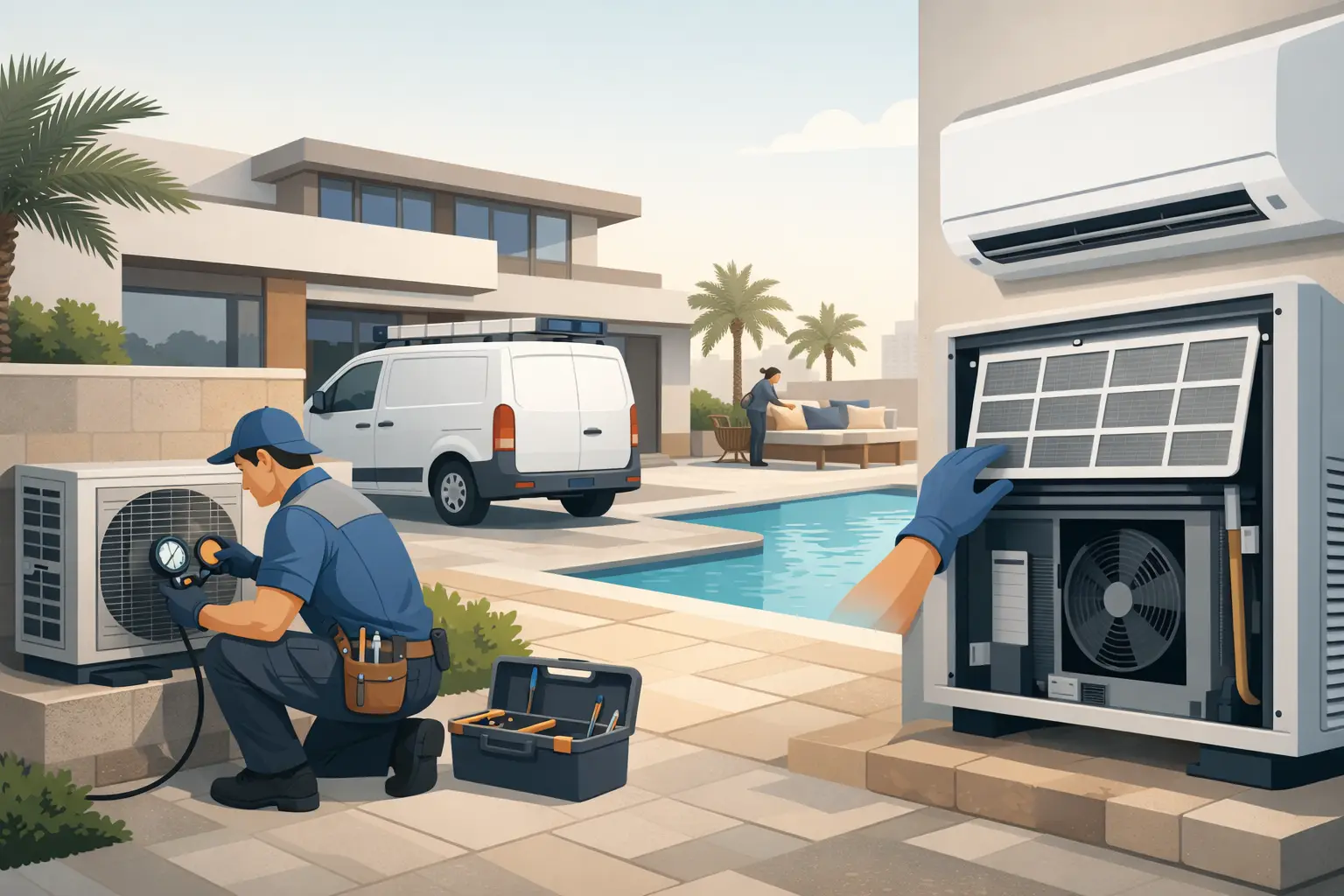
An HVAC inspection goes more smoothly when the technician can reach the equipment, understand the concern, and check the full system without delays. Knowing how to prepare for an HVAC inspection helps homeowners, tenants, building managers, and businesses make better use of the visit - especially in Kuwait, where cooling systems often work hard for much of the year.
Preparation does not mean trying to diagnose or repair the unit yourself. It means making the property ready for a qualified technician to inspect the system safely and explain what they find clearly.
Why preparation matters before an HVAC inspection
An HVAC system is more than the indoor AC unit. Depending on the property, the inspection may include thermostats, air filters, indoor units, outdoor condensers, ducts, drains, electrical connections, and controls. A problem that appears as weak cooling in one room may begin elsewhere in the system.
When access is blocked or the person responsible for the property does not have basic system information available, the inspection can take longer. The technician may also need to return to inspect an area that was inaccessible during the first visit. A few simple checks before the appointment can help the service stay focused on the actual issue.
For landlords and building managers, preparation also supports clearer communication with tenants or occupants. It creates a record of reported concerns, affected areas, and changes made after the inspection.
How to prepare for an HVAC inspection
Start by confirming which areas need attention. If the system serves a villa, office, retail space, or several apartments, identify whether the issue affects the entire property or only specific rooms. This gives the technician a useful starting point without assuming the cause.
Clear a safe path to the indoor unit, thermostat, return-air grille, and outdoor equipment where possible. Move furniture, storage boxes, decorations, or other items that prevent reasonable access. If equipment is installed on a roof, balcony, ceiling area, utility room, or locked service space, arrange entry before the appointment.
Keep children and pets away from the work area while the inspection is taking place. This allows the technician to work safely around electrical equipment, moving fan components, and access panels. Do not remove covers or attempt to clean internal parts before the visit. A professional inspection is more useful when the technician can see the system in its normal operating condition.
Write down what you have noticed
Small details can point to a pattern. Before the visit, make a short note of when the concern started and what happens when you use the system. For example, you may notice that cooling is weaker in the afternoon, one bedroom does not reach the set temperature, water appears near an indoor unit, or the system makes an unusual sound when it starts.
Also note whether the issue is constant or occasional. If a unit shuts down after running for an hour, that matters. If an odor only appears when the AC first turns on, mention that as well. There is no need to use technical terms. Clear everyday observations are more useful than guessing which component has failed.
If several people use the property, ask them whether they have noticed similar problems. In an office or commercial property, occupants may report warm zones, uneven airflow, or rooms that become uncomfortable at certain times of day. Gathering those observations in advance can prevent important details from being missed.
Have basic system information ready
If available, keep the following information nearby: the last maintenance date, previous inspection notes, recent repair records, and any messages or error codes shown on a thermostat or control panel. Photos of visible leaks, frost, warning messages, or water marks can help when the condition is intermittent and not visible during the appointment.
You do not need to search for every document if it is not easily available. However, knowing the approximate age of the unit, whether it has been repaired recently, and whether a filter was changed can give useful context. For a managed building, the maintenance log can help identify recurring issues rather than treating each visit as an unrelated problem.
Make the thermostat and controls accessible
The thermostat is often central to an HVAC inspection. Ensure it is not covered by furniture, wall décor, or a locked cabinet. Let the technician know if the setting has been changed recently, if the display goes blank, or if the system does not respond consistently to temperature adjustments.
For offices and larger properties, identify who can provide access to central controls, plant rooms, or building management systems. A technician may need to compare the thermostat setting with the actual conditions in the space. Access to the right controls helps avoid unnecessary waiting during the visit.
What the technician may check
A qualified HVAC inspection should be based on the condition of the system and the concern you reported. The exact scope depends on the equipment type, property layout, and whether the visit is routine maintenance or a response to a specific fault.
The technician may inspect airflow, filter condition, cooling performance, drain lines, visible electrical components, thermostat operation, indoor and outdoor units, and signs of wear or leakage. In dusty conditions, common in Kuwait, filter condition and airflow can deserve particular attention. A restricted filter may affect comfort and place extra strain on the system, but the technician should assess the wider system rather than assume the filter is the only cause.
Some issues are straightforward to identify during the first visit. Others require monitoring, further testing, replacement parts, or access to another area of the property. A dependable service provider should explain what was found, what action is recommended, and whether the issue requires a follow-up visit.
Questions worth asking during the inspection
The goal is not to turn the appointment into a technical discussion. It is to leave with a clear understanding of your system's condition and the next practical step.
Ask what caused the reported symptom, whether there are any safety or performance concerns, and what should be addressed now versus monitored over time. If maintenance is recommended, ask what it includes and how it relates to the condition found. For a property manager, it is also useful to ask whether the same issue could affect similar units or shared equipment elsewhere in the building.
If the technician recommends repairs, ask for the recommendation in plain language. You should understand which part or area needs attention, why it matters, and what may happen if the issue is left unresolved. Clear service communication is particularly valuable when you need to update a landlord, tenant, facilities team, or business owner.
Prepare differently for homes, rentals, and commercial properties
In a home, the main priorities are access, a clear description of the issue, and someone available to answer questions. If you are a tenant, notify the landlord or property manager according to your lease process, particularly when the inspection involves installed equipment or access to a shared service area.
For landlords, record the tenant's report and confirm whether the concern affects comfort, water drainage, noise, or full system operation. This helps set expectations and supports a more organized maintenance record.
Commercial properties often need additional coordination. Arrange access to offices, ceiling spaces, equipment rooms, rooftops, or retail areas without disrupting customers and staff more than necessary. Tell the technician about operating hours, sensitive areas, and any site safety requirements. This is where professionally managed MEP Maintenance Services Kuwait can help keep inspection work coordinated across essential building systems.
Avoid these common mistakes
Do not wait until a minor concern becomes a complete loss of cooling before arranging an inspection. Reduced airflow, repeated water leakage, unusual noises, inconsistent temperatures, and frequent thermostat problems are all reasons to request professional attention.
Avoid relying on temporary workarounds, such as repeatedly lowering the thermostat to compensate for weak cooling. This may not solve the underlying issue and can make the system work harder. Similarly, do not conceal a leak with towels or move stored items back in front of service panels before the technician arrives.
It also helps to avoid requesting a vague “AC check” without describing the reason for the visit. Routine maintenance and fault inspection can overlap, but the service team needs to know whether you are concerned about performance, drainage, a specific unit, or a property-wide issue.
A well-prepared HVAC inspection is simply a chance to give the technician clear access and useful information. With the right notes and a ready work area, you can make the visit more productive and leave with a practical plan for keeping your property comfortable and properly maintained.