
10 Pest Infestation Signs You Should Not Ignore
Learn the pest infestation signs that can affect homes and businesses, what they may mean, and when to arrange professional pest control in Kuwait today.
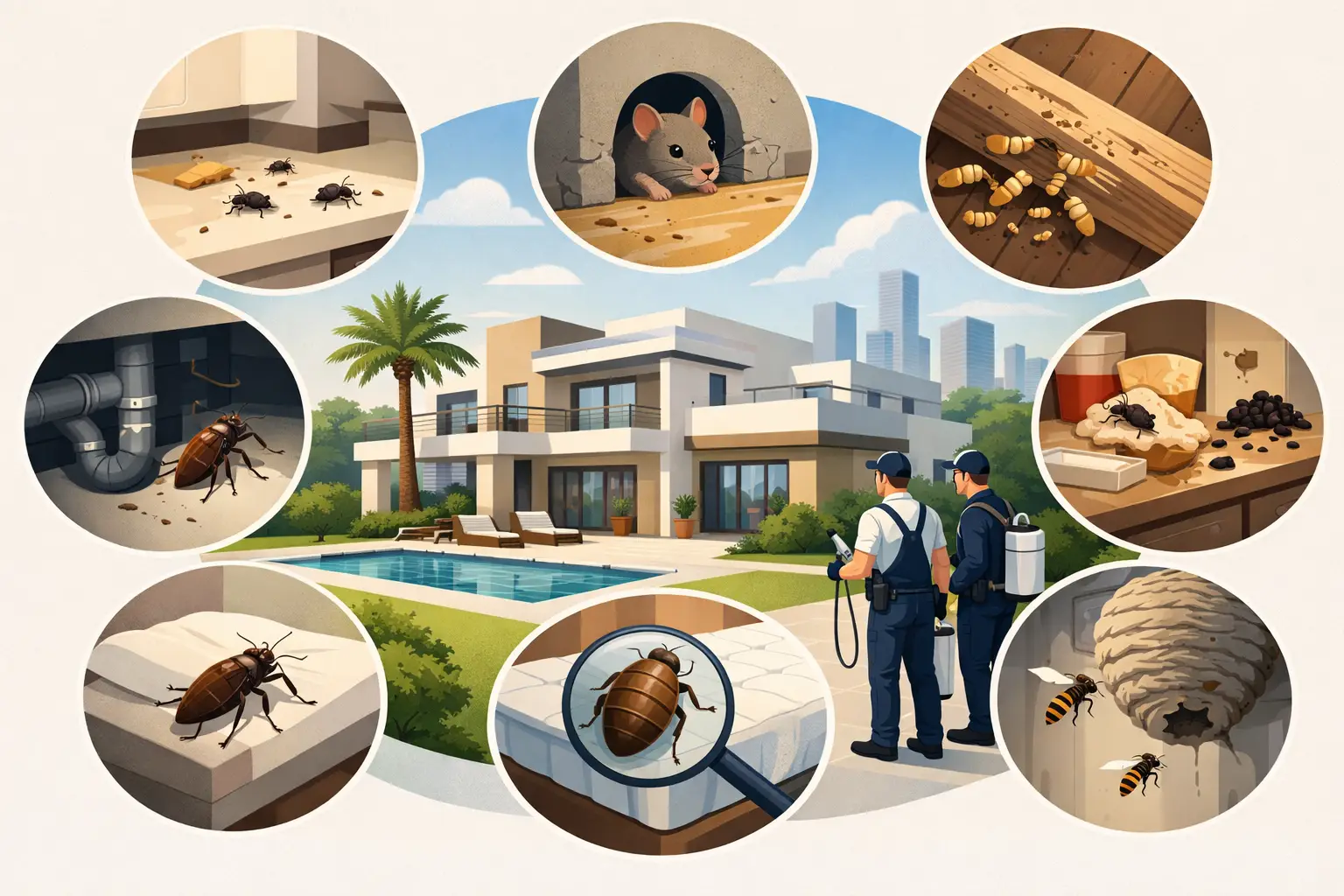
A few ants near a kitchen counter may be a minor nuisance. Repeated activity, new droppings, damaged food packaging, or sounds inside a wall are different. These pest infestation signs can point to a developing issue that becomes harder to manage when it is left untreated.
For homeowners, tenants, landlords, and building managers, the goal is not to guess the exact pest or start spraying products at random. It is to notice patterns early, protect the property, and arrange the right pest control service before pests spread through kitchens, storage areas, ceilings, outdoor spaces, or neighboring units.
10 Pest Infestation Signs to Watch For
1. Droppings in hidden or food-related areas
Droppings are one of the clearest signs of pest activity. They may appear inside kitchen cabinets, behind appliances, around waste areas, in ceiling voids, near storage rooms, or along wall edges. Their size, shape, and location can help a pest control professional identify the likely source.
Do not assume that cleaning the visible droppings has solved the problem. The area should be cleaned carefully, but continued droppings usually mean the pest is still active nearby. In a restaurant, office pantry, retail store, or shared residential building, this should be addressed promptly because activity can affect hygiene and daily operations.
2. Ant trails that keep returning
A single ant can enter through a small gap. A consistent trail leading toward food, water, pet bowls, bins, or a bathroom is more meaningful. Ants leave a scent trail for other ants, so the same route often reappears even after surfaces are wiped.
Recurring ant activity may be linked to an indoor food source, moisture from a plumbing issue, or a nest near the property. This is especially common around kitchens, balconies, gardens, and ground-floor spaces. A proper service considers where the ants are entering, not only where they are visible.
3. Scratching, movement, or chirping sounds
Noises in walls, above suspended ceilings, behind cabinets, or in roof spaces deserve attention, particularly when they happen at night. Scratching or scurrying can indicate rodents, while persistent chirping or fluttering may indicate birds or insects in a void.
Sound alone does not confirm the pest, but it is useful information when reporting the issue. Note the time, location, and frequency. This helps the service provider inspect the right area without unnecessary disruption to the property.
4. Chewed packaging, wires, or stored materials
Rodents can chew cardboard, food packets, insulation, paper, wood, and sometimes cable coverings. Damaged packaging in a pantry or storage room may be the first visible warning. Shredded paper, fabric, or insulation can also be a sign that nesting material is being collected.
Chewed electrical wires should be treated seriously. Avoid handling damaged wiring or attempting a repair. If there is any concern about electrical safety, arrange a qualified electrical inspection as well as pest control. For property managers, checking utility rooms and storage areas can prevent a small issue from becoming a building maintenance concern.
5. Grease marks along walls and edges
Rodents often travel along the same protected paths, such as wall edges, behind appliances, pipes, and narrow gaps. Over time, this movement can leave dark smudges or greasy marks. These marks are more likely in low-traffic areas that are not cleaned or inspected often.
Look behind refrigerators, under sinks, along store room walls, and near service access points. Marks combined with droppings, odors, or gnawing make a stronger case for professional inspection.
6. Unusual odors that do not go away
A persistent musty, stale, or ammonia-like smell can be associated with pest activity, nesting areas, urine, or a dead pest in an inaccessible location. The smell may be strongest in cabinets, under sinks, near false ceilings, or in closed rooms.
Odors can also come from plumbing, drainage, dampness, or waste storage, so they should not be used to identify a pest on their own. Still, when an odor appears with other pest infestation signs, it is worth reporting as part of the service request. Accurate details help the provider assess the likely cause.
7. Small holes, gaps, and damaged screens
Pests need entry points. Small openings around pipes, AC lines, doors, windows, floor drains, wall penetrations, and utility access panels can allow insects or rodents inside. Torn window screens and loose door sweeps can create the same problem.
Not every gap needs urgent work, and some openings are part of a building's intended ventilation or service design. A professional inspection can distinguish between normal building details and entry points that need sealing or maintenance. Long-term pest control often depends on this step, especially in properties with recurring activity.
8. Insect wings, shed skins, or egg cases
Small piles of discarded wings near windows, doors, lights, or wall edges may indicate swarming insects. Shed skins, tiny egg cases, or repeated insect remains in drawers and cabinets can also signal an active breeding area.
Take note of where these are found rather than moving items around extensively. Pests may be nesting behind stored boxes, under appliances, within cabinetry, or in another concealed space. In warehouses, offices, and retail back rooms, routine checks of low-use storage areas are particularly useful.
9. Bites, skin irritation, or repeated pest sightings
Repeated bites or skin irritation after sleeping can be concerning, but they do not always indicate a pest issue. Allergies, fabrics, detergents, and other conditions can produce similar symptoms. What matters is whether there are additional clues, such as small spots on bedding, insects around furniture seams, or sightings in the room.
Avoid moving furniture or belongings from room to room until the issue is assessed. That can spread certain pests to other areas of a home or building. A pest control provider can inspect the affected room and recommend the appropriate next step based on evidence, not assumptions.
10. Pest activity outside that moves closer to the building
Outdoor pest activity can become an indoor problem when conditions are favorable. Overflowing bins, standing water, dense landscaping, uncovered waste, bird feeding, and clutter near exterior walls can attract pests and provide cover close to the property.
In Kuwait, heat and changing outdoor conditions can drive pests toward cooler, shaded, or moisture-rich indoor areas. Villas with gardens, pool areas, and outdoor kitchens may need regular attention around drains, landscaping edges, service rooms, and waste areas. Commercial properties should also review loading areas, bins, and back entrances.
When a Pest Problem Needs Professional Attention
A single sighting does not always mean there is an infestation. The response depends on the type of pest, the location, how often it is seen, and whether there are signs of breeding, nesting, or property damage. However, prompt professional attention is sensible when activity is repeated, when pests are found near food or sleeping areas, when rodents may be present, or when there are signs of damage inside walls or ceilings.
It is also wise to arrange a service when the issue affects a shared building. Pests can move between apartments, offices, storage rooms, plumbing routes, and ceiling spaces. Treating only the most visible location may not address the source.
Before the visit, customers can make the inspection more efficient by sharing where the signs were noticed, when they started, and whether activity is increasing. Clear access to the affected area is helpful when practical. There is no need to use multiple chemicals or disturb suspected nesting areas before the inspection, as this can make the source harder to identify.
What a Proper Pest Control Service Should Address
Effective pest control is more than applying a treatment. The service should begin with an assessment of the pest activity, affected spaces, likely entry points, and conditions that may be supporting the issue. The next action depends on the pest and the property type.
A home may need attention around kitchens, bathrooms, AC areas, balconies, and storage. An office may need inspection of pantries, false ceilings, waste areas, and equipment rooms. A retail or commercial property may require a more structured approach because food storage, deliveries, customer areas, and operating schedules all affect the service plan.
Clear communication matters. Customers should understand the scope of the visit, any preparation needed, the areas being addressed, and any sensible follow-up actions. In some cases, pest control also reveals maintenance needs such as a leaking pipe, damaged door seal, poor drainage, or an opening around a service line. Resolving these conditions helps reduce the chance of recurring activity.
Tasleeh connects customers in Kuwait with approved pest control specialists through a managed service network, helping property owners arrange a clear, professionally handled response when pest activity needs attention.
A clean property can still develop a pest issue, so do not treat it as a personal failure or wait for the signs to become obvious. Early reporting, a careful inspection, and practical maintenance around the property give you the best chance of resolving the issue with less disruption.