
Pool Care Checklist for Kuwait Homes and Buildings
Use this pool care checklist to spot water, equipment, and safety issues early, and know when a professional pool service is the right next step in Kuwait.
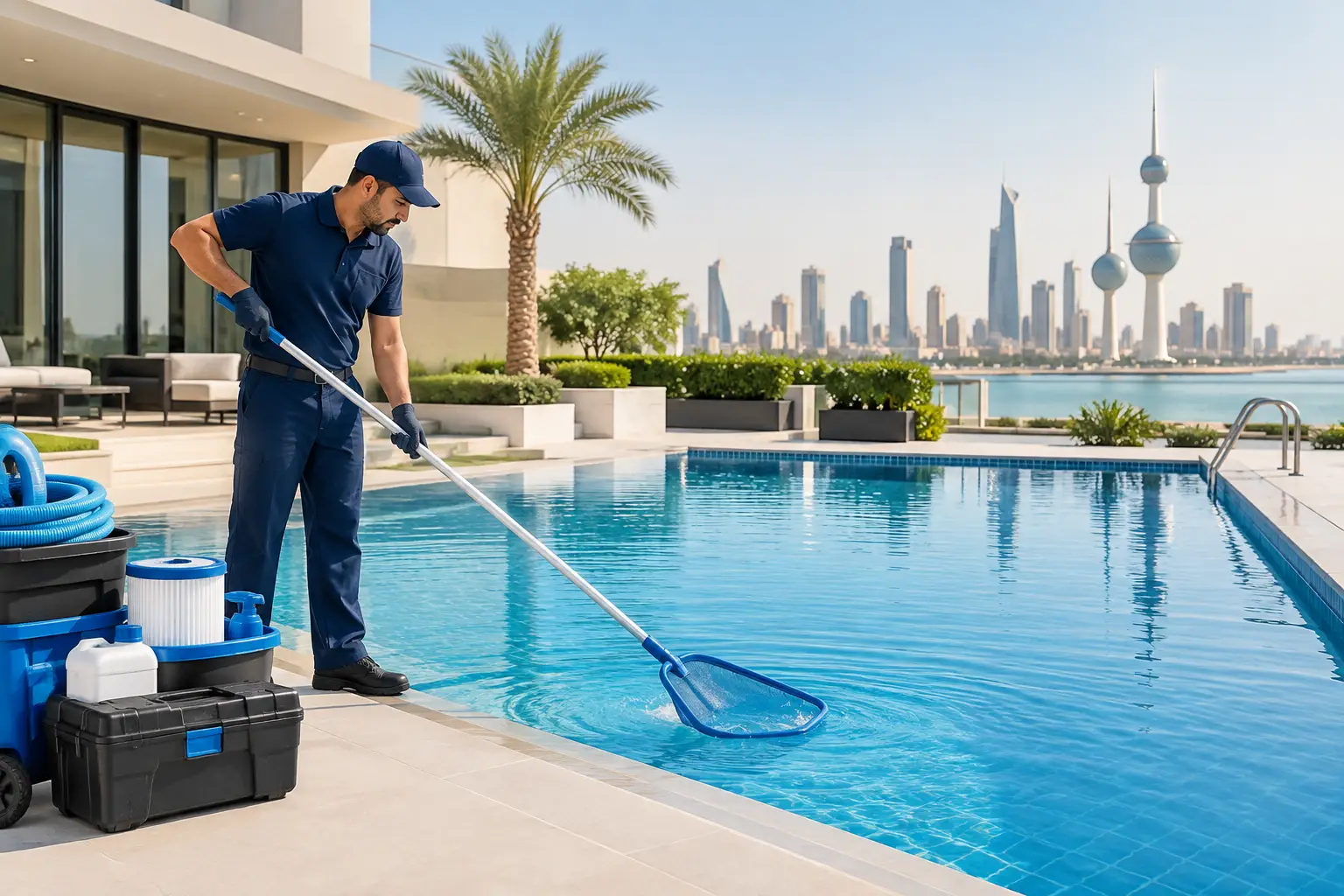
A pool can look fine from across the yard and still have a developing water, circulation, or safety problem. In Kuwait, intense sun, dust, high water evaporation, and frequent use can change pool conditions quickly. This pool care checklist helps homeowners, tenants, landlords, and building managers recognize what needs attention before a minor issue leads to cloudy water, damaged equipment, or an unusable pool.
The purpose is not to turn a property owner into a pool technician. Water treatment, pumps, filters, electrical components, and pool plumbing should be handled by qualified specialists. A clear routine of visual checks and timely service requests helps keep the pool clean, safe, and ready to use.
Why Pool Care Needs Closer Attention in Kuwait
Heat places constant pressure on pool water and equipment. Water levels can drop faster than expected through evaporation, while sunlight can affect the condition of treated water. Windblown sand, dust, leaves, and debris can also collect in the pool, skimmer baskets, and surrounding drainage areas.
For villas, a pool may be used heavily on weekends and left quiet during the week. Apartment buildings, compounds, gyms, and hospitality spaces may have consistent daily use. Both situations need attention, but the service frequency and inspection scope may differ. A lightly used private pool still needs regular professional checks because circulation and water quality problems can develop even when nobody is swimming.
Pool Care Checklist: Daily Visual Checks
A short visual inspection is useful before swimming or opening a pool area for residents, guests, or customers. It should focus on obvious changes, not chemical adjustments or equipment repairs.
- Look at the water from the pool edge. It should appear clear enough to see the bottom and the main drains. Cloudiness, a green tint, foam, floating debris, or an unusual oily surface should be reported.
- Check that the water level is within the normal operating range. A sudden or repeated drop may be caused by evaporation, splashing, or a possible leak that requires assessment.
- Walk around the pool deck and look for loose tiles, damaged grates, sharp edges, standing water, or slippery areas. These are safety concerns, especially around children and high-traffic shared pools.
- Notice unusual sounds from the pump area, such as persistent rattling, grinding, humming, or repeated stopping and starting. Do not open the equipment housing or attempt an adjustment.
- Confirm that pool access controls are working as intended. Gates, latches, barriers, warning signs, and covers all need to be in their proper condition.
If the water is visibly dirty after a dusty day, remove only loose surface debris using normal pool-access equipment if it is safe to do so. Do not handle electrical equipment, remove pump covers, or add chemicals without a qualified pool professional's direction.
Water Quality Signs That Should Not Be Ignored
Clear water is a useful sign, but it does not prove that the water is properly balanced or suitable for swimming. Water can appear clean while treatment levels, filtration performance, or circulation are not within the required range. Professional testing is the reliable way to assess this.
There are also visible and physical warning signs that need prompt attention. Swimmers may report eye irritation, an unusually strong chemical odor, itchy skin, or discomfort after using the pool. The pool may develop discoloration on walls, scale around tile lines, or recurring algae in corners and steps. These issues can result from water imbalance, insufficient circulation, contamination, or a maintenance schedule that no longer matches the pool's use.
A strong chemical smell does not necessarily mean the pool is extra clean. It can indicate that the water needs professional testing and treatment. For a shared residential or commercial pool, it is sensible to restrict use when water quality is in question until it has been checked and corrected by a qualified provider.
Check the Pool Area, Not Only the Water
Pool care includes the area around the pool. A clean-looking deck can still create risks if drainage is poor or fittings are damaged. Inspect the visible condition of handrails, ladders, steps, pool lights, drain covers, and coping stones. Any movement, cracks, corrosion, missing covers, or exposed wiring needs professional attention.
Pool lights deserve particular caution. Water and electrical systems are not a DIY combination. If a light flickers, fails, appears loose, or if there is any concern about electrical safety near the pool, keep swimmers away from the affected area and arrange a qualified inspection. Do not attempt to replace bulbs, access junction boxes, or troubleshoot cables yourself.
For properties with landscaping near the pool, watch for soil, fertilizer residue, falling leaves, or irrigation runoff entering the water. Outdoor landscaping can improve the pool setting, but it also affects the amount of debris and drainage the pool maintenance team needs to manage.
Equipment Warning Signs to Report
Most pool equipment is kept out of sight, which can make early problems easy to miss. You do not need to inspect internal parts to recognize that something is wrong. Changes in noise, water movement, and operating patterns are often enough to request a service visit.
Report a problem if return jets have noticeably weaker flow, the pool surface is no longer moving as usual, or the pump appears to run without circulating water effectively. Persistent air bubbles at return points, water around the equipment area, repeated tripping of electrical protection, or a filter pressure reading outside its usual range are also reasons to contact a professional.
A water loss issue needs careful assessment. High temperatures naturally increase evaporation, but a consistent drop that seems excessive, wet ground around the pool, cracking near pipe routes, or an unexplained increase in top-up water may point to a leak. Leaks can affect structures, underground pipework, and equipment if left unresolved.
What Professional Pool Maintenance Should Cover
A properly managed pool maintenance visit is more than skimming leaves. The exact scope depends on the pool type, size, bather load, equipment, and condition, but it should address the water, circulation system, visible pool surfaces, and key safety observations.
The provider should test water professionally and apply the correct treatment based on the results. They should clean debris from the pool and relevant collection points, inspect circulation performance, and service filtration components where required. They should also identify visible issues with fittings, tiles, lights, drains, plumbing connections, and equipment operation.
For commercial properties and shared facilities, clear communication matters as much as the maintenance work. Building managers need to know whether the pool can remain in normal use, whether follow-up work is needed, and whether a fault affects safety or access. Tasleeh works through approved specialist providers for pool maintenance, with defined service communication suited to homes, buildings, offices, and commercial properties.
Choosing the Right Maintenance Frequency
There is no single schedule that fits every pool. A private pool used occasionally may need a different routine from a pool in a residential building, school, fitness facility, or hospitality setting. Heat, sun exposure, nearby landscaping, dust exposure, and the number of swimmers all affect how quickly conditions change.
As a general rule, higher-use pools need more frequent monitoring and cleaning. Pools that are unused for part of the year still need care to prevent stagnant water, debris buildup, surface staining, and equipment deterioration. A professional can recommend an appropriate maintenance frequency after reviewing the pool's size, operating equipment, water features, and typical use.
It is also worth planning service around known pressure periods. Before a holiday gathering, tenant move-in period, or reopening of a shared outdoor area, arrange an inspection early rather than waiting for water quality or equipment issues to become visible.
When to Request Pool Service
Request professional pool maintenance when water becomes cloudy, green, discolored, or unusually smelly; when debris repeatedly returns after cleaning; or when swimmers report irritation. Also arrange service for reduced circulation, unusual pump noise, leaks, damaged tiles, loose drains, defective lighting, or problems with barriers and access gates.
For a building manager, repeated complaints about pool cleanliness or slippery surfaces are a useful signal that the existing routine needs review. For homeowners, an unexpected change in water appearance or equipment behavior is enough reason to ask for an assessment. Waiting for a complete equipment failure can make a straightforward maintenance visit more disruptive.
A well-maintained pool should not demand constant attention from the people using it. Keep the visual checks simple, treat changes as early warning signs, and leave water treatment, equipment work, and repairs to qualified pool specialists.