
Pool Treatment Comparison: Chlorine, Salt, UV
A practical pool treatment comparison for Kuwait homes and facilities: chlorine, saltwater, UV, and ozone systems, plus the maintenance each requires in Kuwait.
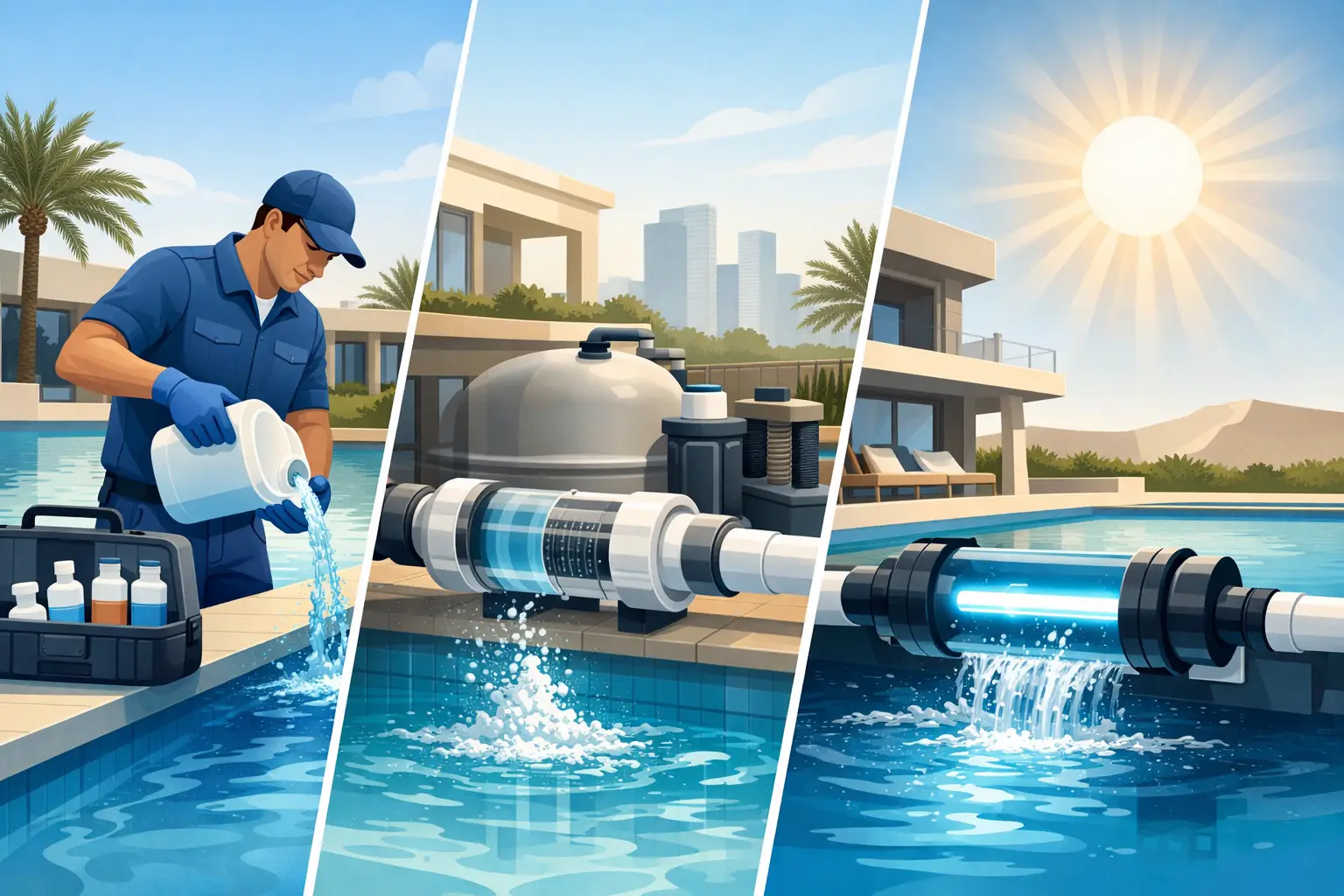
A pool can look clear while its water balance is moving in the wrong direction. In Kuwait, intense heat, dust, heavy use, and long periods of direct sun can quickly increase sanitizer demand. This pool treatment comparison explains what chlorine, saltwater, UV, and ozone systems actually do, where each system fits, and why every pool still needs regular professional testing and maintenance.
The right choice is not simply the treatment that feels most comfortable in the water. It depends on the pool’s size, how often it is used, whether children or guests use it regularly, the condition of the equipment, and the level of routine oversight available. A villa pool and a busy shared pool may need very different treatment plans.
What Every Pool Treatment System Must Do
Pool treatment has two jobs: control harmful microorganisms and keep the water chemically balanced enough to protect swimmers, surfaces, and equipment. Sanitizing and balancing are related, but they are not the same thing.
A sanitizer controls bacteria and algae. Water balancing manages factors such as pH, alkalinity, calcium hardness, and stabilizer levels. If these are not kept within the correct range, a pool may develop cloudy water, scale on tile and equipment, surface irritation, corrosion, or a strong chemical smell.
That smell is often misunderstood. A sharp chlorine odor does not automatically mean there is too much chlorine. It can indicate that chlorine has reacted with contaminants from sweat, sunscreen, dust, or leaves and is no longer working efficiently. The pool needs assessment and treatment, not guesswork or extra chemicals added without testing.
Pool Treatment Comparison: The Main Options
Traditional chlorine treatment
Traditional chlorine treatment uses chlorine products added and managed at planned intervals. It remains a common option because it is effective, familiar to pool professionals, and suitable for many residential and commercial pools when monitored correctly.
Its main strength is that chlorine is a primary sanitizer. It remains in the water at a controlled level, continuing to protect the pool between visits and after swimmers leave. This residual protection matters in hot conditions, when sun exposure and frequent use can reduce sanitizer levels quickly.
The trade-off is that chlorine levels and water balance need consistent attention. Direct sunlight, high temperatures, dust, rainwater, and pool usage all affect demand. Without regular checks, the water can become uncomfortable or unsafe even when it still appears clean. Chlorine treatment is usually a practical fit for pools with a reliable maintenance schedule and properly functioning circulation equipment.
Saltwater chlorination
A saltwater pool is still a chlorine pool. The difference is that a salt chlorinator uses dissolved salt and electricity to generate chlorine within the system. This often provides a steadier supply of sanitizer than manually adding chlorine products at intervals.
Many pool users prefer saltwater because the water can feel less harsh when the system is correctly balanced. It may also reduce the day-to-day handling of chlorine products. However, it does not remove the need for testing, cleaning, filter care, or water balancing.
Salt systems depend on the condition of the chlorinator cell, the correct salt level, circulation, and electrical components. In Kuwait, heat and mineral buildup can affect cell performance. A reduced chlorine output, recurring algae, or a cell warning message should be checked by a qualified pool technician rather than treated by adding products at random.
Saltwater treatment can suit homeowners who want more automated chlorine production and are prepared to maintain the equipment. It is less suitable as a set-it-and-forget-it solution, because the system still needs inspection and adjustment.
UV pool treatment
Ultraviolet, or UV, systems treat water as it passes through a chamber exposed to UV light. The light helps reduce microorganisms and can improve overall water quality when used alongside a primary sanitizer.
The key point is that UV does not leave a sanitizer residual in the pool water. Once the water has moved past the UV unit, it can be exposed again to contaminants from swimmers, windblown dust, or debris. For that reason, UV is normally an additional treatment method, not a replacement for chlorine or another approved primary sanitizer.
UV may be useful for pools where reducing chloramine formation and improving water quality is a priority. It can be a sensible addition for heavily used pools, but its performance depends on correct flow, clean equipment, and timely lamp maintenance. A failed lamp or poor circulation may not be obvious from the water’s appearance alone.
Ozone pool treatment
Ozone systems introduce ozone into the circulation process to oxidize contaminants and support sanitation. Like UV, ozone is generally used as a secondary treatment alongside a residual sanitizer. It can help reduce the load placed on chlorine, particularly where pools receive regular use.
Ozone does not remain in the pool long enough to provide ongoing protection throughout the water. The pool still needs a properly maintained primary sanitizer level. It also needs suitable installation, inspection, and servicing because ozone equipment is connected to the circulation system and must operate at the correct rate.
For property owners, the decision is usually about whether the pool’s usage and maintenance requirements justify the added equipment. Ozone can support water quality, but it does not replace basic circulation, cleaning, filtration, or chemical balance.
Which Treatment Is Right for Your Pool?
For a straightforward residential pool, chlorine or saltwater chlorination is often the practical foundation because both provide residual sanitation. The decision between them usually comes down to equipment preference, maintenance approach, and the pool’s existing setup.
For a pool with frequent guests, shared building use, or higher swimmer loads, UV or ozone may be considered as an added layer of treatment. These systems can support the primary sanitizer and help manage contaminants, but they also introduce equipment that requires planned service.
A pool with recurring algae or cloudy water does not necessarily need a new treatment system. The cause may be inadequate circulation, a dirty or undersized filter, poor water balance, a failing chlorinator, or insufficient maintenance frequency. Replacing equipment before identifying the source of the problem can add cost without resolving it.
Warning Signs That Need Professional Attention
Clear water is not the only measure of a healthy pool. Request a professional inspection when water remains cloudy after normal cleaning, algae returns quickly, tile develops persistent scale, or swimmers report eye or skin irritation. A strong chemical odor, a sudden drop in water clarity, or foam that does not settle can also point to an imbalance or treatment issue.
Equipment warnings matter as well. Low flow, an unusually noisy pump, poor return-water movement, leaks around treatment equipment, or error messages from a salt chlorinator should not be ignored. Pool treatment relies on safe, working circulation and electrical systems. Do not attempt to open, repair, or bypass pool equipment yourself.
What Professional Pool Treatment Maintenance Covers
A proper pool maintenance visit should consider the whole system, not only add chemicals. The scope typically includes water testing, adjustment of required treatment levels, inspection of circulation and filtration performance, cleaning of relevant pool components, and identification of visible equipment concerns.
The technician should also assess whether the current treatment method is delivering the intended result. For example, a saltwater pool may need cell inspection and cleaning, while a UV or ozone system may need confirmation that its treatment unit is operating correctly. Recommendations should be based on test results, equipment condition, and pool usage rather than a one-size-fits-all routine.
For landlords and building managers, consistent records are especially useful. They help track recurring water-quality issues, equipment performance, and changes in maintenance needs across seasons or occupancy levels.
The Practical Next Step
Choose a treatment system that matches the pool’s actual use and can be maintained consistently. Chlorine and saltwater systems provide the essential residual protection most pools need, while UV and ozone can support them where usage or water-quality demands justify additional treatment.
If the water looks wrong, smells unusual, causes discomfort, or keeps developing the same problem, treat it as a maintenance issue rather than a cosmetic one. A qualified pool inspection can identify whether the cause is water balance, sanitation, filtration, circulation, or treatment equipment - and help keep the pool comfortable for the people who use it.