
Preventive Versus Reactive Property Maintenance
Preventive versus reactive property maintenance helps Kuwait property owners reduce disruptions, protect essential systems, and plan service with clarity.
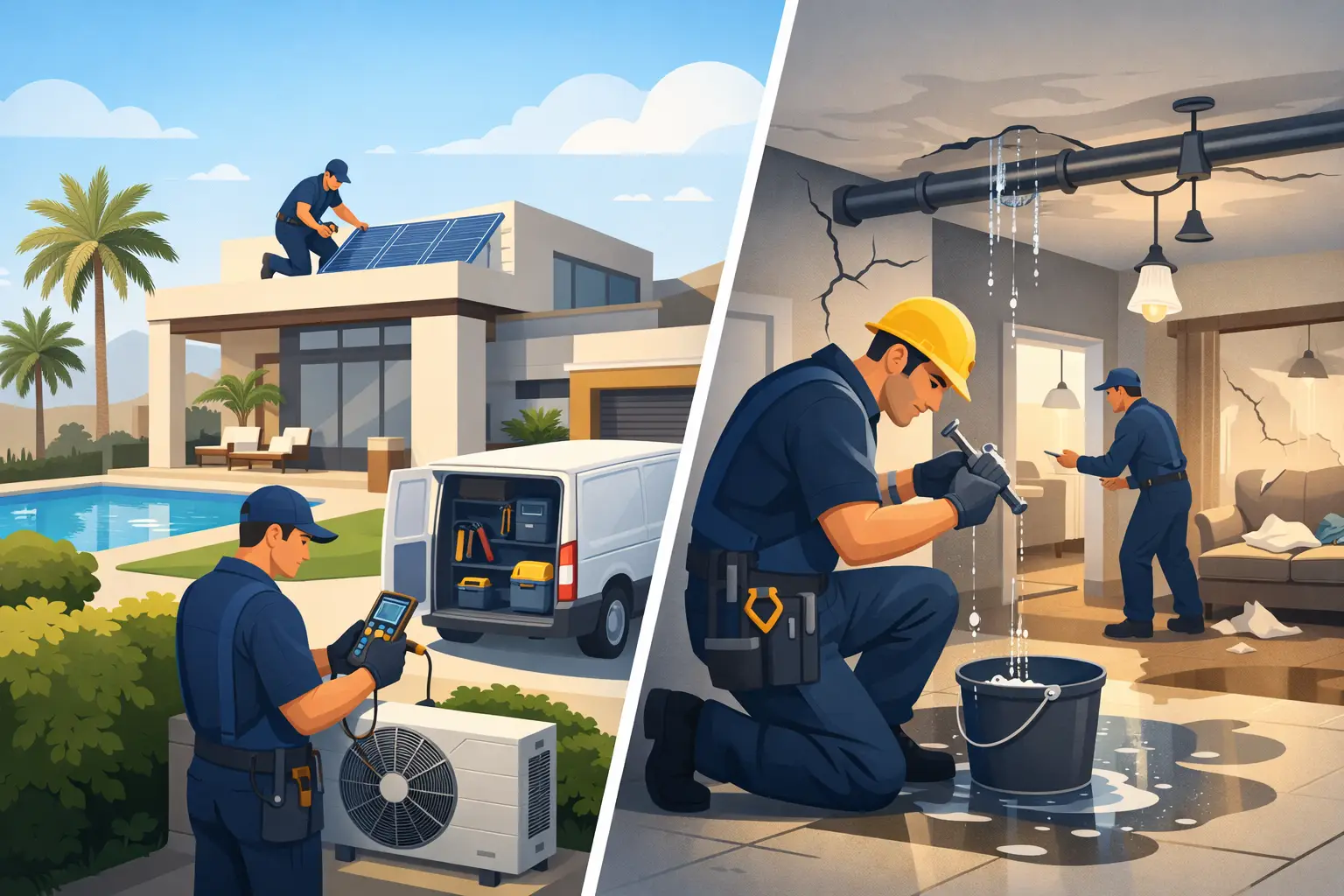
A ceiling stain that appears after a leak, an AC unit that stops cooling during a hot afternoon, or lights that begin flickering in an office rarely feel like minor issues. These are the moments when property owners see the real difference between preventive versus reactive property maintenance.
Reactive maintenance deals with a fault after it affects comfort, safety, operations, or the condition of the property. Preventive maintenance is planned work intended to identify wear and correct small issues before they become disruptive. Both have a place, but relying only on reactive repairs often means responding when the damage, inconvenience, and urgency are already greater.
For homes, villas, apartments, offices, and commercial spaces in Kuwait, maintenance planning is especially relevant. Cooling systems work hard for long periods, plumbing systems can be affected by pressure and hidden leaks, and electrical components need professional attention when signs of wear appear. A clear maintenance approach helps those responsible for a property make better decisions before an urgent call becomes necessary.
What Preventive Maintenance Actually Means
Preventive maintenance is not simply arranging a visit because nothing seems wrong. It is a scheduled check of essential systems, based on how the property is used, the age and condition of the equipment, and known risk areas.
For HVAC, this can involve checking system operation, airflow, drainage, filters, connections, and signs that cooling performance is declining. For plumbing, it may include assessing visible pipework, fixtures, water pressure concerns, drainage behavior, and early signs of leakage. Electrical maintenance can focus on identifying issues such as overheating signs, repeated circuit trips, damaged outlets, or unstable performance that need qualified inspection.
The purpose is practical: find a manageable issue while it is still manageable. A blocked AC drain may be addressed before it causes water damage. A small leak under a sink can be investigated before it affects cabinetry or neighboring spaces. An electrical concern can be assessed before it interrupts work or creates a safety risk.
Preventive work does not mean a system will never fail. Equipment has limits, and unexpected faults can occur even in well-maintained buildings. It does, however, create a clearer picture of system condition and reduces the chance that ordinary wear will go unnoticed for too long.
Reactive Maintenance Starts When the Problem Is Already Visible
Reactive maintenance is necessary when a fault has already appeared. A water leak, loss of AC cooling, blocked drainage, power issue, or malfunctioning fixture requires a prompt professional response. The priority is to identify the cause, control the immediate problem, and carry out the appropriate repair within the agreed service scope.
This approach is appropriate for sudden events. A burst pipe cannot wait for the next planned inspection. Nor should a property manager delay action when an electrical outlet smells burnt, a circuit trips repeatedly, or water is close to electrical equipment. In these situations, stop using the affected equipment or area where it can be done safely, keep people clear of the risk, and request qualified assistance.
The limitation is that reactive maintenance starts later in the problem cycle. By the time a fault becomes obvious, there may be secondary effects. A plumbing issue can affect finishes and furnishings. An AC problem can make a home or workplace uncomfortable at the worst possible time. A recurring electrical fault can disrupt operations while requiring a more detailed investigation.
Reactive maintenance also makes planning harder. The person responsible for the property has less control over timing because the service need is driven by failure rather than by a scheduled check.
Preventive Versus Reactive Property Maintenance: The Real Trade-Off
The choice is not between one method and the other forever. A well-managed property needs both. Preventive maintenance reduces avoidable surprises, while reactive maintenance provides the response needed for unforeseen faults.
The practical question is where to place more attention. A single tenant in a newer apartment may need a lighter maintenance plan than a building manager responsible for multiple occupied units. A villa with several AC units, water tanks, outdoor areas, and frequent family use has more systems that benefit from regular observation. An office or retail space may prioritize maintenance that helps avoid disruption during working hours.
The trade-off is usually between planned attention now and unplanned disruption later. Preventive visits require scheduling and access to the property. Reactive repairs can be more urgent because the issue has already affected daily use. Neither approach should be treated as a substitute for the other, but properties with high system use generally benefit from a more proactive routine.
Warning Signs That Should Not Wait
Many maintenance issues provide an early warning. Paying attention to those changes can prevent a small concern from becoming an urgent repair request.
For cooling systems, watch for rooms that no longer cool evenly, weaker airflow, unusual sounds, unpleasant odors, water dripping from an indoor unit, or electricity use that seems unusually high. These signs do not confirm the exact fault, but they justify a professional HVAC assessment.
For plumbing, look for water stains, damp cabinets, low water pressure, slow drains, recurring clogs, unusual pipe noises, or a water meter that appears to run when fixtures are not in use. Moisture in walls, ceilings, or flooring should be treated seriously, particularly when its source is unclear.
For electrical systems, signs such as flickering lights, outlets that feel warm, buzzing sounds, damaged switches, frequent breaker trips, or a burning smell need qualified attention. Do not remove electrical covers, reset repeatedly tripping breakers without understanding the cause, or attempt repairs yourself.
These warnings do not always mean a major failure is imminent. They do mean that waiting for certainty can be the wrong decision. A timely inspection gives the property owner a clearer basis for action.
How to Build a Practical Maintenance Routine
A useful routine begins with the systems that affect daily operation most: HVAC, electrical, and plumbing. Record when each system was last checked, any repeated faults, and areas where occupants have reported changes. For landlords and building managers, this information is valuable when different tenants report similar issues across units.
Frequency should reflect the property rather than follow a one-size-fits-all schedule. High-use AC systems, older buildings, properties with recurring drainage problems, and commercial spaces with longer operating hours may need closer attention. A newer, lightly used apartment may have different needs. Seasonal demand also matters in Kuwait, where dependable cooling is central to comfort for much of the year.
It is also helpful to separate planned service from improvement work. Planned service focuses on checking condition and addressing maintenance needs. Improvement work may involve replacing aging equipment, changing layouts, or upgrading components after a proper assessment. Keeping these decisions separate makes communication clearer and helps avoid approving work that does not match the actual problem.
When requesting maintenance, describe what you have noticed, when it began, whether the issue is constant or intermittent, and which areas are affected. Photos of visible water damage or a clear description of AC behavior can help explain the concern, but customers should not attempt to diagnose or dismantle equipment themselves.
What Professional MEP Maintenance Should Cover
MEP Maintenance Services Kuwait should be organized around clear service scopes rather than vague promises. Customers need to know whether they are requesting an inspection, routine maintenance, fault diagnosis, repair, or follow-up work. A professional provider should communicate the observed issue, the proposed next step, and any limits or additional work that may be required.
For essential building systems, qualified handling matters. HVAC, electrical, and plumbing work can affect safety, water damage risk, occupant comfort, and business continuity. The right service process includes controlled work standards, clear customer communication, and support when a problem requires further action.
Tasleeh Core Trades provides managed HVAC, electrical, and plumbing maintenance for customers who need a dependable process for essential property systems. If a fault is urgent, provide the clearest possible description when requesting service so the issue can be directed appropriately.
A property rarely fails all at once. More often, it sends small signals first: a drip, a sound, a stain, a room that takes too long to cool. Acting on those signals with planned maintenance is one of the simplest ways to protect the place people live and work.