
Retail Electrical Fault Case Study for Safer Stores
Retail electrical fault case study: see how structured testing, safe isolation, and clear repairs helped protect a Kuwait store from repeat disruption.
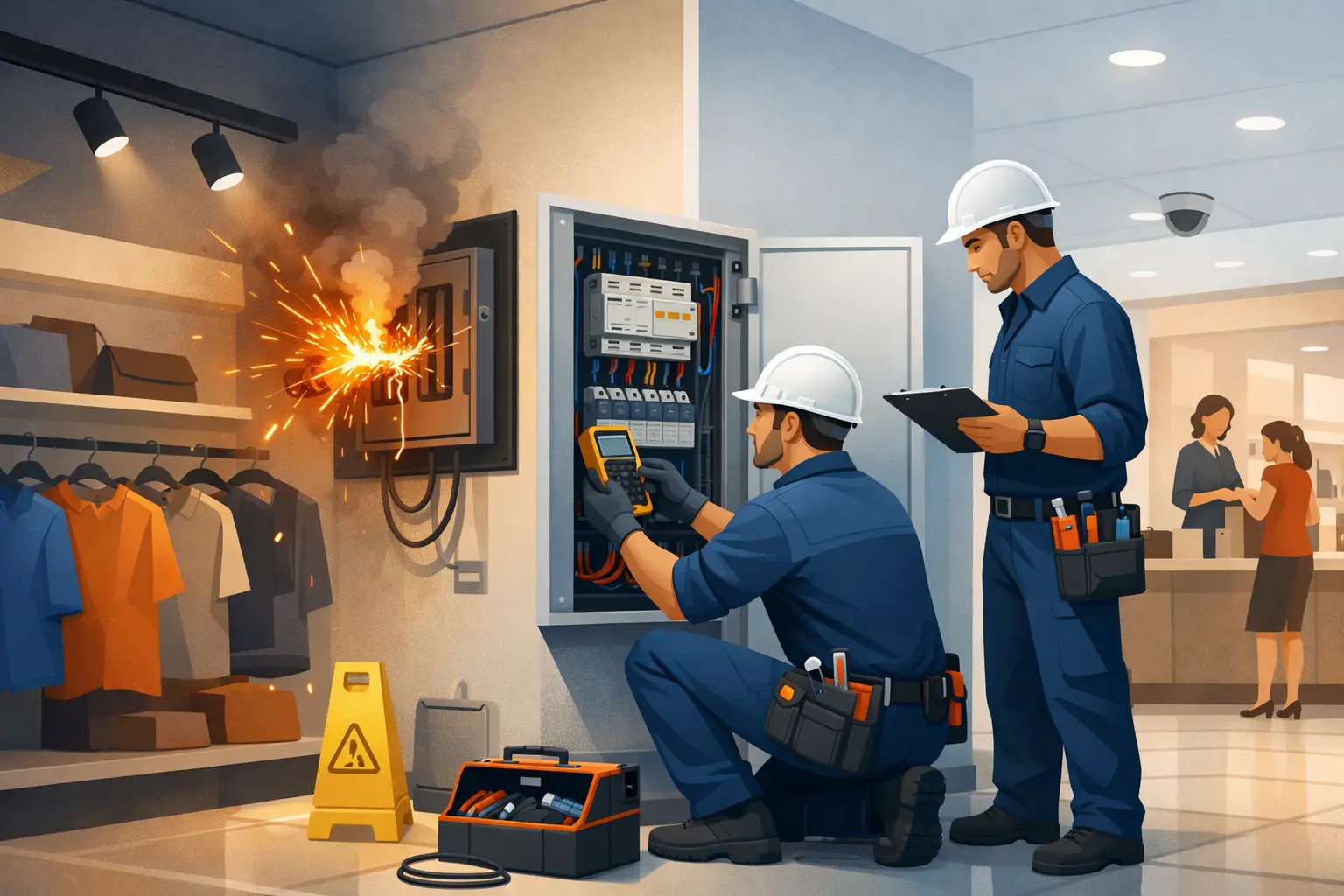
A store can look fully operational while an electrical fault is building behind a wall, above a ceiling, or inside a distribution board. In this retail electrical fault case study, a recurring circuit trip was affecting lighting and point-of-sale equipment in a busy shop. The issue was not only inconvenient. It was interrupting sales, creating uncertainty for staff, and raising a genuine safety concern.
The case shows why electrical problems in commercial spaces should be assessed as a system, not treated as a quick reset. A circuit that trips once may be a one-off event. A circuit that trips repeatedly needs qualified investigation, controlled isolation, and a clear explanation of what was found.
The problem: a recurring trip during business hours
The retail unit had experienced several power interruptions over two weeks. Each time, part of the sales floor lost power. Some lighting went out, a few display sockets stopped working, and the counter equipment needed to be restarted.
Staff initially restored power by resetting the affected breaker. This appeared to solve the problem temporarily, but the trip returned at different times of day. There was no obvious pattern: sometimes it happened during opening hours, and sometimes after additional lighting and display equipment had been switched on.
For the store manager, the immediate concern was avoiding another disruption. The larger concern was not knowing whether the fault was related to a single appliance, a damaged cable, moisture, overloaded use, or an issue within the electrical board itself. Continuing to reset a circuit without identifying the cause can leave the underlying condition unresolved.
Why a retail electrical fault needs a structured response
Retail electrical systems often support more than lights and wall outlets. One circuit may serve display lighting, back-room equipment, signage, chargers, a cashier area, or equipment added after the store first opened. That makes assumptions risky.
A circuit breaker is designed to interrupt power when it detects an unsafe condition. Repeated tripping can be associated with overload, a damaged connection, insulation deterioration, equipment failure, or unwanted contact with moisture. The exact cause depends on the condition of the installation and the loads connected to it.
The practical priority is to keep people away from potential danger, limit disruption where possible, and let qualified electrical personnel investigate. Store staff should report details such as which area lost power, what equipment was running, whether there was a burning smell or unusual heat, and whether the problem followed cleaning, water exposure, or recent changes to the layout. These observations help the technician start in the right place, but they are not a substitute for testing.
Retail electrical fault case study: the inspection process
The electrical team began by speaking with the store manager and reviewing the pattern of incidents. They confirmed which breaker had tripped and identified the equipment and areas supplied by that circuit. Before any further testing, the affected circuit was safely isolated.
This step mattered because the store could not afford broad, unnecessary shutdowns. A controlled approach allowed the team to focus on the affected section while protecting staff and customers. It also prevented repeated resetting from masking the problem.
Checking the connected loads
The first inspection covered the items connected to the affected circuit. The team found that extra display lighting had been added over time, along with several plug-in power supplies near a product display. The total connected load was reviewed, but overload alone did not fully explain the timing of the trips.
The inspection then moved beyond the visible equipment. Outlet points, lighting connections, and accessible cable routes were checked for signs of damage, loose connections, heat discoloration, or moisture exposure. A fault does not always sit at the closest or most recently added device. It can be located anywhere along the circuit.
Identifying the source
Testing pointed to a damaged connection serving a display-lighting section near an area that was regularly cleaned. The connection had deteriorated over time and showed signs consistent with moisture exposure. When the affected lighting was in use, the condition could trigger the protective device.
This finding explained why the problem seemed inconsistent. The circuit did not fail every time the lights were switched on. Its behavior changed with operating conditions, cleaning activity, and the condition of the damaged connection.
The team also noted that the display circuit had accumulated additional equipment over time. Although this was not the direct cause of the trip, it was a useful maintenance finding. Commercial spaces change frequently, and electrical capacity should be reviewed when new lighting, signage, or equipment is introduced.
The repair and return to service
The damaged connection was removed and repaired using suitable electrical components. The nearby area was checked to make sure the installation was protected from the conditions that contributed to the issue. The team then tested the circuit and connected loads before returning it to service.
The repair was only part of the job. Clear communication was equally useful to the store manager. The report explained the fault, the work completed, the equipment or area involved, and the recommended next actions. This gave the business a record of the incident and a clearer basis for future maintenance decisions.
In a retail setting, it is tempting to focus only on restoring power as quickly as possible. That matters, but a fast restart without a proper diagnosis can lead to another failure during a busy period. A measured repair may take more planning, especially if work must be coordinated around store hours, but it reduces uncertainty and helps protect the premises.
What this case means for store owners and managers
The key lesson is not that every tripped breaker has the same cause. It does not. A single event after a known equipment issue may be straightforward. Repeated trips, heat around outlets, flickering that affects one area, burning smells, damaged fittings, or power loss after water exposure should be treated as reasons to arrange professional electrical assessment.
Retail properties also need to account for operational changes. Seasonal displays, added lighting, new payment equipment, refrigeration, staff appliances, and promotional signage can alter how a circuit is used. What was acceptable when the unit opened may no longer suit the current setup.
For landlords and building managers, the same principle applies across shared commercial properties. A documented fault investigation helps separate a tenant-specific equipment problem from an issue within the property electrical infrastructure. That supports better planning, clearer responsibility, and less disruption for occupants.
Preventing repeat disruption in commercial spaces
Preventive maintenance cannot remove every fault, but it can identify warning signs before they become a shutdown. A planned inspection is especially useful after renovations, new equipment installation, water leaks, repeated circuit trips, or visible wear around electrical points.
Good electrical maintenance also depends on clear scope. A qualified provider should explain what area is being inspected, whether the issue relates to a circuit, outlet, lighting section, or distribution board, and what testing or repair is required. This prevents vague work requests and gives the customer a better understanding of what has been addressed.
Tasleeh provides MEP Maintenance Services Kuwait for properties that need organized electrical maintenance and clear service communication. For retail operators, the right response is not guesswork or repeated resets. It is a controlled inspection that identifies the cause, addresses the affected installation, and records what the business needs to monitor next.
When a store’s power system starts showing repeat warning signs, acting early protects more than the day’s trading. It helps keep staff, customers, equipment, and the property itself in a safer position.