
Swimming Pool Maintenance Kuwait for Clean Water
Swimming pool maintenance Kuwait keeps water clear, equipment protected, and pool users safe. Learn what routine professional care should cover year-round.
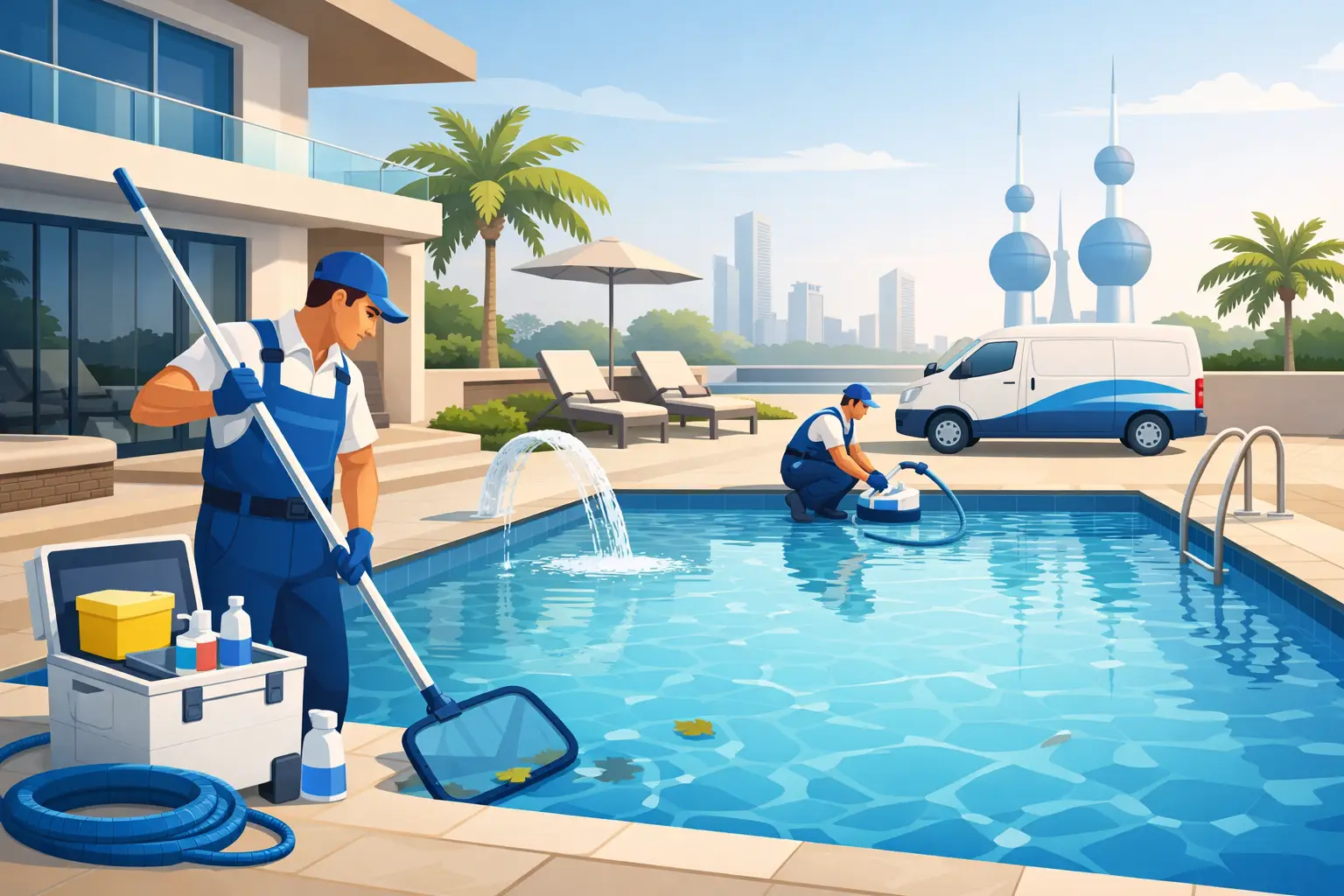
A pool can look clear in the morning and still have a water-balance or circulation issue developing beneath the surface. That is why swimming pool maintenance Kuwait is not limited to removing leaves or adding chemicals. It is a planned service that keeps the water suitable for use, protects equipment, and helps prevent small faults from becoming disruptive repairs.
For villas, apartment buildings, hotels, schools, offices, and commercial properties, pool care needs to reflect how the pool is used. A lightly used residential pool has different demands from a shared pool that is open every day. The practical goal is the same: clean water, working equipment, a safe surrounding area, and clear communication when something needs attention.
Why Regular Pool Care Matters in Kuwait
Heat, dust, wind, and frequent use can affect a swimming pool quickly. Fine dust can settle in the water and on the pool floor, while high temperatures can place extra pressure on water quality and filtration. If the pool is not checked consistently, water can become cloudy, algae may develop, and filters or pumps may have to work harder than they should.
A professional maintenance routine is designed to catch these changes early. Rather than waiting for visibly dirty water or a complete equipment failure, the service team checks the pool’s condition on a schedule and responds to what the pool actually needs.
This protects more than appearance. Poor water balance can make swimming uncomfortable and can contribute to damage in pool surfaces, pipes, pumps, filters, and related equipment. For landlords and building managers, regular care also makes it easier to keep a shared facility presentable and ready for residents or guests.
What Swimming Pool Maintenance Kuwait Should Cover
A properly scoped pool service combines water care, cleaning, equipment inspection, and practical reporting. The exact schedule and tasks depend on the pool size, type of equipment, number of users, and whether it is indoors or outdoors. Still, a reliable visit should address the core systems that keep the pool operating properly.
Water Testing and Treatment
The service provider tests key water conditions and adjusts treatment as needed. This is not simply about making water look blue. Correct water balance supports comfort for swimmers, helps sanitation work as intended, and reduces unnecessary strain on pool finishes and equipment.
Water treatment should be based on test results, not guesswork. Using too much or too little of a treatment product can create a different problem, so this work is best handled by trained pool specialists who understand the pool’s specific system and usage pattern.
Surface, Floor, and Skimmer Cleaning
Leaves, sand, dust, insects, and other debris should be removed before they build up. A routine service commonly includes cleaning the water surface, skimmer baskets, pool floor, and visible areas around the pool. Depending on the pool condition, wall brushing and vacuuming may also be needed.
This work helps the filtration system do its job. When debris is allowed to remain in the pool, it can affect water circulation, clog baskets, and create conditions where water quality declines faster.
Filter, Pump, and Circulation Checks
The filtration and circulation system is the working center of the pool. The service team checks that water is moving correctly, reviews the condition of accessible equipment, and looks for warning signs such as unusual noise, weak water flow, leaks, or pressure changes.
A blocked filter, failing pump, or circulation issue can lead to cloudy water even when treatment has been applied correctly. Equipment checks help identify when cleaning, adjustment, repair, or specialist follow-up is required. Property owners should avoid attempting equipment repairs themselves, particularly where electrical connections, pumps, or plumbing lines are involved.
Pool Area Condition and Safety Observations
A pool is not only the water. The surrounding deck, drains, access points, visible fittings, and lighting all affect how safely and comfortably people use the area. During maintenance, visible concerns such as slippery buildup, damaged grates, loose fittings, or signs of leakage can be reported for the appropriate action.
Not every issue requires an emergency response. A minor cosmetic concern may be scheduled with other planned work, while a leak, electrical concern, damaged drain cover, or major change in water clarity should be assessed promptly. Clear reporting helps the property owner make the right decision without unnecessary stress.
How Often Should a Pool Be Serviced?
Most pools benefit from regular scheduled maintenance, especially outdoor pools exposed to dust and heat. The right frequency depends on the pool’s use and condition. A private pool used occasionally may need a different plan than a pool serving tenants, staff, customers, or guests throughout the week.
Usage is only one factor. Trees or landscaping near the pool, the effectiveness of the filtration system, water temperature, recent weather, and the pool’s age can all affect service needs. A pool that has recently had equipment work or recurring water-quality issues may also need closer monitoring until it is stable.
For this reason, a fixed checklist is useful, but it should not replace observation. Good maintenance is consistent while remaining responsive to the actual condition of the pool.
Signs It Is Time to Request Pool Service
Visible changes are often the first warning, but they are not the only ones. Cloudy water, a green tint, foam, unusual odor, or debris that returns quickly after cleaning all point to a pool that needs professional attention. Water level changes, wet areas near equipment, rattling sounds from a pump, or weak circulation can also indicate a developing issue.
For shared or commercial properties, it is sensible to act before users begin reporting a problem. Closing or restricting access may be necessary when water condition or equipment safety is in question. The priority should be protecting pool users and allowing a qualified provider to assess the cause.
It also helps to report what has changed. Tell the service provider when the issue started, whether the pool has had heavy recent use, and whether you have noticed equipment noise, leaks, or changes in water level. This gives the team useful context before the visit.
What to Expect From a Managed Pool Service
Pool maintenance should not leave the customer wondering what was checked or what happens next. A professionally managed service starts with a clear scope, covers the agreed maintenance tasks, and communicates any faults or follow-up needs in straightforward language.
The service provider may recommend additional attention when equipment is worn, water quality is unstable, or a repair is needed. That does not always mean major work is required. Sometimes the solution is routine filter care or a targeted correction. In other cases, a persistent problem may need inspection of pumps, plumbing, controls, or pool surfaces.
Tasleeh connects customers in Kuwait with approved specialist providers for pool maintenance, supported by organized service communication and defined scopes. This is useful for homeowners and property managers who want pool care handled by a qualified specialist rather than treating it as a general maintenance task.
Simple Steps Between Professional Visits
Daily owner attention does not replace scheduled service, but it can help prevent avoidable issues. Keep the pool area free of large debris, watch for changes in water appearance, and make sure children or other users do not access the pool when a safety concern is present.
Avoid adding treatment products without knowing the current water condition. If the water looks unusual or equipment sounds different, record the issue and arrange professional assessment. Small observations can help prevent a longer interruption later.
A well-maintained pool should feel easy to use, not like another property problem waiting to happen. Regular specialist care keeps the water, equipment, and surrounding space in better working order so the pool remains an asset to the property.