
Top Causes of Circuit Tripping in Kuwait Homes
Learn the top causes of circuit tripping, warning signs to watch, and when homes and businesses in Kuwait need qualified electrical maintenance support.
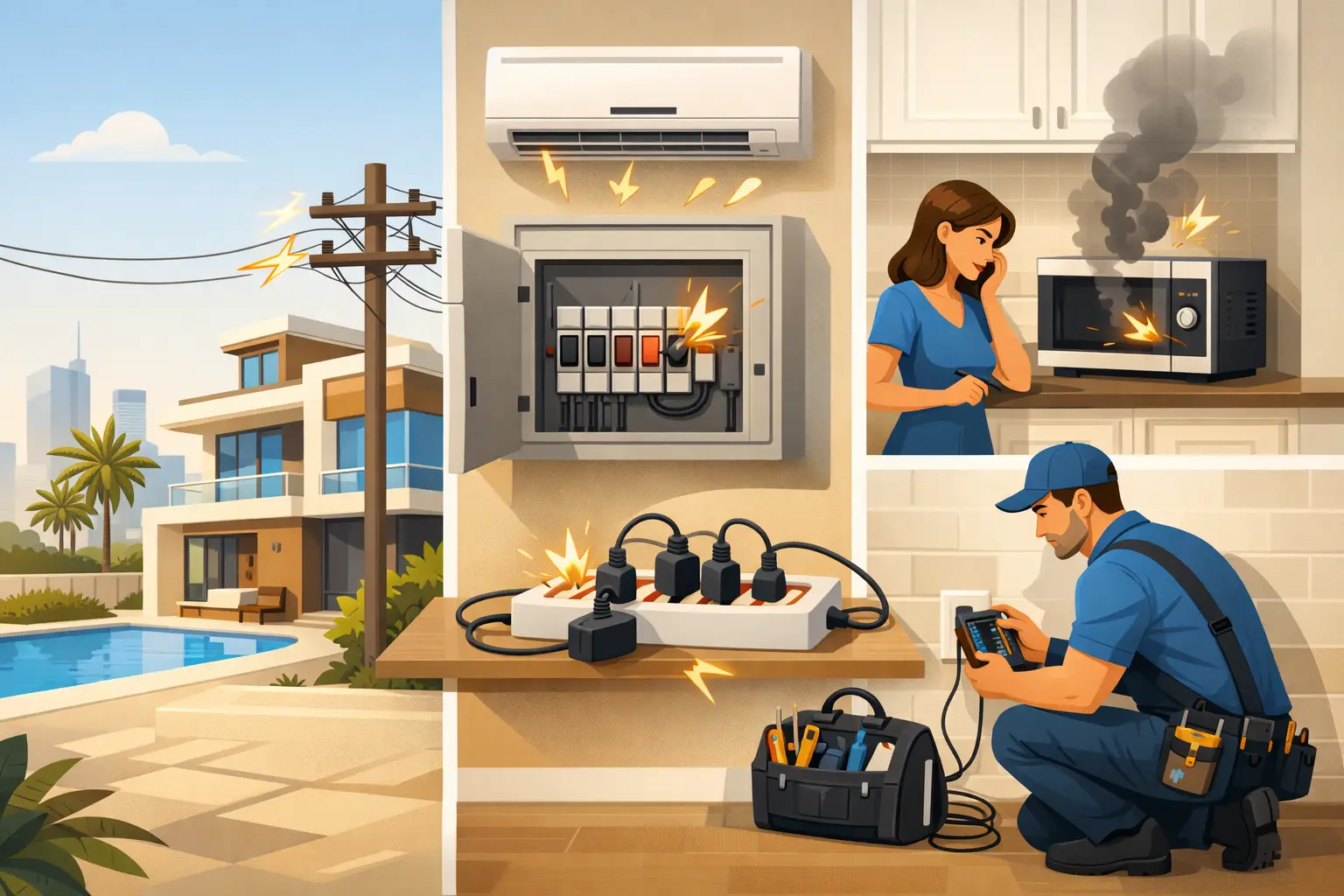
A circuit breaker that trips once may have done exactly what it is designed to do: stop power when it detects a potentially unsafe electrical condition. But repeated trips are disruptive, especially when they affect air conditioning, kitchen equipment, lighting, or office operations. Understanding the top causes of circuit tripping helps property occupants recognize when a simple load issue may be involved and when qualified electrical maintenance is needed.
In Kuwait, electrical demand can rise sharply during long periods of hot weather. Air conditioners, water heaters, pumps, refrigerators, and other essential equipment may operate for extended hours. That makes a well-maintained electrical system particularly important in villas, apartments, offices, retail spaces, and shared buildings.
Top Causes of Circuit Tripping
An overloaded circuit
An overload occurs when one circuit is asked to supply more electricity than it can safely handle. This is common where several high-use appliances share the same circuit, such as an electric kettle, microwave, dishwasher, and refrigerator in a kitchen. In an office, it may happen when extension leads, printers, computer equipment, and portable appliances are all connected to one area.
The breaker trips to prevent wiring from overheating. You may notice that the trip happens soon after a particular appliance is used, or only at busy times when several devices are running. The issue may be temporary, but regular overloads can indicate that the circuit arrangement no longer matches how the space is being used.
A faulty appliance or connected equipment
Sometimes the circuit is not the source of the problem. A fault inside an appliance can cause a breaker to trip when the appliance starts, heats up, or runs for a period of time. This can involve kitchen equipment, washing machines, water heaters, pumps, air conditioning equipment, or commercial devices.
A useful warning sign is a breaker that trips consistently when the same equipment is in operation. Do not keep reconnecting or repeatedly testing equipment that appears to trigger a trip. A qualified technician can assess whether the concern is within the appliance, its connection, or the circuit supplying it.
A short circuit
A short circuit occurs when electricity follows an unintended path, often because a live conductor comes into contact with another conductor or a grounded metal part. Damaged internal wiring, worn cables, loose electrical connections, and equipment faults can all contribute.
This type of trip may happen suddenly and immediately. It can also be accompanied by a burning smell, crackling sound, discoloration around an outlet, or a breaker that will not remain on. These signs need prompt professional attention. Avoid opening electrical panels, removing outlet covers, or attempting to inspect wiring yourself.
Ground fault or earth leakage
Ground faults happen when electrical current escapes its intended path and flows toward earth through an unintended route. Moisture is a common contributor, which is why bathrooms, kitchens, laundry areas, outdoor spaces, and plant rooms require suitable electrical protection.
In villas and buildings, a trip after cleaning, rainfall, plumbing leakage, or use of outdoor equipment can point to moisture affecting a connection or device. The source is not always visible. An electrical inspection may be needed to identify whether water exposure, damaged insulation, or a faulty component is causing the problem.
Air conditioning load and equipment faults
Air conditioning is a major part of electrical demand in Kuwait. When an AC unit has a motor, capacitor, wiring, control, or compressor-related fault, it can trip the circuit breaker or cause a wider electrical interruption. A system may also draw more power than expected if it is struggling to operate efficiently.
If tripping begins when the AC starts or occurs during peak cooling hours, it is worth arranging an assessment rather than treating it as a minor inconvenience. The cause could sit within the electrical circuit, the AC equipment, or both. Coordinated MEP Maintenance Services Kuwait can help identify the correct service scope without guessing.
Loose, aged, or damaged wiring
Electrical components deteriorate over time, particularly in properties with older installations, frequent alterations, or heavy equipment use. Loose terminals, aging insulation, damaged cables, and poorly maintained outlets can create intermittent faults. These are often difficult to identify because the breaker may trip only occasionally.
Look for flickering lights, outlets that feel warm, a buzzing sound, switches that behave inconsistently, or trips that occur without an obvious appliance being used. These symptoms should not be ignored simply because power returns after the breaker is reset. A recurring fault can worsen and may affect more than one circuit over time.
A breaker or panel issue
Circuit breakers are protective devices, but they also require correct selection, installation, and condition. A breaker that is worn, incorrectly rated for the connected load, poorly connected, or affected by heat may trip unnecessarily or fail to hold under normal use. The electrical panel itself may also have internal connection issues.
This does not mean the breaker is automatically at fault. A professional assessment should first establish whether the breaker is responding to a genuine electrical problem. Replacing a breaker without finding the reason for the trip can leave the underlying fault unresolved.
Warning Signs That Need Prompt Attention
A single trip after connecting too many appliances may be straightforward. However, certain signs call for faster action because they can indicate a fault rather than normal circuit protection:
- The breaker trips repeatedly, even when normal equipment is in use.
- Power cuts out when a specific appliance, AC unit, pump, or water heater starts.
- There is a burning smell, smoke, heat, buzzing, or visible discoloration near an outlet, switch, panel, or appliance connection.
- Lights flicker, outlets stop working, or more than one area loses power.
- The breaker trips after water leakage, cleaning, or moisture exposure near electrical equipment.
If there is smoke, sparking, or a burning odor, stop using the affected area and seek urgent qualified electrical support. Do not continue resetting the breaker to restore power.
What an Electrical Maintenance Visit Should Cover
Circuit tripping is not always solved by looking at the breaker alone. A proper electrical maintenance visit should begin with the pattern of the fault: which circuit trips, when it happens, what equipment is operating, and whether the issue is isolated or affects several areas.
The technician can then inspect the relevant electrical panel, circuit protection, visible connections, outlets, and the equipment associated with the fault. Where appropriate, testing helps confirm whether the concern is overload, earth leakage, a short circuit, defective equipment, or an issue within the distribution system.
For landlords and building managers, documenting repeated trips is useful. Note the date, the affected room or circuit, equipment in use, and any visible warning signs. This gives the maintenance team a clearer starting point and helps distinguish an isolated appliance issue from a building electrical concern.
When to Request Electrical Maintenance
Request professional support when circuit tripping is repeated, unexplained, connected to fixed equipment, or accompanied by any sign of heat, smell, noise, moisture, or damaged electrical fittings. Tenants should also report repeated trips to the responsible property contact, particularly when the issue involves the electrical panel, built-in outlets, AC connections, or shared building systems.
For commercial spaces, a trip can interrupt point-of-sale equipment, refrigeration, network equipment, lighting, or customer areas. Early assessment is often less disruptive than waiting for a full outage during operating hours.
Tasleeh provides managed electrical maintenance as part of its core building-services operations. A clear service request should describe the affected area, the equipment involved, and whether the breaker continues to trip after being reset. That helps ensure the visit is prepared around the actual fault.
A circuit breaker is there to protect people, equipment, and the property. When it keeps tripping, treat that interruption as useful information and arrange qualified electrical maintenance before a small warning becomes a larger disruption.