
Why Is Pool Water Cloudy? Causes and Next Steps
Why is pool water cloudy? Learn the common causes, warning signs, and when professional pool maintenance is needed to restore clear, balanced water safely.
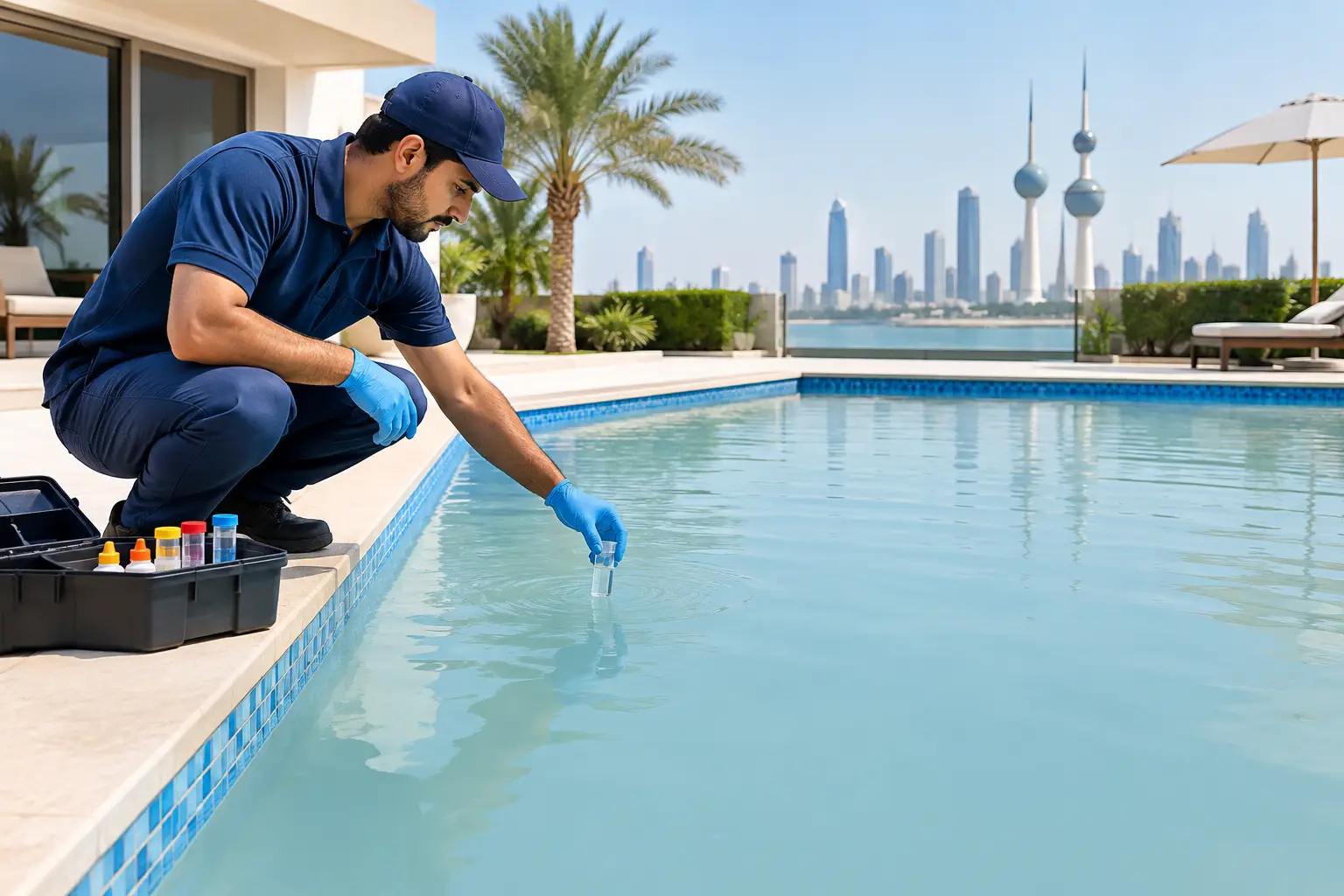
A pool can look clean at a glance, then turn dull, milky, or hazy once the sun hits the water. If you are asking, why is pool water cloudy, the answer is usually not one single issue. Cloudiness often means the pool’s water balance, filtration, circulation, or cleaning routine is no longer keeping fine particles out of the water.
For homes, villas, residential buildings, and commercial properties in Kuwait, this can worsen quickly. Heat, dust, frequent use, strong sunlight, and high evaporation can all place extra pressure on pool equipment and water treatment. Cloudy water should be addressed before it becomes a hygiene concern, damages equipment, or makes it difficult to see the pool floor clearly.
Why Is Pool Water Cloudy? The Main Causes
Pool water becomes cloudy when tiny particles remain suspended instead of being removed by the filtration system. Those particles may be dust, algae, body oils, sunscreen residue, mineral deposits, or material created by an imbalance in pool chemicals.
Poor water balance
Water chemistry is one of the most common reasons for a cloudy pool. Sanitizer levels that are too low may allow algae and bacteria to grow. Levels that are too high can also irritate swimmers and affect the way particles behave in the water.
The pool’s pH, alkalinity, calcium hardness, and sanitizer level work together. When one is out of range, the water can become dull or cloudy even if it does not appear dirty. Adding chemicals without proper testing can make the problem worse, especially when several products are used close together.
A trained pool technician can test the water, identify what is actually out of balance, and apply the correct treatment in the right order. This is more reliable than guessing based on the water’s appearance alone.
A clogged, dirty, or undersized filter
The filter is responsible for catching very small debris before it settles or continues circulating. If the filter is dirty, damaged, incorrectly cleaned, or not suitable for the pool’s size and usage, particles remain in the water and create a hazy appearance.
Sand filters, cartridge filters, and other systems require different maintenance methods. A filter may need cleaning, backwashing, media replacement, cartridge inspection, or a check for internal damage. These are not interchangeable tasks, and the correct approach depends on the equipment installed.
Cloudy water can also appear after a filter has been cleaned if the system is not reassembled correctly or if circulation is interrupted. A professional inspection helps confirm whether the issue is routine filter maintenance or a fault that needs repair.
Weak circulation
Even balanced water will not stay clear if it is not moving through the system properly. A circulation issue can be caused by a blocked skimmer, a dirty pump basket, an incorrect valve setting, a pump problem, or a timer that is not running long enough.
Poor circulation often leaves certain parts of the pool looking worse than others. You may notice debris collecting in corners, cloudy patches near steps, or poor water movement from return jets. In Kuwait’s warmer months, inadequate circulation can lead to faster algae growth and more rapid water deterioration.
Pool pumps and related electrical equipment should be assessed by a qualified technician. Avoid opening equipment housings, adjusting electrical connections, or attempting pump repairs yourself.
Dust, sand, and outdoor debris
Fine dust is a practical concern for outdoor pools in Kuwait. Larger leaves and debris are easy to see and remove, but fine sand and airborne dust can pass through a weak or overloaded filter. They can also settle on the pool floor, then become suspended again when swimmers enter the water.
After dusty conditions, a pool may need more than surface skimming. The water may require professional vacuuming, filter service, circulation checks, and retesting. Repeatedly adding chemicals without removing the underlying debris does not solve the cause of the cloudiness.
Early algae growth
Algae does not always begin as obvious green water. In its early stages, it can make the water look gray, blue-white, or slightly dull. Walls and steps may feel slippery, and brushing may reveal a fine residue that returns soon after cleaning.
Early algae growth usually points to a sanitization, circulation, or filtration issue. Treating it properly requires checking the full system rather than focusing only on the visible water. If left untreated, algae can spread, clog filters, increase chemical demand, and make recovery more difficult.
Heavy pool use and contamination
A busy pool receives more sunscreen, oils, sweat, hair products, and fine debris. These materials can overwhelm normal sanitizer levels and cloud the water, particularly after gatherings or frequent daily use.
This does not mean a pool has been neglected. It may simply need maintenance that matches how often it is being used. Pools in residential compounds, apartment buildings, gyms, and hospitality settings generally need a more structured inspection and cleaning schedule than a lightly used private pool.
Warning Signs That Need Prompt Attention
Some cloudiness is mild, but a pool should not be used when the floor, main drain, or deepest point cannot be clearly seen. Poor visibility is a safety concern, especially for children and swimmers who are not confident in deep water.
Arrange an assessment promptly if the water has a strong chemical smell, swimmers report eye or skin irritation, the pool walls feel slippery, or the cloudiness returns soon after treatment. These signs can indicate poor water balance, ineffective sanitization, or a filtration problem.
You should also request professional help if the pump is noisy, water flow from the return jets seems weak, the filter pressure changes unexpectedly, or there is visible leakage around equipment. The water condition and the equipment performance are closely connected.
What Professional Pool Maintenance Should Cover
A proper pool maintenance visit should look beyond a quick chemical adjustment. The service should begin with an assessment of the water and visible condition of the pool, then identify whether the main problem is chemical balance, debris, filtration, circulation, or more than one factor.
The work may include water testing and controlled chemical treatment, skimming and vacuuming, brushing accessible pool surfaces, checking the filter condition, clearing appropriate baskets, and confirming that circulation is working as expected. A technician may also inspect visible fittings, return flow, and pool equipment for signs that further service is needed.
The exact scope depends on the type of pool, its equipment, how cloudy the water is, and whether there are signs of algae or equipment faults. For example, a pool affected by dust after outdoor conditions may need thorough cleaning and filtration support, while recurring cloudiness may require a deeper review of the pump, filter, and maintenance schedule.
Clear communication matters here. The person responsible for the property should know what was found, what work was completed, and whether follow-up service is recommended. This helps owners, tenants, landlords, and building managers make decisions before a small water-quality issue becomes a larger maintenance problem.
What You Can Do While Waiting for Service
Do not allow swimming if you cannot clearly see the pool floor. Keep loose debris from entering the pool where possible, and avoid adding several chemicals in an attempt to clear the water quickly. Mixing or overdosing pool chemicals can create additional water-quality problems and may be hazardous.
If you maintain records for the property, note when the cloudiness began, recent heavy usage, dusty weather, recent chemical additions, and any changes in pump or filter performance. This information helps the technician identify likely causes faster.
For managed properties, cloudy water is also a useful reminder to review the maintenance frequency. A consistent schedule based on the pool’s use, environment, and equipment condition is usually more effective than waiting for water to become visibly cloudy.
Tasleeh helps Kuwait property owners and managers arrange professionally managed specialist services, including pool maintenance, with clear service coordination and customer communication. When cloudiness persists or visibility is poor, the practical next step is a professional assessment that addresses both the water and the system keeping it clean.