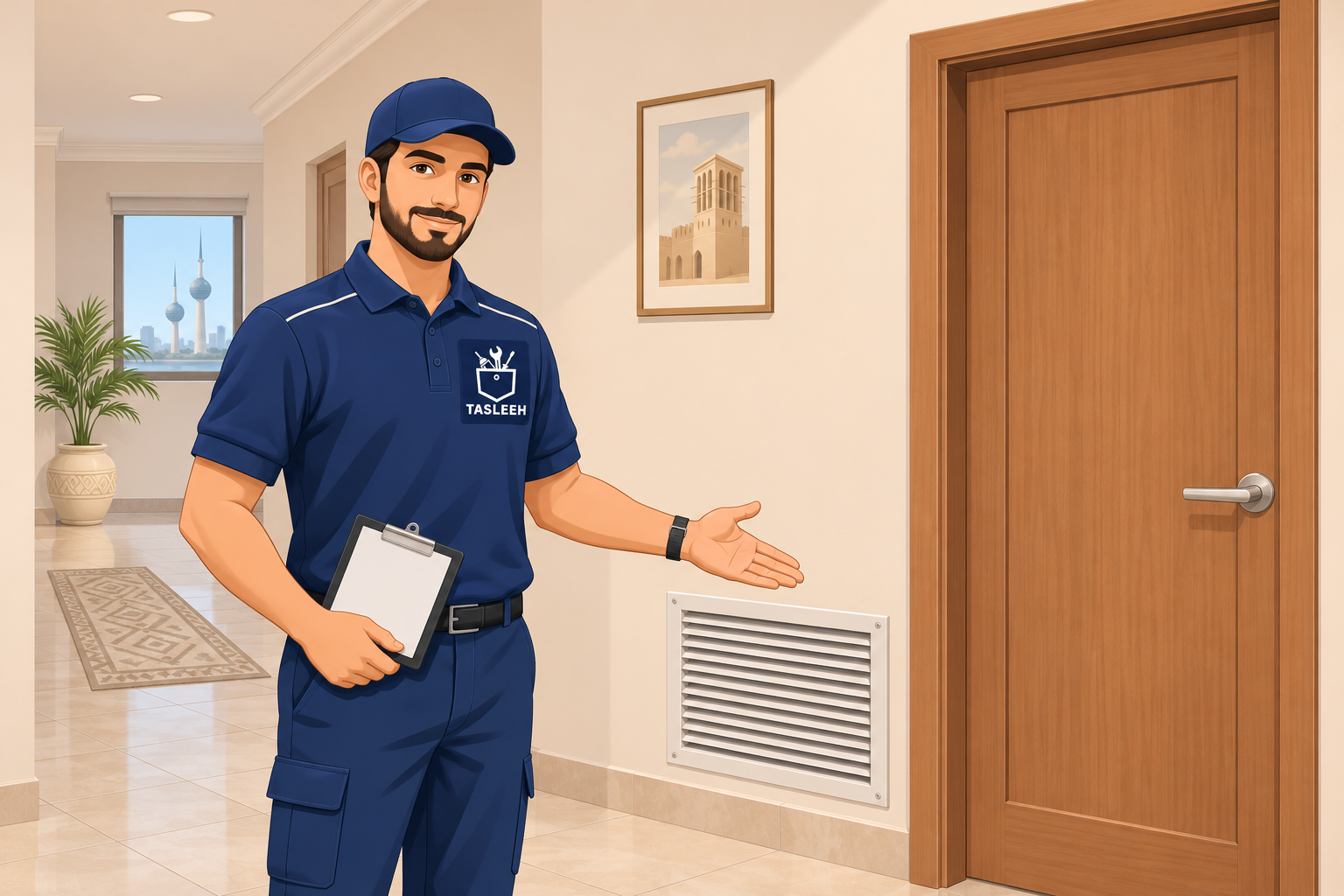
The hallway feels cool, but the bedroom warms up whenever you shut the door. If you have ducted air conditioning with a shared return, tell the technician that the cooling changes with the door position. Cool air may be reaching the room while the air already inside has too little space to flow back to the AC. You can gather a few clues without opening an AC panel or changing the door.
Check where the room air goes when the door closes
A supply vent delivers cooled air into the bedroom. A return carries room air back to the AC equipment. In some homes a return grille serves several rooms from a corridor. A bedroom with a supply vent still needs a way for air to reach that return when you close the door. Some layouts use a grille or a duct between spaces, while others provide a separate return in the room. A gap below a door can be part of the layout, but the size of the visible gap alone cannot tell you whether the return path is adequate.
The Building America guide to ducted returns explains how a restricted return path can create differences in air pressure and temperature between rooms. ENERGY STAR’s building science guide describes how closing a bedroom door can separate the supplied room from a shared return. This explanation concerns ducted systems. A wall-mounted split unit that draws and cools air within the bedroom does not depend on a hallway return in the same way.
Compare the same room with the door open and shut
Notice what happens during normal cooling, when you would have the bedroom door open or closed anyway. Keep the thermostat at its usual setting and compare similar times of day when you can. Write down which room is affected, the door position, and whether the system was actively cooling. If you already have a room thermometer, take any readings in the same place away from the supply vent and direct sun. Let the room settle before taking a reading. If the cooling shuts off during one comparison, note it. That reading will be harder to compare with one taken while air is flowing.
Record anything else that changes at the same time. A bedroom that receives afternoon sun through a large window can feel different from a shaded hallway. If the room is warm with the door open as well, say so. Also write down whether other rooms are affected. Tell the technician what you changed and what stayed the same. They can repeat the comparison and measure the airflow.
Look for obvious obstructions from floor level
See whether a curtain, light box or piece of furniture is covering an accessible grille. A new rug or door sweep may also have changed the clearance beneath the bedroom door. Note what changed and move small items only when you can do so safely. Leave fire doors operating as intended. If the room only feels comfortable with the door open, share that observation so it can be assessed. Leave grilles in place and leave any duct adjustments, trimming or cutting to qualified people after assessment and any required property approval.
Ask for an airflow check with the door as you use it
Tell the technician which room warms up, how often it happens, and where any visible grilles are. Ask whether they can check the supply airflow and the pressure difference across the door during cooling. Measurements can help distinguish an inadequate return route from a supply problem. If you rent or the system is shared, send the notes to the building manager and arrange access as needed. Bring any changes in the room layout to the technician’s attention along with the usual details to prepare for an AC inspection.
If you need an assessment in Kuwait, share the room notes with Tasleeh’s AC maintenance service. Confirm what airflow checks the provider can cover for your system and property.