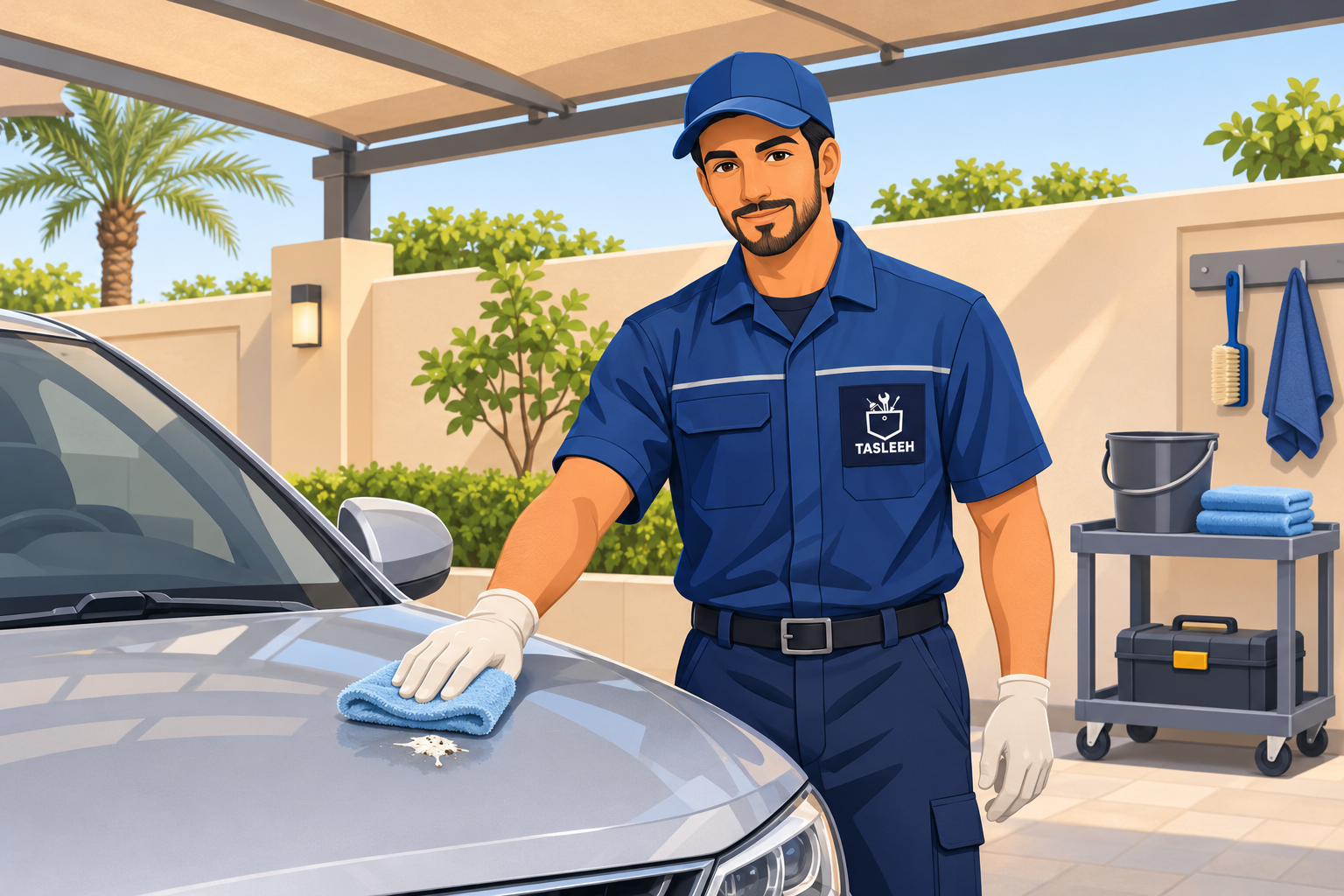
Bird droppings on the bonnet are easy to notice just as you are about to leave. Resist the quick dry wipe. Deal with the deposit promptly, but use a method suited to the paint and let a hot panel cool before cleaning. If you cannot do that safely with suitable materials, ask for professional cleaning rather than scraping at it.
You may spot it on a car parked outside your home or workplace in Kuwait, well before the next planned wash. Start with the care instructions for your finish, particularly if the car has a wrap, a coating or matte paint.
Act promptly, with a cool surface and the right instructions
Do not assume it is harmless to leave a dropping until your usual wash day. Ford's exterior-care guidance calls for prompt removal to help avoid paint damage, while warning against washing a vehicle that is hot to the touch or in strong direct sunlight.
Park in a safe shaded place if one is available and allow the panel to cool. Check your own vehicle's care instructions before choosing a cleaner. A product described as a general household cleaner is not automatically suitable for paint, trim or protective finishes. Ford specifically warns against using washing-up or laundry liquid on painted surfaces.
Soften the deposit instead of rubbing it dry
A dry tissue, rough cloth or fingernail is a poor starting point. Autoglym's bird-dropping wipe instructions say to allow the deposit to soften before removal and warn that rubbing dry droppings may scratch paint. If the deposit stays stuck, stop rubbing and let it soften.
For a finish whose instructions permit it, a clean moist cloth can help soften a dry deposit before you gently lift it. Use a suitable purpose-made product only according to its label and the vehicle's instructions. Keep the area moist while cleaning that spot; do not let a cleaner dry on the panel or keep scrubbing a patch that resists removal.
If the car is dusty, avoid dragging that dust across the surrounding paint. Tesla's Model Y washing guidance starts by flushing away grit before hand washing. Its instructions are model-specific; use your own manual for water, product and pressure restrictions around the vehicle's components.
Keep used material separate from your clean cloths. Autoglym's care advice also emphasizes disposing of the used wipe or cloth and washing your hands afterwards. Do not reuse a soiled wipe on the steering wheel or interior.
Flag a delicate finish before anyone starts
Tell the cleaner if the affected panel has a matte finish, a wrap, paint-protection film, a coating or recent paintwork. Provide any care information you have. If you do not know what is on the panel, say that; a shiny appearance alone does not establish which treatment is suitable.
A matte panel needs different care. For example, Hyundai's exterior-care guidance gives separate restrictions for matte paint, including avoiding ordinary polishing treatments. Do not assume that a polish recommended for one car is acceptable on every finish.
Before the visit, note the location of the deposit, when you noticed it and any cleaner or rubbing already tried. A clear photo can help show its extent, but it cannot establish the condition of the paint underneath. Request exterior cleaning explicitly; an interior clean is a different part of the service.
Check the result before agreeing to polishing
After the deposit is removed and the area is clean, look at it with the provider. If a dull patch or mark remains, stop further attempts and ask for an assessment. Do not assume it is leftover dirt, or that a stronger chemical or extra rubbing will make it disappear.
Keep removal and any proposed polishing as separate decisions. Ask what the provider observed, which finish is involved, what additional work is suggested and what it will cost. Stain or scratch removal is not guaranteed.
If you are also arranging a trip, keep paint cleaning separate from the mechanical vehicle checks before travel. A clean exterior does not replace those checks.
For exterior cleaning, see Tasleeh's car wash and interior-cleaning service. Include your vehicle, location, the affected panel and any special finish. Confirm address coverage, available timing and the cleaning scope before approving the work.