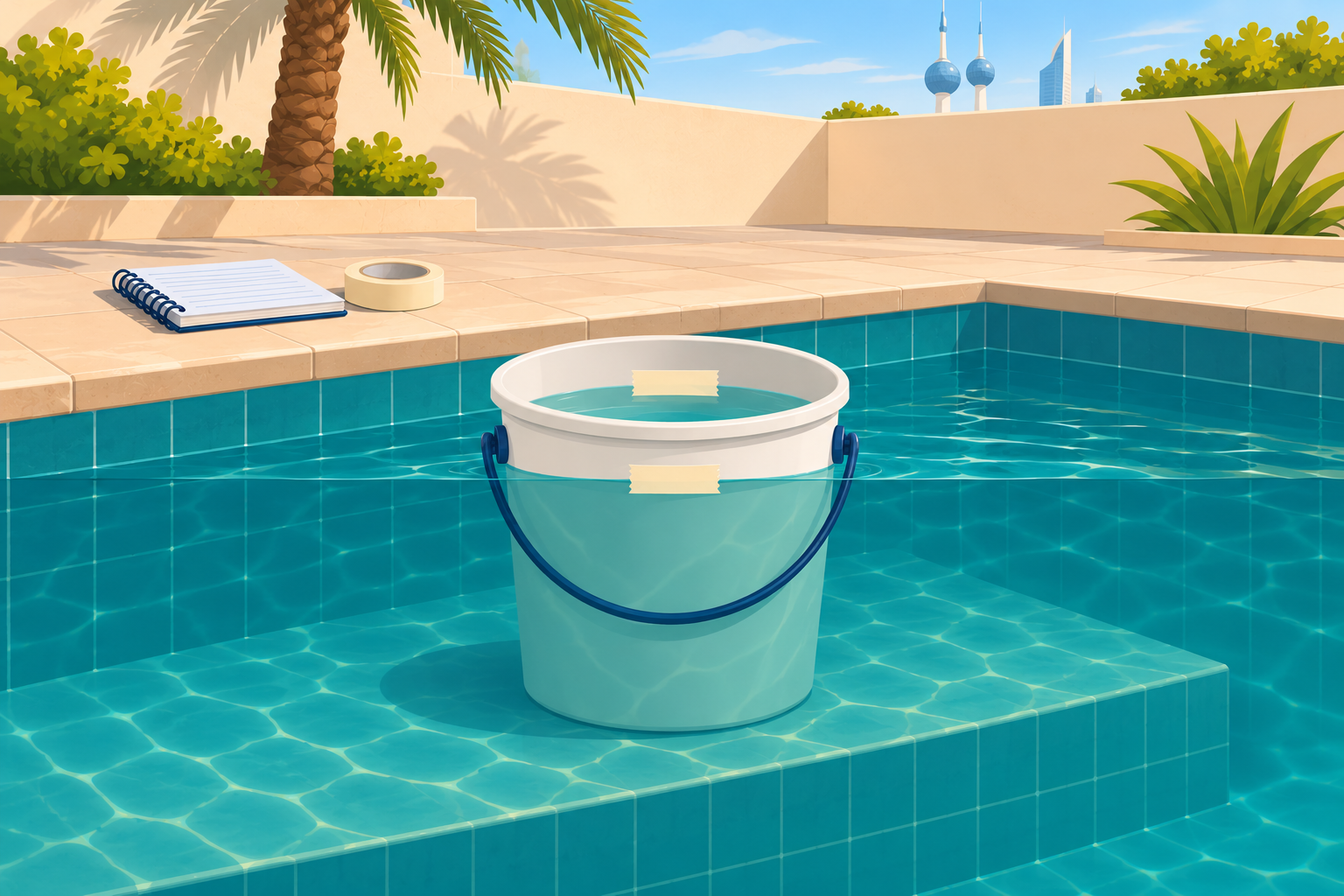
The pool needed a top-up yesterday. This morning the waterline is down again. If the pool is still at a safe operating level, a bucket test can help you judge whether evaporation explains the drop. Compare how far the water falls in the pool and in a bucket set on one of its steps over the same day.
Check what happened before you noticed the drop. Swimmers can splash water out, and a filter backwash sends water away. An automatic refill can hide a steady loss by replacing water as it goes. If the drop is fast or the water is already too low for the equipment, keep the pool closed and ask the operator or a pool provider to check it now.
Choose a quiet day and keep the pool closed
Pick a calm, dry day when you can close the pool for 24 hours. Skip top-ups and filter cleaning until you've taken the second reading. Ask the person responsible for the equipment to confirm that the water is at the normal level and that the pump, cleaner and automatic refill, if fitted, can safely stay off for the test. For a shared pool or unfamiliar controls, leave the test to the operator.
Secure the pool and keep children and pets away. If you can't safely reach a stable step or bench from the dry deck, ask the operator or provider to place the bucket and take the readings. The test needs still water, so wait for the surface to settle before making either mark. See the EPA WaterSense pool guide.
Mark the bucket and pool waterlines separately
Use a clean, intact bucket. Fill it with pool water to about 2.5 cm below the rim and set it securely on the submerged step or bench. The EPA guide calls for at least two-thirds of the bucket to sit below the pool surface, with the water inside slightly higher than the water outside. Check that the bucket rests flat and stays put. A bucket that floats or tips can let pool water mix with the sample.
Mark the waterline inside the bucket, then mark where the pool water meets the outside of it. Write down the time or photograph both marks. Leave the bucket where it is for 24 hours, then measure the vertical drop from each starting mark to the new line on that same side of the bucket. Compare those two distances. The two surfaces can begin at different heights, so their final heights alone will not tell you which lost more. See Oklahoma City Utilities' bucket-test instructions.
Use the result to decide what to check next
If both levels fell by about the same amount, evaporation could explain the drop during that test. If the pool water fell clearly farther, ask about a leak assessment. If the difference is only a few millimetres, check that you can read both marks on still water before drawing a conclusion. If it rained, someone used the pool, the bucket moved or the refill ran, repeat only when conditions are suitable or ask the provider to check.
Even a close result may miss a loss that occurs when the equipment runs. If you normally notice the drop after the pump runs, report that pattern. From a safe, dry spot, note any persistent wet patch around the pool, visible drip at the equipment or bubbles coming back into the water. An inspection can start with those observations. Leave covers and fittings in place and let a professional handle wiring or equipment under pressure.
Give the pool provider both readings
Share the start time, the two measured drops, what was switched off and when the pool last needed topping up. Say whether the pool has an automatic refill. On a skimmer-fed pool, if the level has fallen below the skimmer opening, the pump may pull in air and run dry. Ask the operator to confirm the correct level and restart procedure for your system before restoring operation or reopening the pool. See the Pentair pump guide for an example of that risk.
The pool maintenance basics cover the broader care routine. If the loss keeps recurring, share your measurements with Tasleeh's pool maintenance service. Ask which checks the provider can do at your address and whether finding or repairing a hidden leak needs a separate visit.