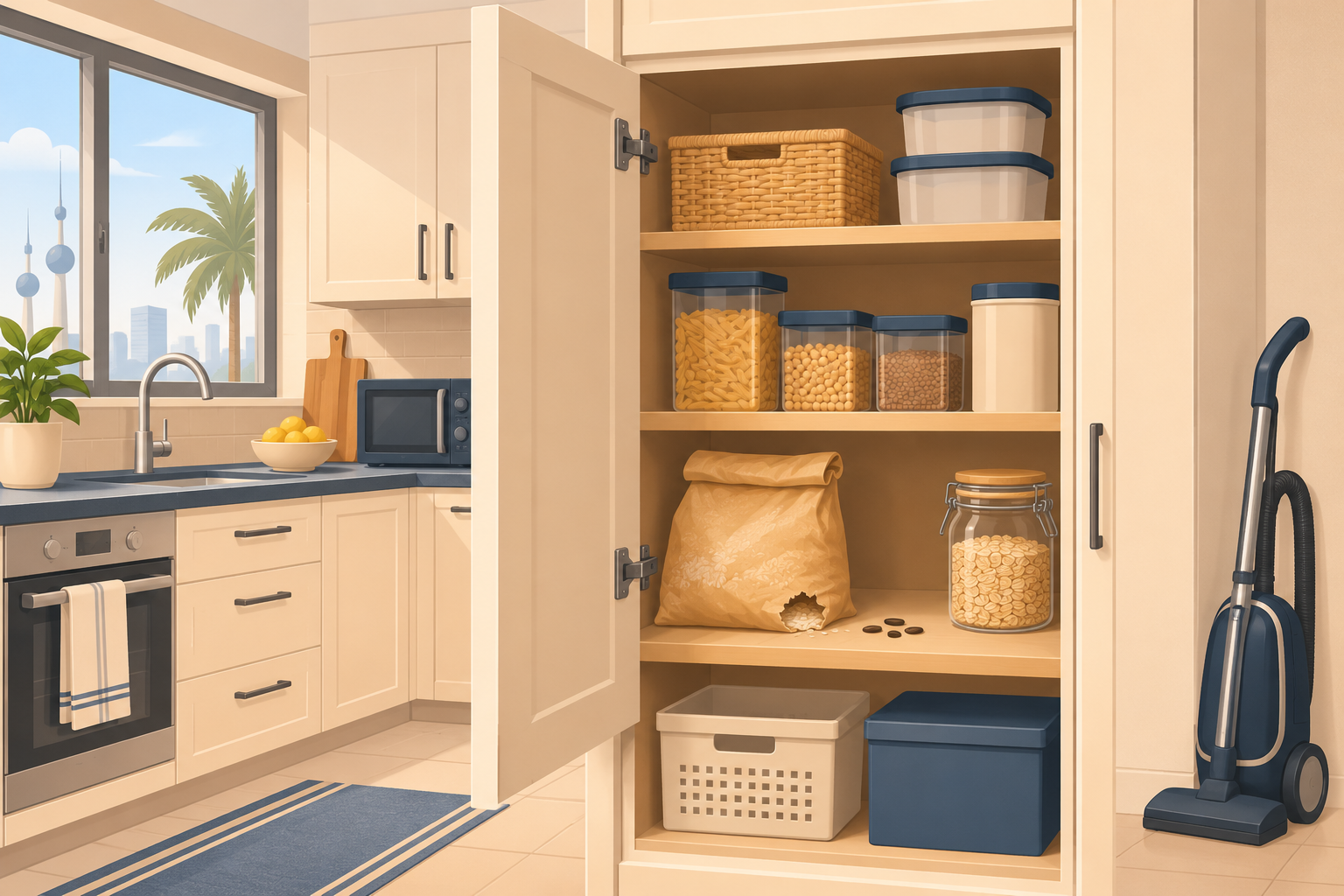
You open the kitchen cupboard for rice and see a few dark pellets beside the bag. If they could be rodent droppings, leave the vacuum off and stop using that shelf. Keep children and pets away. Leave the food and utensils on that shelf out of use until you've checked what may have been exposed.
A torn food bag near the marks is worth mentioning when you call for help. If you can take a photo safely from where you're standing, keep it with your notes. Leave boxes and appliances in place.
Why the vacuum should stay off
Dry sweeping or vacuuming can lift contaminated particles into the air. The US Centers for Disease Control and Prevention advises against both for rodent waste and nesting material. If you've already used a vacuum there, stop using it and mention it when asking for cleanup advice.
For household cleanup that can be done safely, the CDC describes ventilating before starting, using gloves and wetting the waste with a suitable disinfectant before removing it. The shelf itself needs disinfecting too. Follow the full instructions and check how long the disinfectant must stay wet on the surface. For surfaces that touch food, also check the label for any rinsing instructions. See the CDC's rodent cleanup guidance.
Arrange professional advice if there is a lot of waste, evidence in several places, a suspected nest or signs in an area you can't inspect safely. Tell the provider if you think rodents reached a duct. Heavy contamination and ventilation systems need different precautions from a household shelf.
Decide what food and packaging can be kept
Don't use or taste food that may have been contaminated. Look at the type and condition of the packaging only when it is safe to handle. A gnawed rice bag and an intact factory-sealed jar call for different decisions. Under US Food and Drug Administration guidance, exposed food in paper or plastic packaging should be discarded. Damaged cans and jars, including those with a compromised seal, should be discarded as well. When you can do so safely, put discarded items where people and animals can't get to them, such as a bin with a secure lid.
An undamaged all-metal can or an undamaged, hermetically sealed glass jar of commercially prepared food may be salvageable after proper sanitation. A tight-looking lid on a home storage jar does not establish that the food is protected. Leave any suspect containers closed and out of use until you can follow the instructions or get advice. See the FDA's guidance on exposed food and containers.
Keep any dishes or utensils that may have been exposed out of use. Find out how to clean those items and the surfaces that touch food before using the cupboard again. If you share the kitchen, tell everyone which cupboard to leave alone. Use unaffected food and utensils in a clean part of the kitchen.
Tell the provider what you saw and where
Droppings, chewed packaging and signs near a pipe opening help an inspector decide where to look. Those signs can turn up inside cupboards or under the sink. Appearance alone cannot tell you when they appeared or whether rodents are still active. See the US Environmental Protection Agency's guide to rodent signs.
Make a note of the shelf or drawer, when you spotted the marks and any damage visible without moving things. Report new signs after safe cleanup, and tell your building manager if the evidence is near a shared service opening or if other units have reported signs. For other clues to share, see the guide to signs of pest activity.
Ask who can remove the waste and make the shelf and any affected food-contact surfaces safe to use again. If the provider finds an entry point around a pipe or cabinet, ask who can seal it. Once the area can be used safely, store food in hard containers with tight lids and keep kitchen rubbish covered.
For an assessment in Kuwait, see Tasleeh's pest control service and describe what you found. Confirm address coverage and whether cleanup or repairs would need to be arranged separately before agreeing to the work.