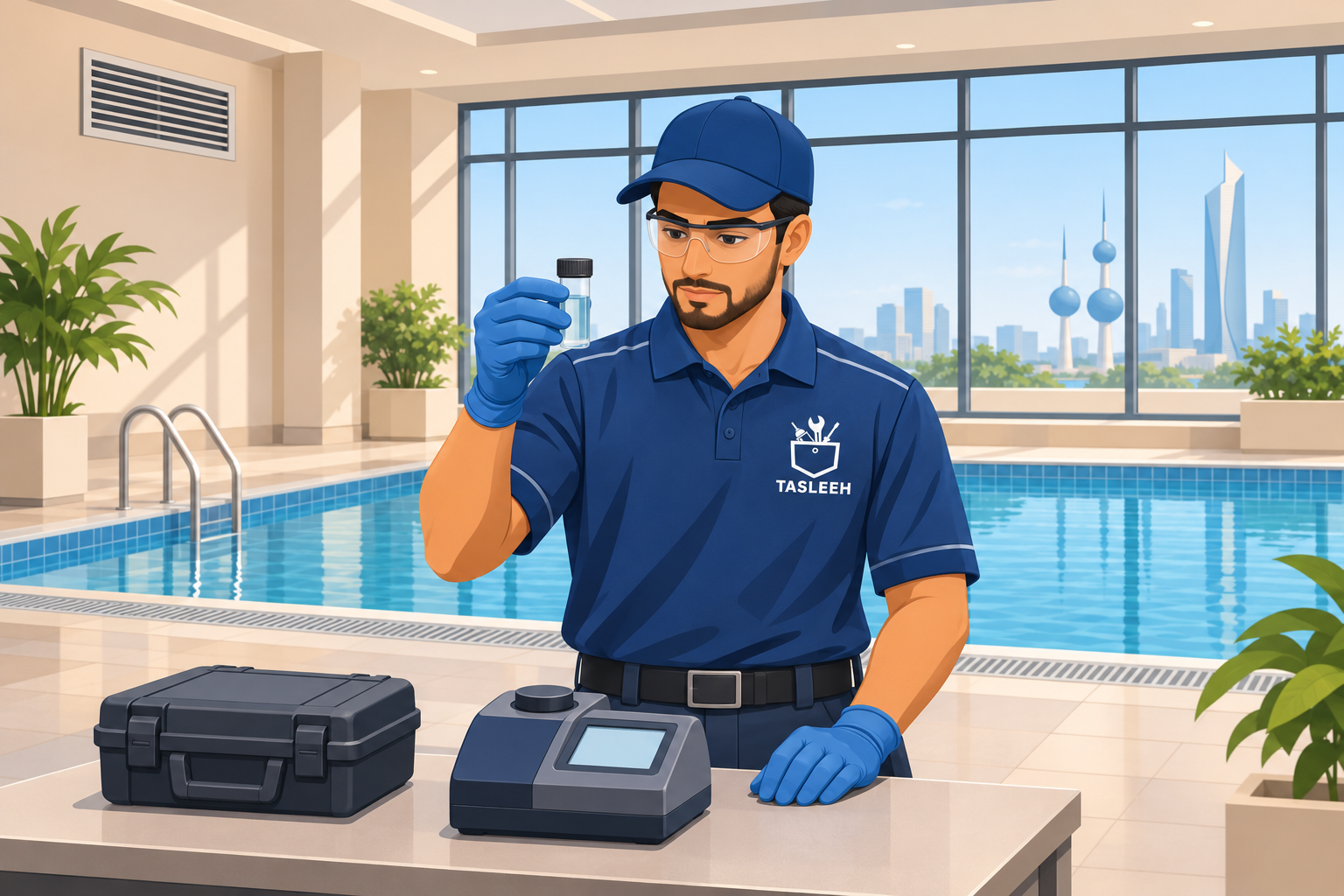
You reach the pool and notice a sharp chlorine-like smell before you get in. Stay out of the water and tell the person responsible for the pool. That smell can come from chloramines, which form when chlorine reacts with sweat, dirt and other material brought in by swimmers. The smell alone cannot tell you how much disinfectant is available.
For a villa or shared building pool in Kuwait, ask for water checks and, if the pool is indoors, an assessment of the air around it. Avoid adding a chemical or swimming a few lengths to see whether the smell bothers you.
Ask what the chlorine readings actually measure
If the service note says "chlorine checked", ask which reading was taken. Free chlorine is the form available to disinfect the water. Total chlorine includes free and combined chlorine. The difference between total and free gives the combined chlorine reading, which includes chloramines.
NSW Health's chloramine guide explains those distinctions. Ask the operator to record the actual free and total readings, their units, the time and the pH (acidity) result. Keep them with the pool's service record so the provider can review what was measured.
A strong smell does not give you those numbers. Tell the provider if a product was added recently, and give its name and the time it was added if you already know them. Leave the dose and any corrective treatment to the competent person managing the pool. A result from another pool or a general online recipe cannot establish what yours needs.
Include the air around an indoor pool
Chloramines can leave the water and collect in the surrounding air. An indoor pool may need its ventilation assessed as well as its water. Ask how the system brings in fresh air and removes air from the swimming area, even if the room feels cool.
The CDC's pool-operation guidance explains that removing humidity does not necessarily provide enough fresh air or remove enough chloramine-polluted air. Ask management whether the air-handling system is part of the assessment. Leave changes to controls, ducts and equipment to the responsible technical team.
Describe where you noticed the smell, such as beside the water or at the entrance. Say whether it appeared after a busy session or a change you know about. These observations help the team investigate; they do not confirm the cause.
Report irritation and a sudden chemical incident promptly
The CDC's swimmer guidance advises reporting chemical odours or eye, skin or respiratory irritation to the lifeguard or operator immediately. If the air is irritating, move away from the water into fresh air. Seek medical attention immediately for trouble breathing, wheezing, chest tightness or persistent eye or skin discomfort, as advised by Poison Control's chlorine-safety guidance.
If a sharp smell appears suddenly during chemical handling, leave the affected area and alert staff. Do not assume every odour is ordinary chloramines. Avoid entering the chemical store or opening containers to track it down. The National Pesticide Information Center's pool-chemical guidance warns that mixing products can release dangerous gases or cause fires. Do not add bleach, acid or another pool product on guesswork.
Agree who will check the pool before it reopens
Send the operator a short account of the time, location, recent use and any irritation reported. Include the latest service record if you have it. If you manage a shared pool, identify who will arrange the checks and update residents. Keep swimmers out while the concern is assessed.
Ask what was checked, what action was taken and what instructions apply before swimming resumes. A weaker smell alone does not establish that the pool is ready. After chemical treatment, testing and the responsible operator's instructions determine when the pool can be used again; there is no waiting time you can safely choose from the smell.
Once normal use resumes, showering before entering and using the toilet first help reduce material that contributes to chloramine formation. The pool-care basics cover the wider routine. For an assessment request, share your notes with Tasleeh's pool maintenance service. Confirm address coverage and the water-care scope, and ask separately whether indoor ventilation needs another specialist.