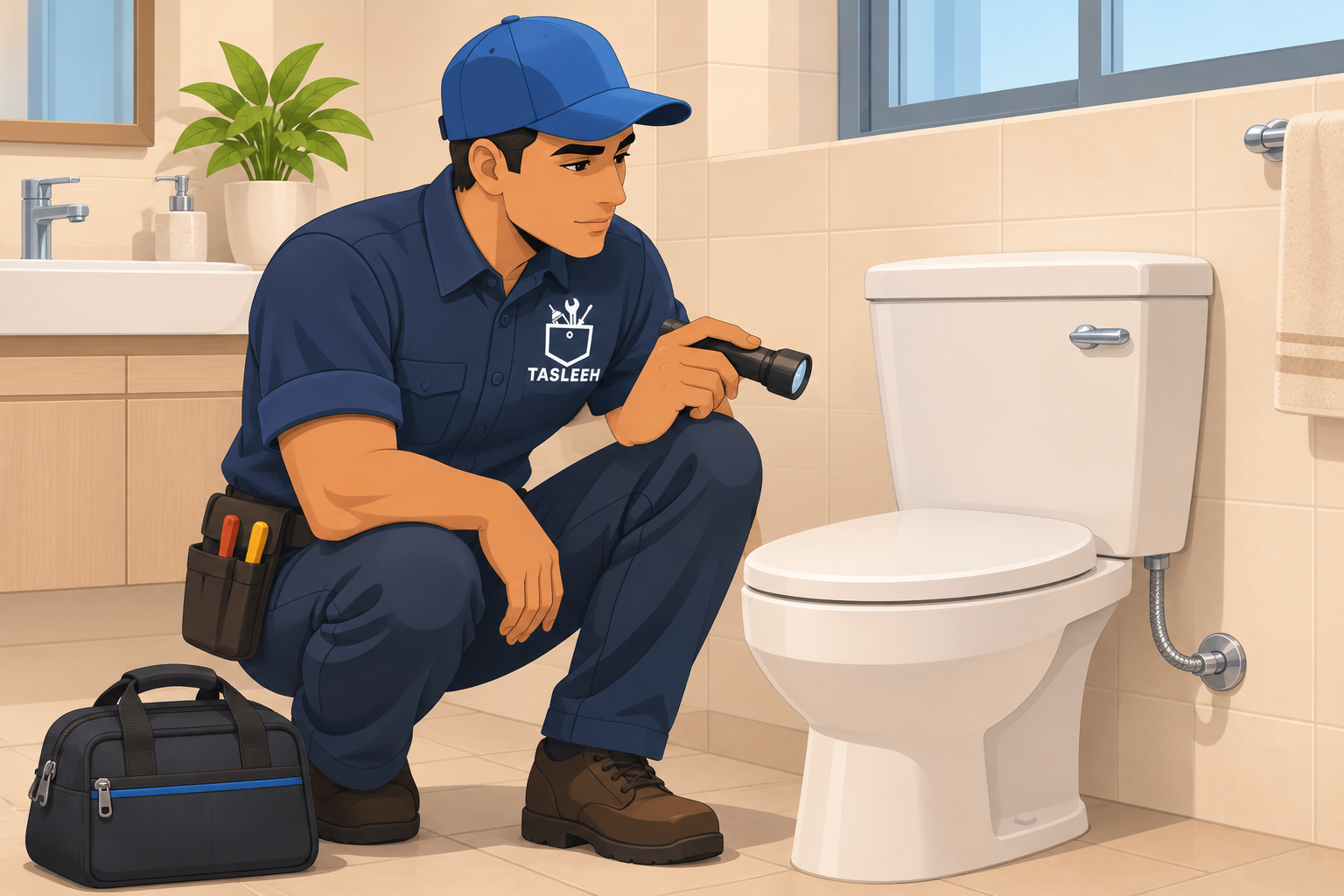
You hear the toilet fill for a few seconds, even though nobody has used it. The fill valve may be topping up the cistern after some water slipped into the bowl. The cistern is the tank that holds water for the next flush. Wait for the usual refill to stop. If the sound starts again, look for a trickle in the bowl even when the tiles are dry.
Listen after the normal refill has stopped
After one normal flush, wait for the refill sound to stop. Leave the toilet unused and listen for another short burst. Note whether it starts and stops, or whether the water seems to run continuously. Report which pattern you heard. A technician still needs to check what is causing it. If several bathrooms are close together, listen beside each toilet. A hiss through the wall can sound closer than it is.
Look for a thin trickle down the back of the bowl or ripples when nobody has flushed. The sound may come and go while the trickle is hard to see. Kohler’s guidance for one- and two-piece toilets explains how the fill valve can reopen when the level drops. The flush seal may be worn or the flushing mechanism may be sticking. The guide also describes water entering the overflow. Those faults can sound alike from the doorway.
Use the colour test only if the cistern is easy to reach
For a conventional toilet with a safely removable tank lid, check the manufacturer’s instructions first. If the lid is fixed, heavy or awkward to lift, leave it alone. Skip the test if there is cleaner in the tank. If you can safely lift the lid, set it down flat on a stable surface where it cannot fall. Leave the float and other parts where they are.
With the toilet unused and the tank filled, add a couple of drops of food colouring to the cistern water. Wait 10 minutes without flushing. If the colour appears in the bowl, water moved from the tank to the bowl during the test. That result is useful even when the floor is dry. Identifying the part takes a separate check. Flush afterwards to help prevent staining, as advised by the US EPA’s WaterSense toilet guidance.
If the bowl stays clear and you hear the refill again later, report both observations. A leak that comes and goes may stay quiet for the whole check. There is no need to keep adding dye or run a series of flushes just to make the sound happen.
Leave a concealed tank closed and report external water
If your toilet has a wall-mounted flush plate and a concealed cistern, skip the tank test. Look at the bowl and listen from outside. A photo of the flush plate or a model name you already have can help a technician identify the design. Keep the plate and wall intact. If the label is out of sight, describe the fixture as you see it. Leave a stiff valve alone.
Water pooling at the base of the toilet, dripping from a visible connection or marking the wall deserves prompt attention. It may be a separate problem. Tell your building manager or plumber where you found it and whether it is spreading. Stay off wet tiles and avoid further flushing if the bowl is backing up. Take a photo only from a dry, stable spot.
Tell the plumber what happened between flushes
Include the bathroom location, whether the cistern is exposed or concealed, and whether you heard one short refill or repeated bursts. Add any visible trickle, colour-test result or water outside the fixture. If the sound stops before the visit, a short recording can show how it starts and how long it lasts. Record from a dry spot. If the noise began after recent work on the toilet, mention what changed. In a managed building, find out who can give the plumber access before the visit. The guide to preparing for a plumbing visit covers access and other details worth having ready.
For a refill that keeps returning, send those observations with a Tasleeh plumbing request in Kuwait. Ask the technician to explain what they found and confirm the scope before any repair or replacement.