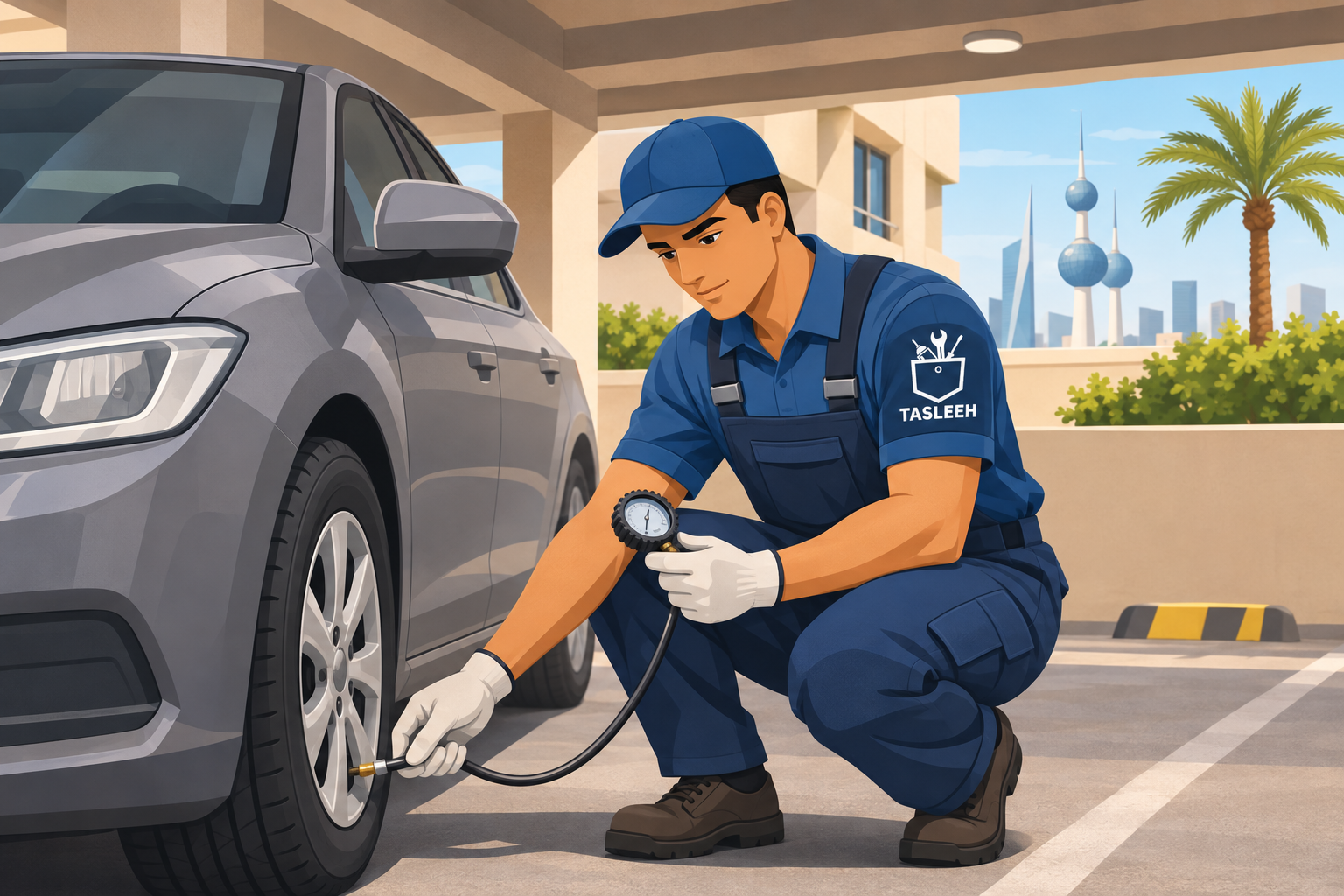
The tyre-pressure light comes on as you leave home, then disappears later. Check the tyres even if the dashboard looks normal again. A cooler morning can lower the pressure enough to trigger a warning, but a change in temperature does not rule out damage or an air leak.
For a car parked overnight at a Kuwait home or office, inspect safely and measure against the vehicle's instructions. Check the pressure before using reset, even if warming the tyres makes the warning disappear.
Deal with visible damage before taking a reading
If the warning appears while driving, move to a safe stopping place and check the tyres when it is safe to approach them. Keep away from moving traffic. If a tyre looks flat or damaged, or you suspect a puncture or significant pressure loss, do not continue the journey to see whether the light goes out. Arrange appropriate assistance.
Michelin's flat-tyre guidance warns against driving on a flat and reinflating a damaged tyre before professional assessment. A pressure top-up is not a repair for damage. Avoid removing an embedded object or attempting a roadside repair yourself.
Use the vehicle's cold-pressure recommendation
A tyre can be low without looking obviously soft. If there is no sign of damage and you can check safely, use a reliable gauge or ask a competent provider to measure all four tyres. Record which wheel each reading belongs to.
Michelin's pressure-checking instructions recommend checking before driving or after the car has been parked for at least three hours. Compare the reading with the vehicle's door label or owner's manual, not the figure on the tyre's sidewall. Check the required units and any different front, rear or load settings in your own instructions.
There is no single pressure number for every Kuwait car. Ask for help if the label is unreadable, the fitted tyres differ from the approved specification or you cannot interpret the instructions. The number used on another vehicle may be unsuitable for yours.
A light that goes out still deserves a check
Bridgestone explains that changing temperatures can switch the warning on and off when pressure sits near the alert level. An overnight drop followed by warmer conditions can produce that pattern. It does not tell you whether there is also an air leak.
Do not release air from a warm tyre simply to make its reading match a cold-pressure figure. Michelin's checking guidance explains that driving raises tyre pressure. Tell the person measuring it whether the car has just been driven, and follow the vehicle's instructions for the situation.
Check the manual before using reset
Different vehicles confirm corrected pressures in different ways. Toyota's TPMS guidance, for example, describes both automatic clearing and model-specific manual procedures. Use the instructions for your own model after the tyres have been checked and any required correction completed. Do not borrow a reset sequence from a different car.
A flashing warning followed by steady illumination can indicate a monitoring-system fault. Michelin distinguishes this pattern from a steady low-pressure alert. Read the displayed message and the handbook. A suspected sensor fault does not prove that the actual pressures are correct.
Give the workshop the readings and the pattern
If the same tyre loses pressure again, or the warning persists after the specified checks, arrange assessment. Include these details in the request:
- Vehicle make, model, year and the exact dashboard message.
- Whether the light stays on, flashes first or disappears later.
- Each measured pressure, its units and whether the tyres were cold.
- Recent tyre or wheel work, an impact or an earlier pressure correction.
If you have a recent tyre-work receipt, keep it with the readings. Ask the provider to explain what was found, whether any tyre or valve work is needed, and whether a separate monitoring-system check is required. Agree the work and cost before authorizing an addition.
For a shared family or company car, ask the other drivers what they noticed. Photograph the message only while safely parked. If a trip is approaching, address the warning before departure alongside the broader vehicle checks before travel.
For an assessment request, see Tasleeh's car-maintenance service and share the readings and warning history. Confirm address coverage, the required tyre or TPMS work and available timing before booking; do not assume every provider handles every system.