
Commercial AC Maintenance Guide for Kuwait Buildings
Use this commercial AC maintenance guide to spot warning signs, plan service visits, and protect comfort, equipment life, and business operations in Kuwait.
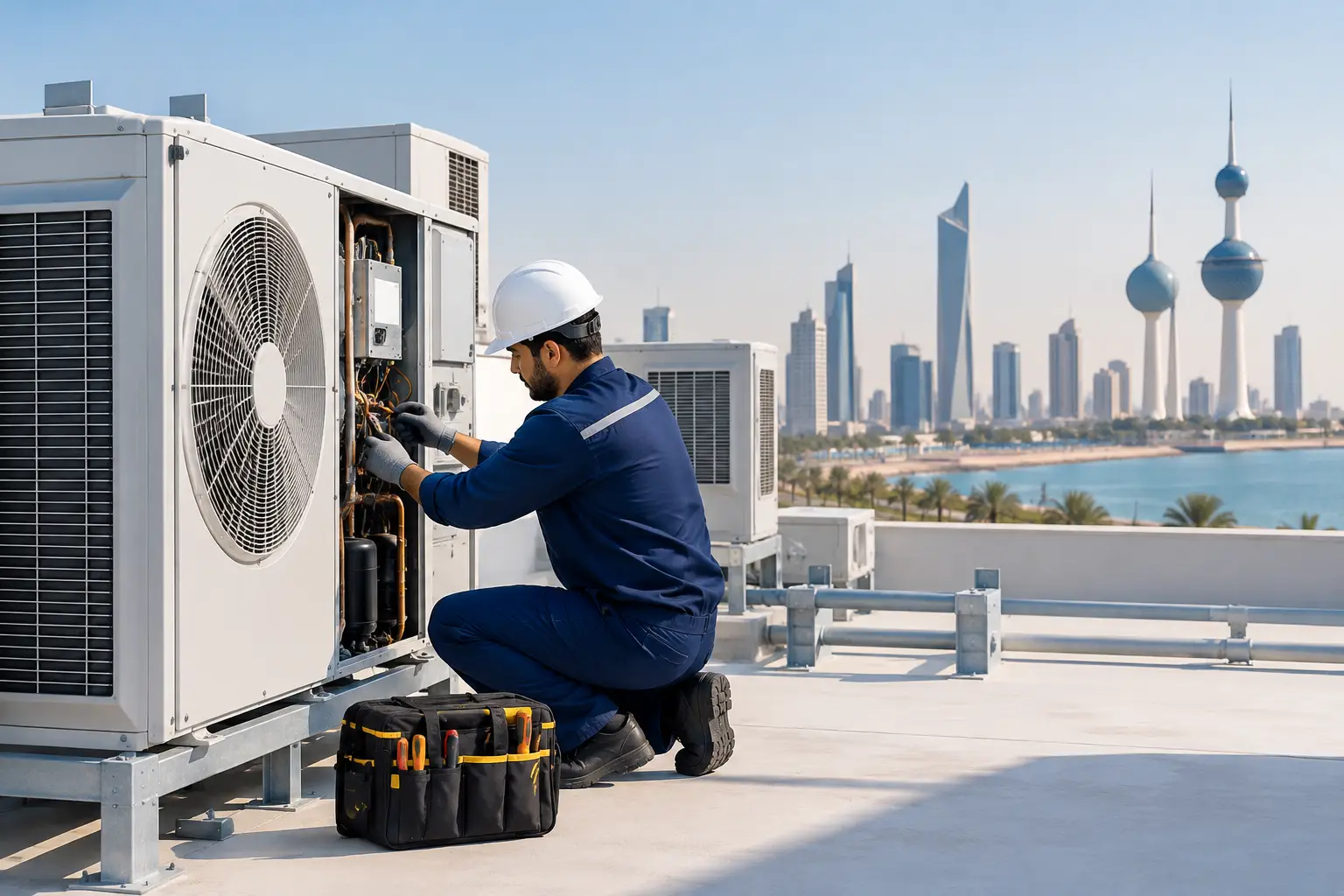
A commercial AC system rarely fails without warning. In offices, shops, clinics, and residential buildings, the early signs are usually easy to overlook: one area feels warmer than the rest, airflow has weakened, humidity is rising, or the unit is running longer than usual. This commercial AC maintenance guide explains what building managers and business owners should watch for, what professional service should cover, and how to plan maintenance around Kuwait’s demanding climate.
Why Commercial AC Maintenance Matters in Kuwait
Air conditioning is not just a comfort system in a commercial property. It affects staff productivity, customer experience, equipment conditions, indoor air quality, and the daily operation of the space. A warm reception area, humid office, or poorly cooled retail floor can quickly become a business issue.
Kuwait’s long hot season puts sustained pressure on AC equipment. Dust, high outdoor temperatures, and extended operating hours can reduce cooling efficiency faster than many owners expect. Systems that appear to be working may still be consuming more electricity, struggling to reach the set temperature, or placing extra strain on major components.
Routine maintenance helps identify developing issues before they become a shutdown, leak, or urgent repair. It also gives property teams a clearer record of the system’s condition, which is useful when managing multiple units, tenant spaces, or a larger building.
Warning Signs That Need Professional Attention
A commercial system does not need to stop completely before it needs service. Request an inspection when cooling performance changes, particularly if the issue affects only certain rooms or zones. Uneven temperatures can point to airflow restrictions, thermostat issues, blocked drainage, duct concerns, or a problem within the unit itself.
Water around an indoor unit, ceiling stain, or repeated drain overflow should also be addressed promptly. Condensate drainage is a normal part of AC operation, but blocked drain lines can cause water damage and disrupt business areas. Do not attempt to open the unit or clear internal parts yourself. A qualified HVAC technician should assess the source of the problem and confirm that drainage is working correctly.
Other signs include unusual noise, persistent odors when the AC starts, frequent thermostat adjustments, weak airflow, or a noticeable increase in operating time. Electrical concerns, such as tripping breakers or a unit that repeatedly turns on and off, require immediate professional assessment. Do not continue resetting equipment to keep it running.
What a Commercial AC Maintenance Visit Should Cover
The right maintenance scope depends on the system type, unit age, occupancy, operating hours, and the condition of the property. A small office with split units has different needs from a retail space with multiple zones or a building using centralized equipment.
A professional visit typically begins with a practical review of cooling performance and the concerns reported by the site contact. The technician should inspect accessible indoor and outdoor components, check airflow and temperature response, assess filters and drainage, and look for visible signs of wear, dirt buildup, vibration, or water leakage.
Filter condition is particularly important in commercial spaces. Dirty filters restrict airflow and make the system work harder. In dusty locations or busy premises with doors opening frequently, filters may need attention more often than a lightly used office. The correct interval depends on site conditions, not a one-size-fits-all schedule.
Technicians may also inspect electrical connections, controls, insulation, fan operation, coils, and refrigerant-related performance where appropriate. These checks help identify issues that cannot be confirmed by looking at the thermostat alone. If a repair or replacement is needed, the service provider should explain the finding, the affected area, and the recommended next step before work proceeds.
For larger properties, maintenance should include clear reporting. Building managers need to know which units were serviced, what condition they are in, any faults found, and whether follow-up work is recommended. This makes it easier to prioritize repairs and avoid losing track of recurring problems in the same area.
How Often Should Commercial AC Be Serviced?
For many commercial properties in Kuwait, AC maintenance should be planned before the heaviest cooling period and continued during periods of high use. The ideal frequency depends on how hard the system works.
An office that operates standard daytime hours may need a different schedule from a restaurant, retail unit, clinic, server room, or building with continuous occupancy. High-traffic spaces, units near dusty outdoor areas, and systems running for long hours usually benefit from more frequent checks.
Rather than waiting for a fixed annual date, consider the property’s operating pattern. Maintenance before summer helps prepare equipment for sustained demand. Mid-season inspections can catch performance decline before it affects occupants. A post-season review may also be useful if the system has experienced heavy use or recurring issues.
If your property has several units, create an equipment list showing each unit’s location, model details where available, past maintenance dates, and reported faults. This simple record helps identify patterns, such as one floor repeatedly losing cooling or a particular unit requiring frequent attention.
Common Maintenance Gaps in Commercial Buildings
The most common gap is reactive servicing: waiting until a unit stops cooling and then arranging urgent work. This may be unavoidable in some cases, but it is not an efficient long-term approach. Emergency faults often occur during the hottest periods, when a cooling interruption is most disruptive.
Another gap is treating every complaint as a single-unit problem. If several areas are warm, the cause may involve building usage, controls, airflow, or a wider system issue. A proper inspection should consider the pattern, not just the closest indoor unit.
Some properties also neglect outdoor equipment because it is out of sight. Outdoor units need clear airflow and should not be obstructed by stored items, construction debris, or landscaping growth. Site teams can report visible obstructions, but technical cleaning, electrical work, and component inspection should be handled by trained HVAC professionals.
Finally, maintenance records are often incomplete. When a different person manages the property each year, past repairs and recurring faults can be lost. Clear service documentation supports better decisions and reduces unnecessary repeat visits.
Preparing Your Site for an AC Service Visit
A few practical steps can help a maintenance visit run smoothly. Give the technician access to the affected rooms, ceiling access points where applicable, indoor units, outdoor equipment areas, and electrical panels if required. Let staff know when work is planned, especially if the property includes customers, patients, tenants, or sensitive equipment.
It also helps to share specific observations. Note when the problem occurs, which areas are affected, whether it is worse at certain times of day, and whether there has been water leakage, noise, or an odor. This information can shorten diagnosis and help the technician focus on the likely cause.
For occupied commercial premises, schedule work with business continuity in mind. Some tasks may be completed with minimal disruption, while deeper cleaning, repairs, or work on a major unit may require timing outside busy hours. The right approach depends on the system and the nature of the work.
Choosing a Managed HVAC Service
Commercial AC maintenance needs more than a general callout. The provider should be able to define the service scope, communicate clearly about findings, and manage follow-up work when a fault is discovered. This is particularly important for landlords, building managers, and businesses responsible for multiple occupants.
Tasleeh provides managed HVAC support as part of its MEP Maintenance Services Kuwait, with a focus on clear service scopes and organized customer communication. When requesting service, describe the property type, the number of affected areas, the symptoms, and whether the issue is reducing operations or causing water leakage. This helps ensure the visit is planned around the actual need.
A well-maintained AC system should not be invisible until it fails. Regular checks, clear reporting, and timely action on early warning signs can help keep commercial spaces comfortable through Kuwait’s busiest cooling months. If your building is showing reduced cooling, uneven temperatures, leaks, or persistent noise, request a professional AC maintenance assessment before the issue becomes more disruptive.