
Cooling Service Warning Signs You Should Not Ignore
Spot cooling service warning signs early, from weak airflow to leaks and high bills. Know when Kuwait homes and businesses need HVAC attention promptly.
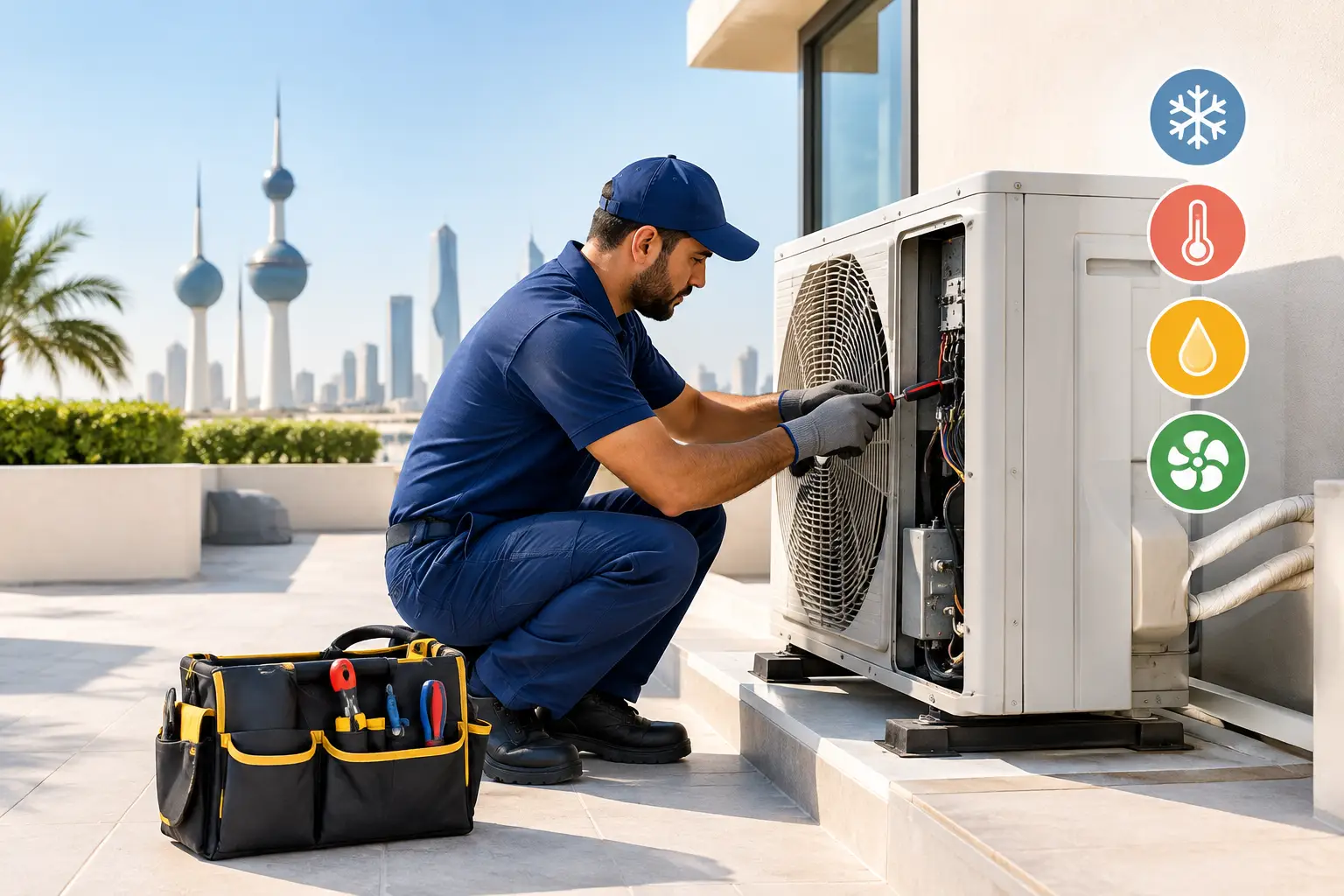
A Kuwait summer can expose an air-conditioning problem quickly. A system that was only slightly underperforming in mild weather may struggle to keep a bedroom, office, or retail space comfortable once outdoor temperatures rise. Recognizing cooling service warning signs early helps prevent a small performance issue from becoming an uncomfortable breakdown, water damage concern, or disruption to daily operations.
Air conditioning systems do not always fail without notice. Changes in airflow, cooling time, noise, moisture, or energy use often point to a problem that needs professional attention. For homes, villas, apartments, offices, and commercial spaces, the right next step is to arrange an HVAC assessment rather than waiting for the unit to stop working completely.
Cooling Service Warning Signs to Watch For
Rooms that stay warm or cool unevenly
If the AC runs for a long time but the room never reaches a comfortable temperature, the system may not be cooling effectively. You may also notice that one room is cool while another remains warm, even with doors and windows closed.
Uneven cooling can have several causes. Airflow may be restricted, controls may not be operating correctly, or part of the cooling system may need attention. In larger villas, offices, and buildings with several units or zones, an issue in one area can affect comfort throughout the property. A professional inspection can identify whether the concern is isolated to one unit, a thermostat, air distribution, or a wider system issue.
Weak airflow from vents
Cool air needs to move through the space properly. If the air coming from vents feels weak, even when the system is operating, the unit may be working harder than necessary without delivering enough cooling.
Weak airflow is often noticed first in bedrooms, upper floors, meeting rooms, or areas furthest from the indoor unit. It can also make a room feel humid or stuffy. Avoid opening equipment, removing panels, or attempting internal repairs. HVAC components require safe handling and the cause is not always visible from the outside.
Warm air when cooling is selected
An AC that blows room-temperature or warm air should be checked, particularly when this happens consistently rather than for a brief moment after switching it on. The issue may be related to cooling performance, system controls, or another component that needs diagnosis.
Before requesting service, you can simply confirm that the thermostat is set to cooling and that the temperature setting is lower than the current room temperature. If the problem continues, arrange a qualified HVAC visit. Repeatedly switching the system off and on or changing settings aggressively is unlikely to solve a mechanical fault.
Water dripping, stains, or moisture near the unit
Water around an indoor AC unit is not something to ignore. Drips from the unit, damp ceiling areas, wall stains, or water collecting below a vent can indicate a drainage or condensation issue. In apartments and offices, moisture can also affect finishes, furniture, documents, and neighboring spaces if it is left unresolved.
Turn the unit off if water is reaching electrical outlets, switches, or other electrical equipment, and keep the area clear. Do not attempt to open drain lines or access internal electrical parts. A technician can inspect the unit, drainage path, and surrounding components to find the source safely.
New noises during operation
Most air-conditioning systems make some ordinary operating noise. What should raise concern is a new, repeated, or unusually loud sound. Rattling, grinding, buzzing, banging, or sharp clicking can indicate that a part is loose, worn, or not operating as it should.
The timing of the sound matters. A noise at startup may point to a different issue than one that occurs continuously while the system is cooling. Note which unit is affected, when the sound happens, and whether cooling performance has changed. This information helps the service team assess the issue more efficiently.
Unusual smells from the AC
A musty smell may suggest moisture or cleanliness concerns within the system. A burning smell, electrical odor, or smoke requires more urgent attention. Switch the AC off, avoid using the affected unit, and request professional HVAC support.
Smells can travel through a room quickly, so the source is not always obvious. It may be tempting to mask the odor with sprays or fragrances, but that does not address the underlying issue. A proper inspection is the safer approach, especially in occupied offices, shops, and family homes.
Higher electricity use without a clear reason
Cooling costs often rise during Kuwait's hottest months because systems operate for longer. However, a clear increase in electricity use without changes in occupancy, operating hours, or thermostat settings can be a sign that the AC is losing efficiency.
The system may be running longer to reach the same temperature, or it may be cycling on and off more frequently than usual. This does not automatically mean major replacement work is needed. It does mean the unit should be assessed before the added strain leads to a more serious fault.
When a Cooling Issue Needs Prompt Service
Some warning signs allow time for a scheduled assessment. Others should be treated as a priority because they can affect safety, property condition, or business continuity. Request HVAC service promptly if you notice water near electrical connections, a burning odor, smoke, frequent tripping of a related electrical circuit, or a complete loss of cooling during very hot weather.
For a commercial property, the decision also depends on what the space supports. A warm storeroom may be inconvenient, while poor cooling in a customer-facing retail area, occupied office, server room, or regularly used clinic space can affect operations more quickly. Building managers should report the location of the affected area, the number of units involved, and whether the issue is ongoing or intermittent.
What Professional Cooling Service Covers
Cooling service is not limited to making a unit feel colder for the day. A proper HVAC visit begins with identifying the reported symptom and checking the relevant parts of the system. Depending on the issue, the technician may assess cooling output, airflow, controls, drainage, electrical connections, and visible condition of the equipment.
The scope should match the problem. A unit with poor airflow may need a different assessment from one that is leaking water or making noise. For properties with multiple AC units, the service team can also help determine whether the concern is limited to a specific room or affects a wider cooling setup.
Tasleeh provides managed HVAC support as part of its MEP Maintenance Services Kuwait offering. Clear communication matters here: customers should understand the reported issue, the work needed, and any recommended follow-up before decisions are made.
Do Not Wait for a Full Breakdown
Waiting is understandable when the AC is still producing some cool air. But partial cooling, intermittent faults, and small leaks rarely become easier to manage during peak heat. Early service can reduce disruption and help protect the condition of the property.
If your cooling system is showing any of these warning signs, submit a service request with a short description of what you have noticed. Include the unit location, when the problem began, and whether there is leaking, unusual noise, or a complete loss of cooling. That gives the HVAC team a clearer starting point and helps move the issue toward a practical resolution.