
Common Bathroom Drainage Problems in Kuwait
Learn about common bathroom drainage problems in Kuwait, warning signs, likely causes, and when to request professional plumbing service for your property.
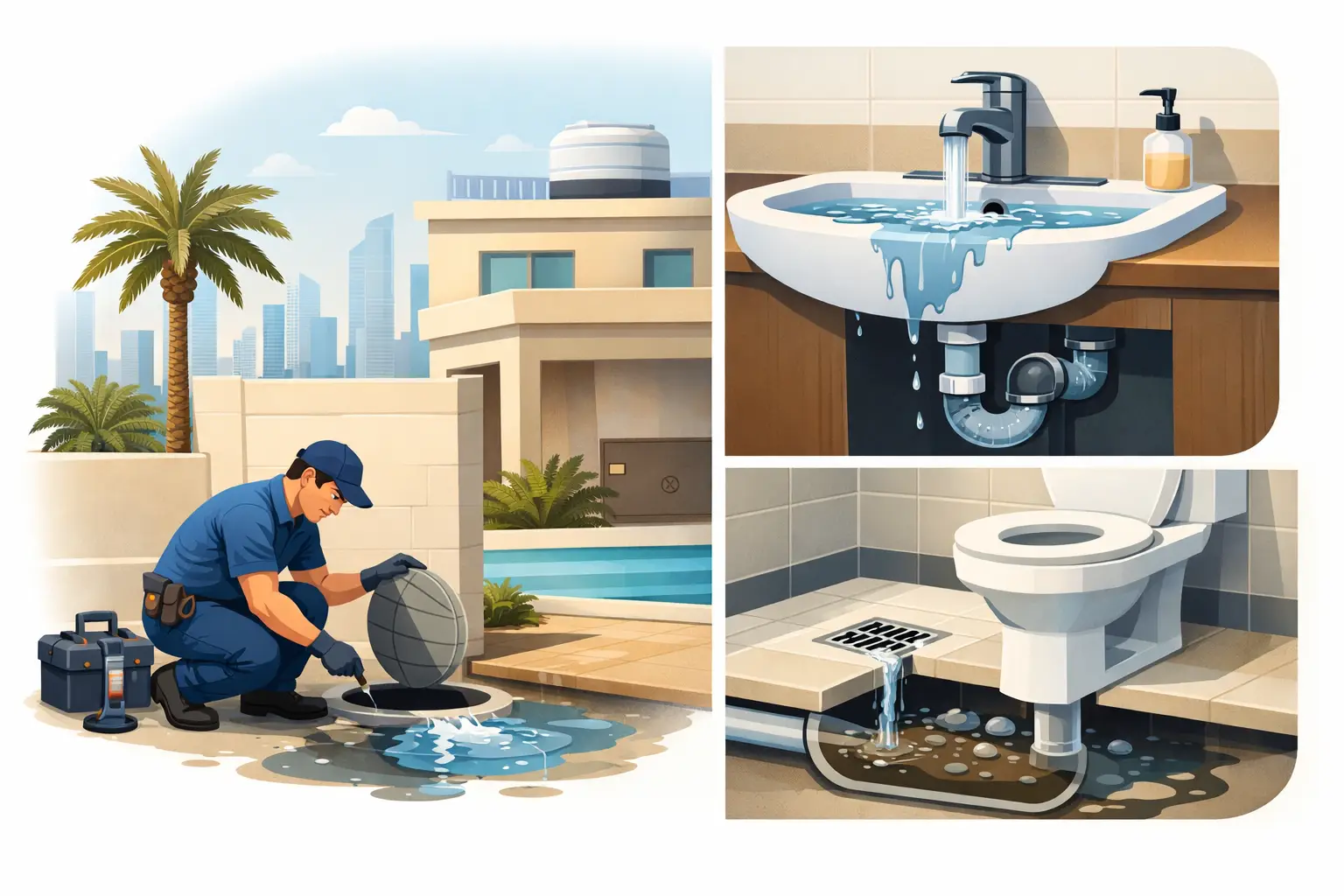
A shower that fills around your feet, a sink that drains slowly, or a floor drain that produces an unpleasant smell can quickly make a bathroom difficult to use. Common bathroom drainage problems often start small, but in apartments, villas, offices, and commercial buildings, a delayed repair can lead to leaks, water damage, hygiene concerns, or disruption for occupants.
Bathroom drainage is not limited to the visible drain opening. It includes the fixture trap, connected waste pipe, floor drain, venting arrangement, and, in many properties, a larger shared drainage line. Identifying whether the issue is isolated to one fixture or affects several bathrooms helps determine the appropriate plumbing service.
Common Bathroom Drainage Problems and Their Causes
Slow-draining sinks and showers
A bathroom sink or shower that drains slowly is usually dealing with a partial blockage. Hair, soap residue, toothpaste, shaving products, and skin oils can build up inside the trap and pipe over time. In Kuwait, mineral deposits from water can also contribute to narrowing inside fixtures and pipework, especially where regular cleaning and maintenance have been delayed.
A slow drain may seem manageable at first, but it tends to worsen as more debris collects. Standing water around a shower drain can leave surfaces slippery and make cleaning harder. In a sink, slow drainage may be followed by gurgling sounds or an odor as material remains in the pipe.
The cause is not always directly below the fixture. If more than one bathroom fitting drains slowly, the restriction may be farther along the branch line or within a shared drainage system. A professional inspection is the sensible next step rather than repeatedly relying on chemical drain products, which may damage older pipework or fail to clear the underlying blockage.
Frequent floor drain odors
A bathroom floor drain should allow wastewater to leave without allowing sewer gases back into the room. An unpleasant smell often means that the water seal in the drain trap has dried out, particularly in guest bathrooms, vacant apartments, storage areas, or bathrooms that are used infrequently. Kuwait's hot, dry conditions can make this more noticeable in unused spaces.
Odor can also point to a dirty drain cover, accumulated residue in the trap, a damaged seal, poor drainage flow, or an issue in the building's drainage line. If the smell returns soon after routine cleaning, it should not be treated as a cosmetic issue. Persistent odors can affect comfort in a home or workplace and may indicate that the drainage system needs assessment.
A plumbing technician can check the drain, trap, connecting pipe, and surrounding fittings to identify whether the issue is local or connected to a wider drainage problem. This is particularly useful in buildings where several units report similar odors.
Water backing up from a drain
Water backing up through a shower drain, floor drain, or sink is more urgent than a slow drain. It means wastewater cannot move through the line as intended and is being forced back toward the lowest available outlet. The water may be discolored, carry debris, or appear when another fixture is used.
A local blockage may cause backup in one bathroom. However, water appearing in a floor drain when a toilet is flushed or when another bathroom is in use can indicate a blockage farther down the pipework. In apartment buildings and commercial properties, the issue may involve a shared line and require coordinated action to prevent water from reaching neighboring spaces.
Avoid using the affected fixtures until the drainage issue has been checked, especially if wastewater is rising from the floor drain. Continued use can increase the amount of water entering the bathroom and create a sanitation concern. A qualified plumbing service can locate the blocked section, clear it using appropriate equipment, and inspect for damage or recurring causes.
Gurgling drains and unusual sounds
Gurgling is often a sign that air is struggling to move through the drainage system while water flows. It may happen after a sink empties, when a toilet is flushed, or when a washing machine or another nearby fixture discharges water. The sound can be caused by a partial blockage, restricted ventilation, or pressure changes in a shared drainage line.
One occasional sound does not always mean a major failure. Repeated gurgling, especially when paired with slow draining, odor, or water level changes in a toilet bowl, deserves attention. These symptoms can develop before a complete blockage or backup occurs.
For landlords and building managers, reports of gurgling from more than one unit are worth treating as a building maintenance issue rather than several unrelated tenant complaints. Early inspection can reduce the chance of an inconvenient drainage failure in occupied areas.
Leaks around the toilet, sink, or floor drain
Not all bathroom drainage issues are visible inside a pipe. Water around the base of a toilet, below a vanity, near a shower threshold, or around a floor drain can indicate a loose connection, worn seal, cracked fitting, or drainage overflow. Even a small recurring leak can affect flooring, wall finishes, ceilings below, and nearby electrical points.
The source can be difficult to identify because water may travel along a pipe or beneath tiles before it becomes visible. A puddle near a drain does not always mean the drain itself is leaking. It could be caused by a fixture connection, a failed waterproofing detail, or water backing up during use.
A professional visit should include checking the visible fixtures, drainage connections, flow behavior, and signs of moisture around the affected area. Where the source is not immediately clear, further investigation may be needed before repairs are planned. This avoids replacing a visible part while leaving the actual cause unresolved.
Repeated clogs in the same bathroom
A drain that blocks repeatedly is usually telling you that clearing the surface debris was not enough. The pipe may have a deeper buildup, an incorrect slope, a damaged section, a restriction caused by previous work, or a recurring source of debris entering the drain. In some properties, unsuitable materials flushed into toilets or washed into floor drains create ongoing blockages.
Repeated clogs are especially disruptive in tenant-occupied properties, restaurants, offices, and shared staff facilities because the same issue continues to generate complaints. A proper service assessment looks beyond restoring short-term flow. It considers why the blockage keeps returning and whether the connected pipework needs cleaning, repair, or further inspection.
Why Bathroom Drainage Problems Should Not Be Delayed
Drainage failures rarely stay limited to convenience. Standing water can affect bathroom hygiene and increase slip risks. A hidden leak can damage finishes and create moisture in walls or ceilings. Backups may interrupt the use of a bathroom entirely, while persistent odor can make a property feel poorly maintained even when the room appears clean.
There is also a practical difference between a single fixture issue and a system issue. A slow bathroom sink in one apartment may need localized drain cleaning. Several slow fixtures, backups in a floor drain, or complaints from multiple units may point to a larger drainage line that needs organized maintenance. The right scope depends on the symptoms, the property layout, and whether the pipework is shared.
What a Professional Drainage Service Should Cover
A professional plumbing visit begins with understanding what is happening, when it occurs, and which fixtures are affected. The technician should assess water flow, visible drainage points, accessible traps and connections, and signs of leakage or backup. This helps separate a simple local blockage from a deeper pipe or building-line concern.
The work may involve clearing a blockage, cleaning an accessible drain section, checking seals and connections, or identifying the need for further drainage investigation. For property managers, clear communication matters as much as the repair itself. Occupants need to know whether they should avoid a fixture, whether access to another area is required, and whether the issue is confined to one bathroom or connected to the building system.
Tasleeh provides managed plumbing maintenance as part of its MEP Maintenance Services Kuwait offering, with defined service scopes and professional support for homes, offices, and commercial properties.
When to Request Plumbing Support
Request professional help promptly if water is backing up, a toilet overflows, wastewater appears from a floor drain, or a leak is reaching walls, ceilings, or adjacent rooms. These symptoms can worsen quickly and may require immediate control of the affected area.
For less urgent concerns, arrange a plumbing inspection when slow drainage keeps returning, odors persist after normal cleaning, drains gurgle regularly, or several fixtures show the same behavior. It is also sensible to act before handing over a rental property, reopening a vacant unit, or preparing a commercial bathroom for heavy use.
A bathroom should drain quietly, stay dry around its fixtures, and remain free from recurring odor. When it does not, treating the first warning sign as a maintenance request is usually far easier than dealing with the damage and disruption that can follow.