
How to Report Electrical Faults in Kuwait
Learn how to report electrical faults safely, what details to share, and when a Kuwait property needs prompt professional electrical maintenance support.
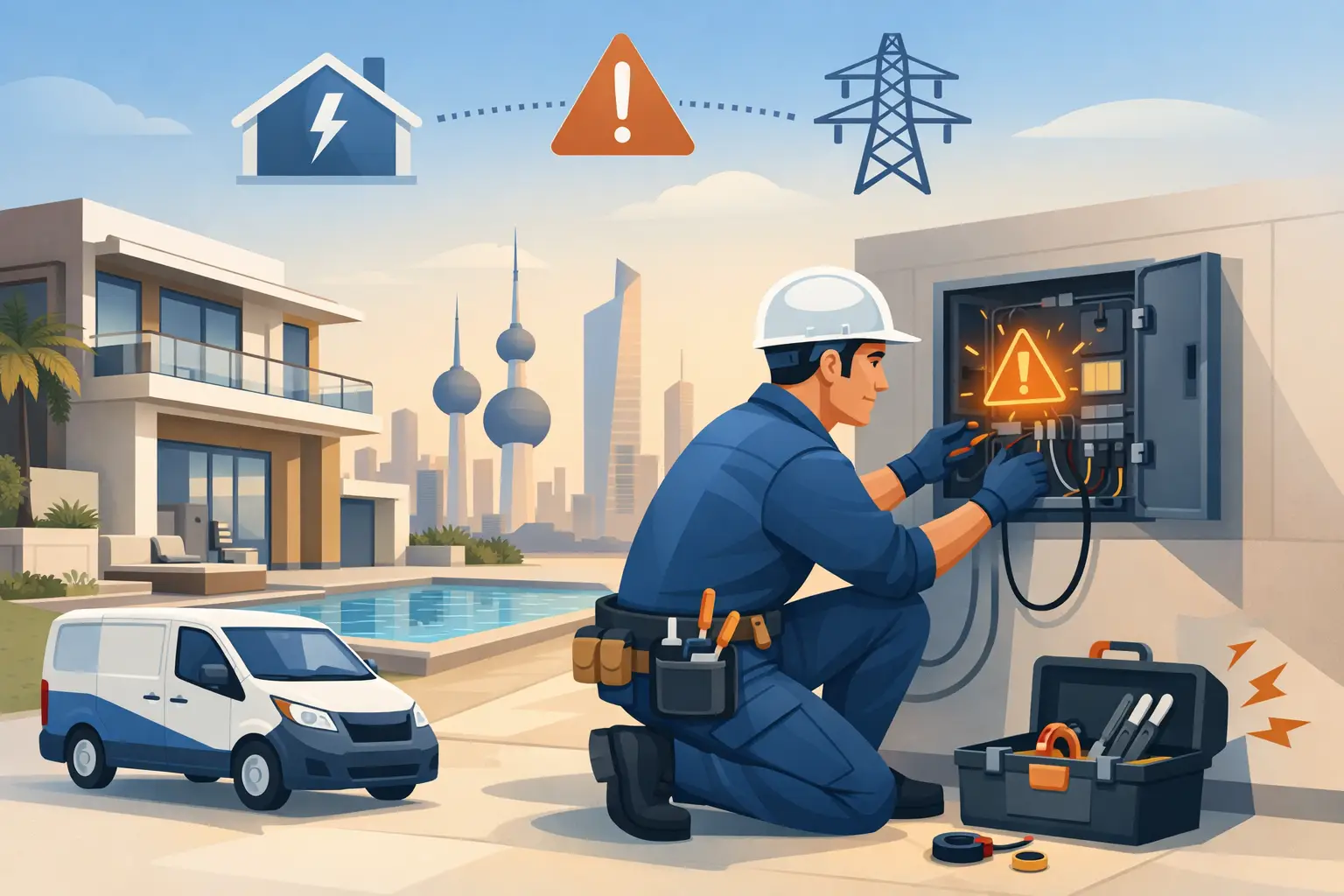
A burning smell near an outlet, lights that flicker when an appliance starts, or a breaker that keeps tripping are not issues to watch for a few days. Knowing how to report electrical faults clearly helps the right maintenance team assess the risk, arrive prepared, and protect the people using the property.
For a villa, apartment, office, shop, or shared building area in Kuwait, an electrical fault can interrupt daily activity quickly. It can also affect air conditioning, refrigeration, lighting, internet equipment, security systems, and other essential services. The right response is to make the area safe, report what you have observed, and leave inspection and repair to a qualified electrical professional.
Start by judging whether the fault is urgent
Some electrical problems need immediate attention because there may be a fire, shock, or damage risk. If you see smoke, sparks, exposed wires, melted outlet covers, or signs of electrical burning, keep people away from the affected area. If it is safe to do so without touching damaged equipment or standing near water, switch off power from the main electrical panel. Then report the issue as urgent.
The same applies when electrical equipment is wet, water is leaking near outlets or wiring, or someone has received an electric shock. Do not touch the person or the electrical source if power may still be live. Contact emergency services where required, and arrange professional electrical inspection before the area is used again.
A repeatedly tripping breaker may not look as serious as a spark or burning smell, but it still deserves prompt attention. The breaker is responding to a problem such as an overloaded circuit, a faulty appliance, damaged wiring, or moisture affecting an electrical connection. Resetting it repeatedly can hide the warning sign rather than resolve the cause.
What to include when reporting an electrical fault
A useful report does not need technical language. Clear, simple observations are more valuable than guesses about what has failed. Start with the property type and exact location: for example, a bedroom outlet in an apartment, a kitchen circuit in a villa, a reception area light fitting, or a common corridor panel in a building.
Explain what happened and when it started. Mention whether the issue is constant or intermittent, and what was in use at the time. A report such as, “The living room lights flicker every evening when the AC starts,” gives more direction than simply saying, “There is an electrical problem.”
Include whether power is fully out, limited to one room, or affecting a particular device. It also helps to identify any visible signs, such as a hot outlet cover, a buzzing sound, a burning odor, dim lights, or a breaker that will not stay on. If it is safe to take a photo from a distance, it may help document visible damage, but do not move covers, open panels, or handle wires to get a better image.
For managed properties, tell the service provider whether the affected area is occupied and whether access requires coordination with a tenant, security desk, facilities contact, or building manager. In offices and retail spaces, report any operational impact, such as loss of lighting in a customer area or interruption to essential equipment. This helps the work be planned around access and safety requirements.
Describe the symptoms, not the diagnosis
Electrical systems can produce similar symptoms for very different reasons. A flickering light could be caused by a loose connection, a failed light fitting, a circuit issue, or a problem with the connected equipment. A breaker trip could result from a single appliance or from wiring that requires further investigation.
For that reason, avoid asking for a specific repair unless a qualified technician has already identified the cause. Report the symptom, location, timing, and impact instead. This allows the electrical team to inspect the system properly and determine the correct scope of work.
This approach is especially useful in older apartments, recently renovated units, and commercial spaces where several systems may share electrical loads. Kuwait’s high cooling demand means electrical circuits can be under greater pressure during periods of heavy AC use. If a fault appears when multiple cooling units, kitchen appliances, or office equipment are operating, mention that pattern in the report.
What not to do while waiting for help
Do not attempt to repair an electrical fault yourself. Replacing outlets, opening distribution boards, reconnecting wires, or removing damaged fittings can create a serious shock or fire risk. Even a small issue can involve hidden damage behind a wall, inside a ceiling, or within a circuit panel.
Avoid plugging more equipment into the affected outlet, using extension cords as a permanent workaround, or continuing to run equipment that causes heat, noise, flickering, or breaker trips. If an appliance seems connected to the problem, stop using it and tell the technician what it is. The appliance may be faulty, but it still needs proper assessment before it is used again.
Do not cover a damaged outlet, tape over a cracked switch, or place rugs, furniture, or storage items in front of an electrical panel. Keep the area accessible for inspection. If children, visitors, or staff could enter the affected area, restrict access until the fault has been checked.
What a professional electrical visit should cover
A qualified electrical service begins with understanding the reported symptoms and inspecting the affected location safely. Depending on the fault, the technician may check the circuit, electrical panel, outlet or switch condition, lighting connection, load behavior, and signs of heat or moisture damage.
The scope depends on what the inspection finds. A localized problem may involve one outlet, light fitting, switch, or appliance connection. A wider issue may require assessment of a circuit, breaker, panel component, or electrical distribution serving several rooms. In a commercial property, the team may also need to coordinate access and minimize disruption to occupied areas.
A clear service process should explain what has been found, what work is needed, and whether any related safety concern needs attention. This matters because electrical faults are not always isolated. For example, a damaged outlet may be the visible symptom, while the underlying issue is a loose connection or overheating within the circuit.
Tasleeh Core Trades provides managed electrical maintenance as part of its MEP Maintenance Services Kuwait offering. The focus is on defined service scopes, qualified execution, and clear communication for homes, offices, and commercial properties.
How tenants, landlords, and building managers should report faults
The person who notices a fault may not be the person responsible for authorizing work, so reporting should be practical and prompt. Tenants should notify the landlord, property manager, or assigned maintenance contact as soon as the issue is noticed, particularly when it involves outlets, breakers, lighting circuits, or shared electrical areas.
Landlords and building managers should record the unit number or area, occupant contact details, reported symptoms, time of report, and any action already taken to make the area safe. If the fault affects common areas, note whether it impacts stairways, corridors, parking, entrances, pumps, security equipment, or other shared facilities.
For businesses, the report should identify whether operations are affected and whether there are access restrictions, customer-facing areas, or critical equipment involved. A professional maintenance provider can then schedule and prepare the visit appropriately, rather than arriving with incomplete information.
When to request electrical maintenance
Request professional electrical maintenance whenever there is a repeated or unexplained electrical issue, even if power returns after a breaker reset. Prompt inspection is appropriate for persistent flickering, warm switches or outlets, unexplained power loss, frequent breaker trips, humming sounds, damaged fittings, or any electrical issue near water.
Electrical faults rarely become easier to diagnose after repeated temporary fixes. A clear report and timely inspection give the technician the information needed to address the real cause, while helping you keep the property safer for everyone who lives, works, or visits there. If you are responsible for the property, submit an electrical service request with the location, symptoms, and urgency so the issue can be assessed properly.