
Villa HVAC Inspection Example: What a Report Covers
See a practical villa HVAC inspection example, including the checks a technician performs, common findings, and what Kuwait homeowners should expect today.
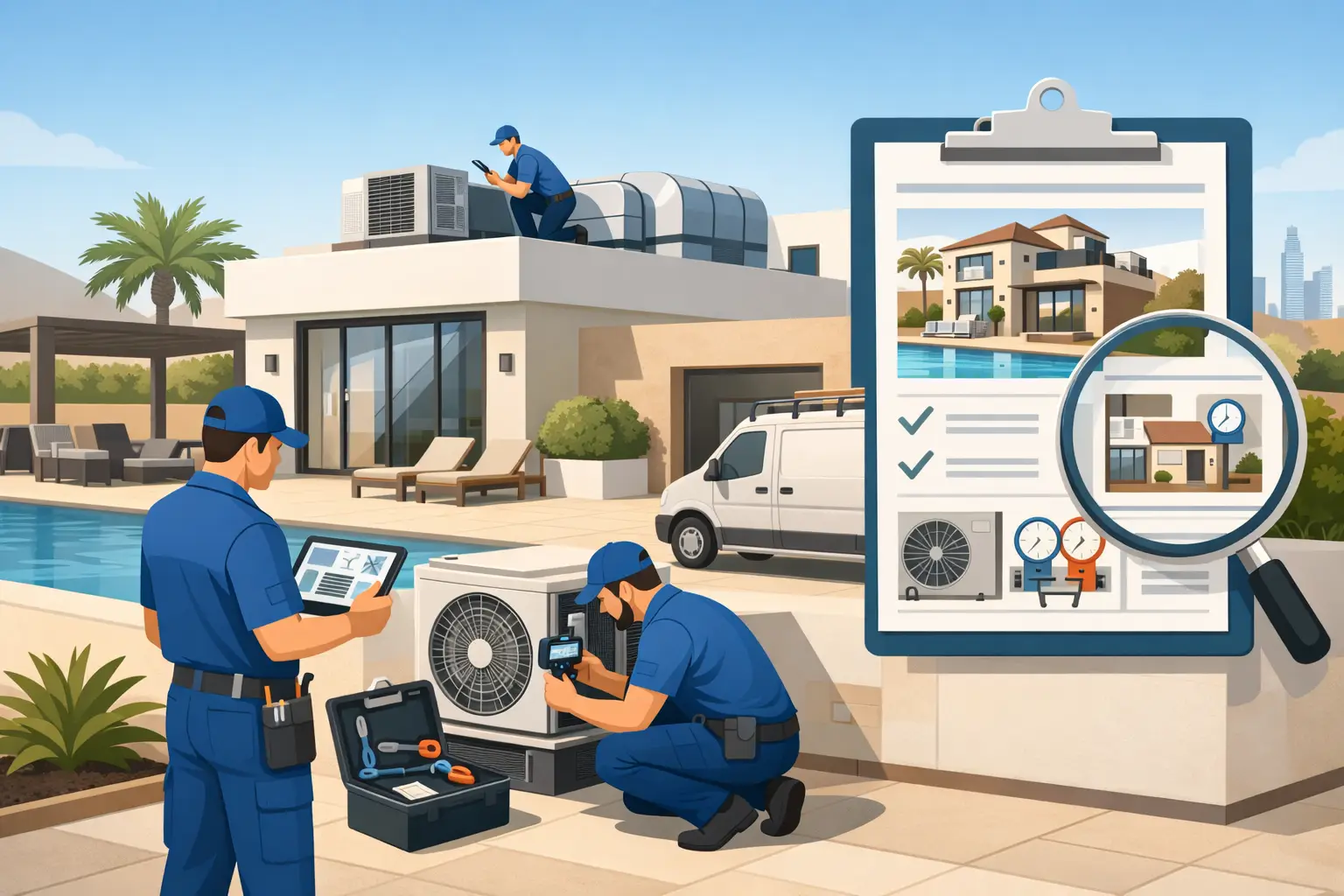
A villa HVAC inspection example is useful because a cooling problem rarely begins with one obvious failure. In Kuwait, a system may still run while using more electricity, cooling rooms unevenly, leaking water, or struggling through the afternoon heat. An organized inspection identifies the condition of the system before a small issue becomes a disruptive repair.
For villa owners, tenants, and property managers, the value is not a long technical report full of unfamiliar terms. It is a clear answer to practical questions: Is the system cooling safely and effectively? What needs attention now? What can be monitored? And what work, if any, should be planned next?
What a Villa HVAC Inspection Usually Covers
A professional HVAC inspection looks at the full cooling setup, not only the indoor unit that appears to be underperforming. Many villas have multiple split units, concealed ducted units, separate thermostat zones, and outdoor condensers located on roofs, balconies, or service areas. Each part affects comfort and system performance.
The visit generally starts with the customer’s observations. A technician may ask which rooms feel warm, whether the issue occurs at specific times, whether there are water marks near vents or ceilings, and whether the system makes unusual sounds. This context helps focus the inspection, especially when one zone has a different problem from the rest of the villa.
The technician then checks indoor units, filters, airflow, drainage, thermostats, electrical connections, and outdoor condenser condition. Cooling performance is assessed through professional measurements rather than guesswork. If a concern is found, the report should distinguish between routine maintenance, a repair recommendation, and an issue that needs further diagnosis.
Villa HVAC Inspection Example: A Typical Report
The following example shows the kind of findings a homeowner might receive after an inspection of a two-story villa with ducted cooling downstairs and split units upstairs.
Property and system overview
The report begins by recording the areas inspected and the equipment serving them. For example, it may identify one ducted unit for the ground-floor living and dining areas, another for bedrooms, and individual split units in upper-floor rooms and the maid’s room. Recording this detail matters because it prevents confusion when follow-up work is needed on only one unit or zone.
The report may also note the approximate system age, visible condition, and whether access to the indoor or outdoor equipment was clear. Restricted access does not automatically mean a fault, but it can make proper maintenance harder and should be addressed before it affects service quality.
Indoor unit findings
In this example, the ground-floor ducted unit is operating but has reduced airflow at two supply vents in the living room. The return-air filter is heavily loaded with dust, and the grille has visible buildup. The indoor coil is not fully visible without further service access, but the available inspection suggests that cleaning may be needed.
The technician also finds early water staining near an access panel. The drain line is flowing slowly, which can lead to overflow when humidity is high or the system runs for extended periods. The report recommends professional drain cleaning and an inspection of the drain pan before the issue develops into ceiling or wall damage.
Upstairs, one bedroom split unit is cooling less effectively than the other rooms. Airflow is present, but the measured temperature difference is lower than expected. This finding does not by itself confirm a refrigerant issue. A restricted filter, dirty coil, fan concern, or refrigerant-related fault can produce similar symptoms. The correct next step is further diagnosis by an HVAC technician, rather than assuming the unit simply needs gas added.
Thermostat and control checks
The inspection confirms that the downstairs thermostat responds to temperature changes but is positioned near a sun-exposed hallway. This may cause the unit to run longer than necessary during the afternoon, while rooms farther from the thermostat feel too cold or too warm.
A report should explain the practical effect of this finding. The thermostat may be working correctly, but its location can lead to uneven comfort. Depending on the villa layout and system design, the solution could involve reviewing airflow balance, thermostat settings, or control placement. It depends on the existing equipment and should be assessed before any changes are made.
Outdoor condenser findings
At the outdoor condensers, the technician checks for blocked airflow, damaged fins, unusual vibration, visible oil marks, loose mounting, and electrical wear. In this example, two condensers have dust accumulation on the coils, while one has leaves and debris restricting the area around the unit.
Outdoor units release heat from the villa. When that heat cannot dissipate efficiently, cooling performance can decline and the equipment may run longer. Kuwait’s dust and high summer temperatures make condenser cleanliness and open airflow especially relevant. The report recommends coil cleaning as part of planned maintenance and clearing the immediate service area so technicians can safely inspect the units in future visits.
One condenser also produces a noticeable vibration when starting. The mounting base is intact, but a worn support pad may be contributing to the noise. This is recorded as a repair item rather than an emergency issue, unless the vibration is severe, the equipment is moving, or abnormal electrical behavior is present.
Electrical and safety observations
HVAC equipment relies on electrical components that should be inspected by qualified personnel. In this example, the technician finds no signs of overheating at accessible connections, but notes weathered insulation around an outdoor control cable. The cable should be assessed and corrected by a qualified HVAC or electrical professional to avoid further deterioration.
A customer-facing report should be careful and specific here. It should not state that a system is fully safe based on a visual check alone. Instead, it should identify what was inspected, any visible concern, and the recommended professional action.
How to Read the Recommendations
A useful inspection report separates findings by priority. This makes it easier to plan work without treating every note as urgent.
Items requiring prompt attention may include active water leakage, a unit that trips power, burning smells, damaged electrical components, or a system that stops cooling during high heat. These situations can affect safety, prevent normal use of the villa, or cause property damage.
Maintenance items may include dirty filters, coil cleaning, drain cleaning, airflow restrictions, and minor vibration concerns. These do not always mean the system has failed, but postponing them can reduce efficiency and increase the chance of a larger problem later.
Monitoring items are observations that do not currently require repair, such as a thermostat location that may affect comfort or a unit with minor noise but normal operating readings. The report should state what to watch for and when to request a return visit.
Warning Signs That Justify an Inspection
A scheduled inspection is sensible before the peak cooling season, after a long vacant period, or when taking responsibility for a newly purchased or rented villa. It is also appropriate when the system appears to work but comfort has changed.
Common warning signs include rooms that cool at different speeds, weak airflow, frequent thermostat adjustments, water dripping from an indoor unit, musty odors, new rattling or vibration, and unusually long operating cycles. Higher electricity use can also be a clue, although consumption may rise for several reasons, including occupancy, insulation, and outdoor temperatures.
Do not remove covers, handle wiring, open refrigerant lines, or attempt to clear concealed drain blockages yourself. These systems combine electrical equipment, moving parts, pressurized components, and drainage connections. A qualified technician can inspect the cause without creating a larger fault or safety risk.
What to Expect After the Inspection
The most useful outcome is a clear scope of work. The customer should know which units were inspected, what was found, what immediate maintenance is recommended, and whether further testing is needed before a repair decision is made. Photos of visible issues can also help document the condition of outdoor equipment, drainage areas, or access panels.
For landlords and building managers, this record supports planned maintenance and helps communicate clearly with tenants. For homeowners, it provides a practical baseline for future visits, particularly where several units serve different parts of the villa.
Tasleeh provides managed HVAC support as part of its MEP Maintenance Services Kuwait offering. If your villa has uneven cooling, drainage concerns, reduced airflow, or equipment that has not been checked recently, request an HVAC inspection with a clear service scope and documented findings. A well-timed inspection gives you something more useful than reassurance: a clear view of what your cooling system needs next.