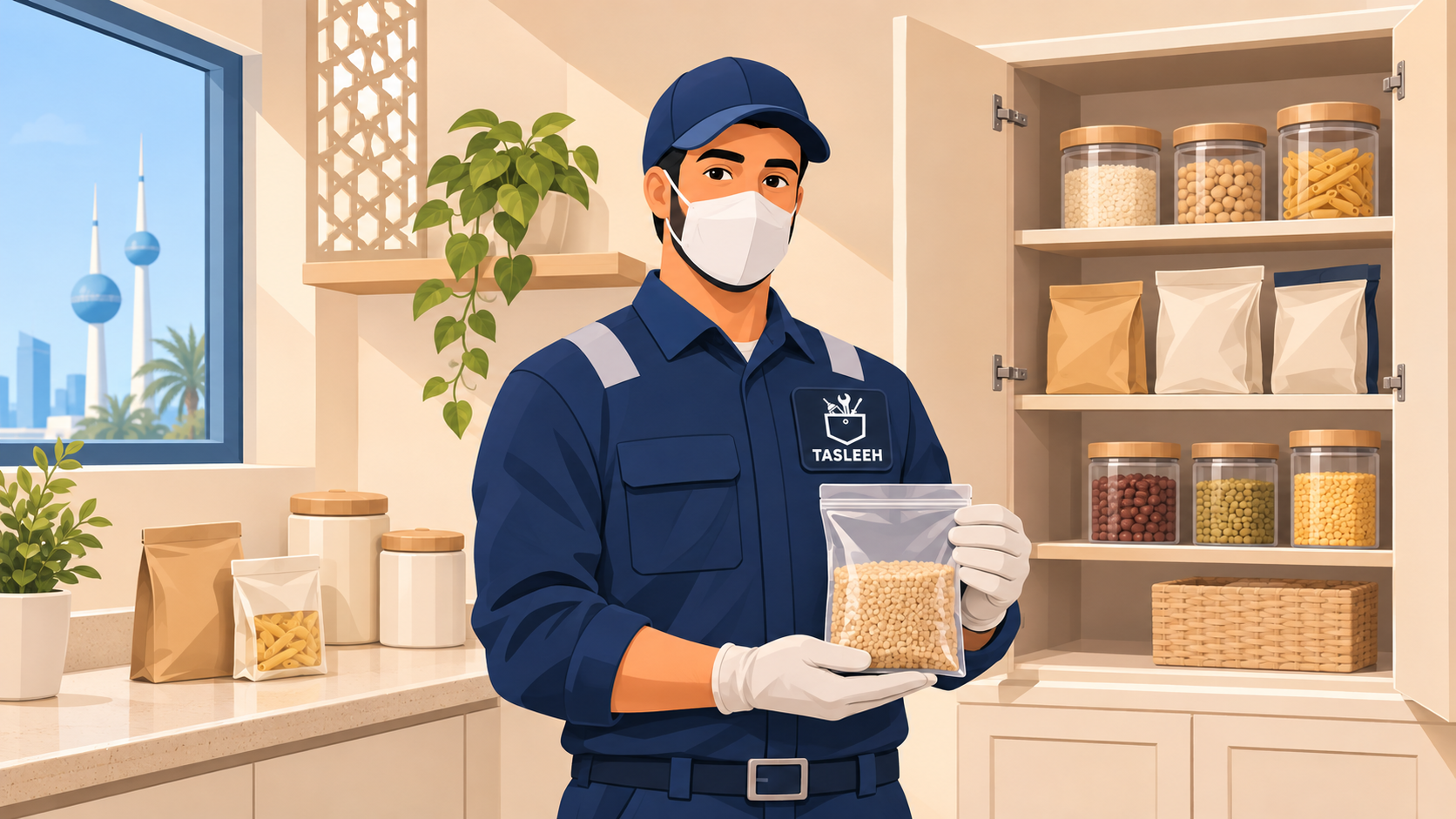
You open a bag of flour and see fine strands with flour clinging to them. Close the bag and keep it out of the food you plan to use. Silky threads in dry food can be a sign of pantry moth larvae. If you also see small moths in the kitchen, check the other packets for silk or insects to trace the source. Check the food around the bag before you clean and restock the cupboard.
Start with the packet that has the threads
Look for fine webbing in the folds of the package, grains held together by silk, or small larvae in the contents. Some pantry insects leave different signs, so you don’t need to name the species at home. A clump by itself doesn’t confirm insects. The National Pesticide Information Center’s pantry moth guide explains how larvae can leave strands as they move through food.
If there is clear webbing or insect activity in the food, close or bag the package and take it to the outside rubbish bin. Don’t sift the food or put it back in storage. If the strands are visible at the opening, take a photo there and photograph the label. You can show the retailer the product and batch without opening the bag again. The photo also gives a pest specialist something to look at if you keep seeing moths.
Check the neighbouring dry goods and the pet food
Start with the packets next to the flour. Check opened flour, rice, pasta, oats, nuts, dried fruit and spices, then look at thin packages that haven’t been opened. Paper, thin cardboard and flexible wrappers can still allow insects in. Check folded corners and the seams of packets. Look through clear packaging before you open it. If a packet has webbing around a seam or larvae inside, set it apart from the stock you are keeping. The University of Minnesota Extension guide notes that pantry insects can spread from one food package to another and can also turn up in stored pet food or birdseed.
Keep packets that look clear in a separate spot while you check the shelf. If a package is hard to inspect, set it apart until you can check it. If you see moths coming back after removing the first suspect bag, look at dry food in other cupboards or the place you keep pet supplies. An adult moth can move away from the food it came from. Finding one on the wall near a cupboard doesn’t tell you which packet needs to go.
Clean the empty shelf before putting food back
Once you have removed infested items, clear the shelf. For ordinary pantry-insect debris, vacuum crumbs and insect material from shelf corners and crevices, empty the vacuum outdoors, and wash the shelf with soap and water. Let it dry. Leave the vacuum off if you see pellets that could be rodent droppings. Use the separate guide to suspected rodent droppings in that situation.
The University of California’s pantry pest guidance recommends removing the affected food and cleaning storage areas. It advises against spraying insecticide around food. Put unaffected dry goods in clean containers with tight-fitting lids. Use up the older stock before refilling, and clean and dry the container before putting a new batch in. For food you use infrequently, buy an amount you can finish instead of keeping several open bags at once. That makes it easier to tell which batch has a problem if you find new signs.
If you still see moths, record where they appear
Note the first packet you discarded, where you’ve seen fresh threads or larvae since, and which cupboards you already cleared. If you store spare flour or pet food elsewhere, tell the provider. Ask what they will inspect and how to prepare the food-storage area before a visit. For recurring signs or uncertainty about what you’re seeing, you can request an assessment through Tasleeh’s pest control service and confirm the provider’s scope for your home in Kuwait.