
Choosing a Car Detailing Provider in Kuwait
Choosing a car detailing provider in Kuwait means checking scope, products, condition review, communication, and the final vehicle inspection at handover.
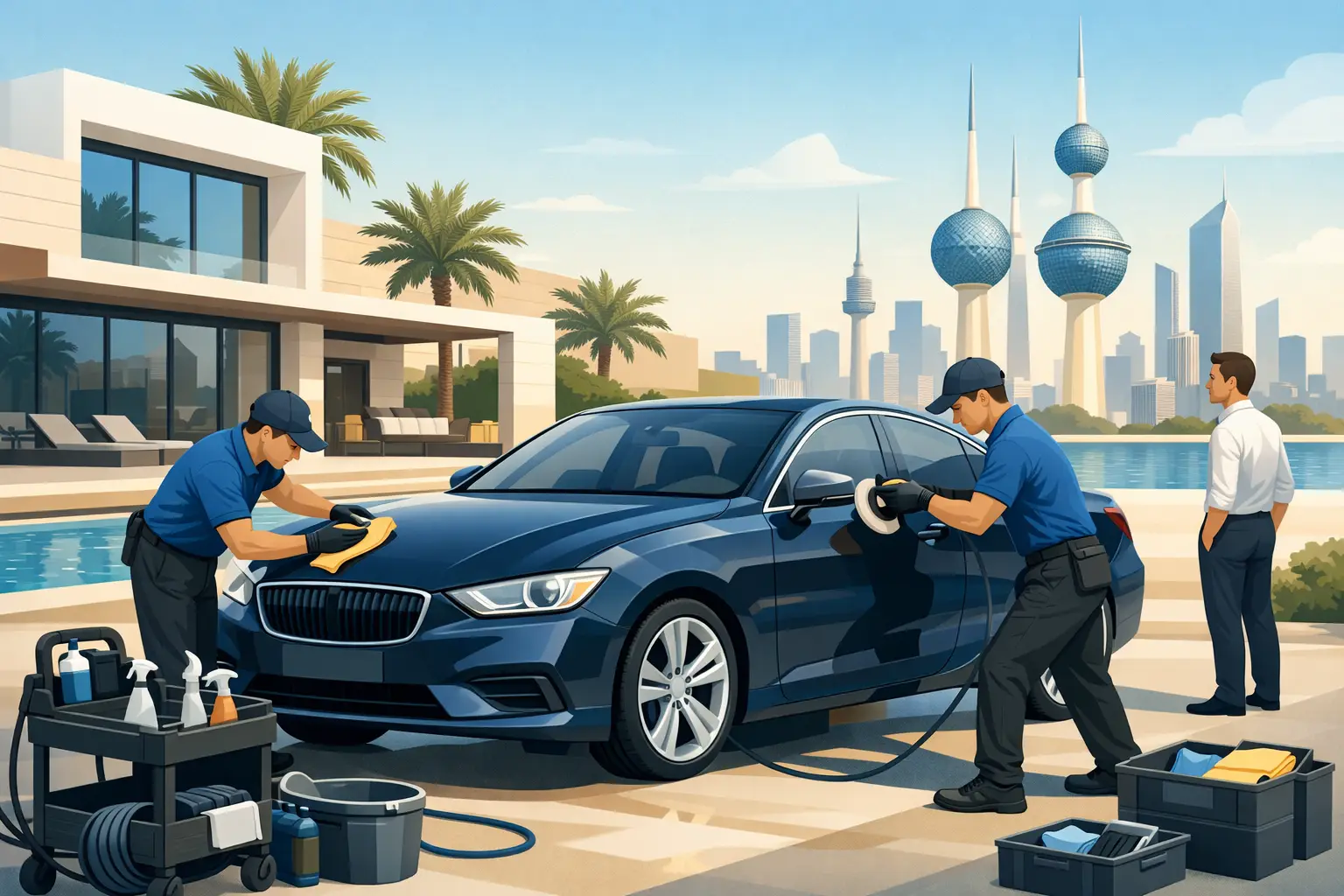
A car can look clean after a quick wash and still have dust in the vents, stains in the upholstery, buildup around door edges, and faded trim. In Kuwait, heat, sand, traffic dust, and strong sunlight can affect both the cabin and exterior finish quickly. Choosing a car detailing provider is therefore not just about finding someone to wash the vehicle. It is about selecting a service with a clear scope, suitable products, careful handling, and realistic communication about the result.
A proper detailing appointment should help restore the vehicle’s condition within the agreed service scope. It should not leave you guessing what was cleaned, what was excluded, or whether a visible mark was already present before the work began.
What Car Detailing Should Cover
Car detailing is more thorough than a standard exterior wash or interior vacuum. The exact work depends on the vehicle’s condition and the package requested, but a provider should explain the areas they will address before starting.
Interior detailing may include vacuuming seats and carpets, cleaning dashboard and door panels, wiping cup holders and storage areas, cleaning interior glass, and treating fabric or leather surfaces with products suited to the material. A good provider will also pay attention to frequently missed areas such as seat rails, door jambs, air vents, and the space beneath floor mats.
Exterior detailing can include a careful wash, wheel and tire cleaning, removal of surface dirt from badges and trims, glass cleaning, and treatment of exterior plastic or rubber components. More involved services, such as paint correction or protective coatings, are different from routine detailing. They should be discussed separately because they depend on the paint’s condition, the vehicle’s age, and the result you expect.
Do not assume every detail includes engine-bay cleaning, stain removal, odor treatment, headlight restoration, or paint defect correction. These services may require additional time, different materials, or a condition assessment. A clear scope protects both the customer and the provider.
Choosing a Car Detailing Provider: What to Check
The first thing to look for is clarity. A reliable provider should be able to describe the service in plain language: which parts of the car will be cleaned, how the vehicle will be handled, how long the work is expected to take, and what results are realistic.
This matters because the word “detailing” can mean different things. One provider may focus on deep interior cleaning, while another may offer an exterior-focused service with paint treatment. Neither approach is automatically wrong, but the service needs to match the reason you are booking it.
If you are preparing a family vehicle after frequent school runs, you may need upholstery cleaning, sand removal, and odor treatment. If you are selling a vehicle, you may prioritize a clean cabin, presentable exterior trim, and clear glass. If you have recently bought a used car, a detailed condition review and deep interior cleaning may be more useful than cosmetic exterior work alone.
Ask how the provider records the car’s condition before work starts. A simple walk-around with photos can be helpful, especially when the vehicle has existing scratches, dents, worn leather, damaged trim, or stained seats. This creates a shared record and prevents confusion at handover.
Check That Products Match the Vehicle Materials
Cars contain different surfaces: painted panels, leather, fabric, screens, piano-black trim, chrome, rubber, and textured plastic. Using one harsh cleaner for everything can cause problems, including faded trim, sticky surfaces, streaking on glass, or damage to sensitive interior finishes.
A professional provider does not need to overwhelm you with product names. They should, however, be able to explain that they use appropriate cleaners for the vehicle’s materials and that they will avoid unsuitable products on sensitive areas. This is especially relevant for leather seats, infotainment screens, matte finishes, and vehicles with protective paint films or specialty coatings.
For Kuwait conditions, ask how the provider handles fine dust and sand. Rushing into dry wiping can create unnecessary marks on exterior paint. Careful cleaning starts with removing loose contamination safely before wiping painted surfaces.
Look for a Controlled Work Area and Process
The location and process affect the outcome. Detailing performed in a shaded, clean, organized area is generally easier to control than work carried out in direct sun, high wind, or a dusty roadside setting. Heat can also affect how quickly products dry, which may lead to streaks or uneven finishing if the process is not managed carefully.
That does not mean every service must take place in the same type of facility. Mobile detailing can be suitable when the provider has the right equipment, enough space around the vehicle, and a practical plan for water, waste, and safe working conditions. The key question is whether the provider can complete the agreed work properly at your location.
For apartments, office buildings, and commercial premises, confirm any parking or access requirements before the appointment. A provider should know whether the vehicle must be moved, whether a shaded area is available, and whether building rules affect the service setup.
Warning Signs Before You Book
A low-quality detailing experience often starts with vague communication. Be cautious if a provider cannot explain the difference between a basic wash and detailing, refuses to identify what is included, or promises to remove every scratch and stain without seeing the vehicle.
Some imperfections cannot be fully removed. Deep scratches may extend beyond the clear coat. Dye transfer, old food stains, smoke odor, pet odor, and sun-damaged interior trim can require specialized treatment and may improve rather than disappear completely. An honest provider will set that expectation before beginning work.
Other warning signs include unclear handling of personal belongings, no condition check for visible damage, or no final review of the completed vehicle. It is also reasonable to ask how keys are managed and who is responsible for moving the car, particularly when the service is arranged at a home, office, or managed property.
Be wary of a service that treats every vehicle the same way. A lightly used sedan, a sand-exposed SUV, a family vehicle with fabric seats, and a luxury car with delicate finishes need different levels of attention.
Questions That Help You Compare Providers
You do not need technical knowledge to make a sound decision. Start by explaining what you want improved and ask the provider to confirm the appropriate scope. Then clarify whether the service includes interior deep cleaning, exterior detailing, seat or carpet treatment, wheel cleaning, glass cleaning, and any protection applied after cleaning.
It also helps to ask whether the provider needs to inspect the vehicle first. An inspection is particularly useful when there are stubborn stains, odors, visible paint marks, mold concerns, pet hair, or signs of water exposure inside the cabin. It gives the provider a chance to identify limits and recommend the right approach rather than making assumptions.
Before the appointment, remove valuables, documents, loose electronics, and personal items from the vehicle. Let the provider know about any existing concerns, such as a loose trim piece, a damaged seat control, a warning light, or a window that does not close properly. Detailing should not involve mechanical or electrical repairs, and these issues may affect how parts of the vehicle can be cleaned safely.
Inspect the Vehicle Before Handover
A final inspection should be part of the service, not an awkward extra request. Review the areas you discussed at the beginning, including seats, carpets, dashboard, glass, wheels, door edges, and exterior panels. Check the vehicle in reasonable lighting, since some streaks, residue, or missed dust may not be visible in a dark parking area.
Focus on the agreed scope rather than expecting unrelated repairs. Detailing can improve presentation and cleanliness, but it does not repair torn upholstery, fix body damage, restore failed electronics, or resolve mechanical faults. If the provider identifies a separate concern during the service, they should communicate it clearly rather than attempting work outside the agreed service.
For homeowners, landlords, and businesses managing several vehicles, consistent service records can also be useful. Keeping notes on the date, condition, scope, and any recurring issues makes it easier to plan future care and maintain a presentable fleet or personal vehicle.
The right provider will make the process straightforward: inspect the car, agree on the scope, explain realistic results, carry out careful work, and review the finish with you. That level of organization matters as much as a polished dashboard, because it gives you confidence that your vehicle has been handled with proper attention.