
Electrical Inspection Versus Repair in Kuwait
Understand electrical inspection versus repair, the warning signs to watch for, and when a qualified technician should assess your Kuwait property safely
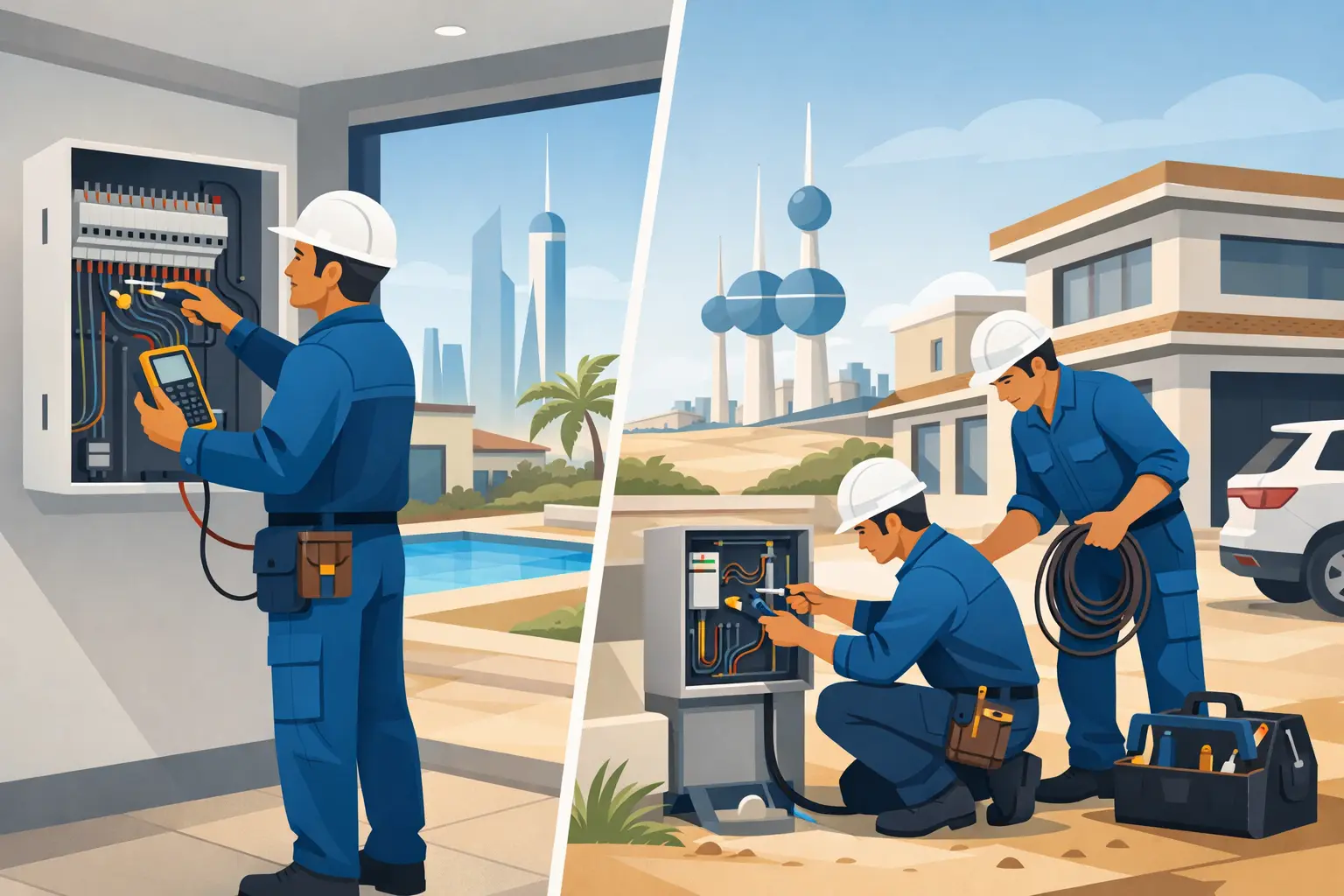
A breaker that trips once may be a minor overload. A breaker that trips repeatedly, a warm outlet, or lights that dim when the air conditioning starts are different concerns. Understanding electrical inspection versus repair helps homeowners, tenants, landlords, and building managers choose the right response without delaying a problem that could affect safety or daily operations.
An inspection is used to assess the condition of an electrical system and identify risks, faults, or areas needing attention. A repair is the corrective work carried out after a fault has been identified. The right service depends on what you are seeing, how urgent it is, and whether the cause is already clear.
Electrical Inspection Versus Repair: The Main Difference
An electrical inspection is an assessment. A qualified technician reviews relevant parts of the installation to understand whether the system is operating properly and whether there are signs of damage, wear, overloading, poor connections, or unsafe alterations. The purpose is to find the cause of a concern or confirm the condition of the system before a failure occurs.
Electrical repair is the work needed to correct a known issue. It may involve repairing or replacing a damaged component, resolving a circuit fault, securing a connection, addressing a failed outlet or switch, or restoring power to an affected area. The exact scope should follow an assessment rather than assumptions.
The distinction matters because a visible symptom does not always reveal the source. For example, a non-working outlet may be caused by the outlet itself, a circuit breaker issue, a loose connection elsewhere, moisture exposure, or a fault on the circuit. Repairing the visible point without proper diagnosis can leave the underlying issue unresolved.
When an Electrical Inspection Is the Better First Step
Inspection is usually the appropriate starting point when the problem is intermittent, affects more than one area, or has no obvious source. It is also useful when responsibility for a property is changing, after renovation work, or when a building has experienced repeated electrical concerns.
For villas, apartments, offices, and retail spaces in Kuwait, an inspection can be particularly helpful after changes in occupancy or equipment use. Adding high-demand appliances, office equipment, kitchen equipment, or additional air conditioning loads can place more demand on circuits than the original setup was intended to handle.
A qualified inspection may be appropriate if you notice recurring breaker trips, flickering lights, outlets that work inconsistently, unusual buzzing, or electrical equipment that loses power without explanation. It is also sensible when there are signs of heat around switches, outlets, or the electrical panel, even if power has not failed.
For landlords and building managers, inspection supports clearer maintenance decisions. Rather than sending someone to replace individual fittings repeatedly, the assessment can establish whether there is a broader circuit, load, or installation issue that needs attention. This helps define the required work more accurately and gives occupants a clearer explanation of what is being addressed.
When Electrical Repair Is Needed
Repair is needed when a technician has identified a specific fault or damaged component. In some cases, the issue is straightforward, such as a failed switch, a damaged outlet cover, a light fitting that is no longer operating correctly, or a clearly isolated circuit problem. Even then, the technician should verify the condition of the related wiring and connections before completing the work.
More involved repairs may be required when a circuit is overloaded, wiring has deteriorated, connections have loosened, or electrical equipment has been affected by heat or moisture. The scope can differ significantly between a single apartment outlet and a fault affecting several circuits in an office or commercial space.
Repair should not be treated as a quick replacement exercise. Electrical systems are interconnected, and the correct repair needs to account for the load on the circuit, the condition of connected points, and the reason the failure occurred. If a component failed because of a larger issue, replacing it alone may only postpone another interruption.
Warning Signs That Need Prompt Attention
Some electrical concerns can wait for a planned service visit, but others should be treated as urgent. If there is a burning smell, smoke, visible sparking, crackling sounds, scorch marks, a hot electrical panel, or a person has received an electric shock, stop using the affected area where it is safe to do so and arrange qualified professional assistance promptly.
Do not remove panel covers, open outlets, reset a repeatedly tripping breaker several times, or attempt to repair wiring yourself. These actions can increase the risk of shock, fire, or damage to connected equipment. If the issue affects a tenant area, shared building systems, or business operations, notify the responsible property contact as well.
Other signs may not be immediate emergencies but still deserve inspection. These include bulbs failing unusually often, lights dimming when appliances start, outlets that feel loose, switches that make unusual sounds, and circuits that lose power under normal use. Repeated symptoms are more meaningful than a single isolated event.
What a Professional Electrical Visit Should Cover
The scope of a visit depends on the issue reported. A well-managed electrical service starts by confirming the symptom, the affected locations, and when the problem occurs. For example, a circuit that trips only when certain equipment is used requires a different assessment than a permanent loss of power in one room.
The technician should inspect the relevant electrical points and circuit protection, test where necessary, and identify whether a repair can be completed during the visit or whether further work is required. For larger properties or complex faults, the first visit may be primarily diagnostic. That is often the right approach because it avoids carrying out unnecessary work before the cause is known.
Clear communication is part of proper MEP Maintenance Services Kuwait. Customers should understand what was found, what work is recommended, whether the concern is isolated or wider in scope, and what to expect next. This is especially useful for property managers who need to coordinate access, communicate with tenants, or plan work around business hours.
Kuwait Conditions That Can Affect Electrical Systems
Electrical issues are not always caused by age alone. Kuwait's high temperatures can increase cooling demand for long periods, which places sustained pressure on systems serving air conditioning equipment and other heavy loads. Dust, building alterations, equipment upgrades, and periods when a property is vacant can also reveal existing weaknesses when systems return to regular use.
In older properties, earlier modifications may not match current electrical needs. In newer properties, problems can still occur after fit-outs, furniture installation, kitchen changes, or the addition of equipment that draws more power than expected. An inspection is useful when the electrical system has changed, even if there has not yet been a complete failure.
Commercial spaces need particular attention to patterns of use. A retail shop may have display lighting, refrigeration, signage, and point-of-sale equipment operating at the same time. An office may experience problems only during peak occupancy. These details help the technician assess the correct circuit and avoid a repair that addresses only the immediate symptom.
How to Decide What to Request
If you know what has failed and it is clearly limited to one electrical point, request electrical repair and explain the symptom as precisely as possible. Mention whether the point has lost power, whether a breaker trips, whether there is heat or noise, and whether nearby outlets or lights are affected.
If you are unsure why the issue is happening, if it keeps returning, or if several areas are affected, request an electrical inspection. This gives the technician room to diagnose the cause before recommending corrective work. It is generally the more practical choice for unexplained faults, recurring power interruptions, and concerns following renovation or increased equipment use.
For tenants, avoid assuming that a small symptom is only a minor inconvenience. Report it early to the landlord or building manager, particularly when it involves breaker trips, warm fittings, or changes in lighting behavior. For owners and facility teams, early inspection can limit disruption and help prevent a manageable fault from affecting a larger part of the property.
Tasleeh provides managed electrical maintenance for homes, buildings, offices, and commercial spaces in Kuwait. When an electrical concern is recurring, unclear, or showing signs of heat or damage, request a qualified assessment rather than waiting for the next interruption.