
Office Lighting Fault Example and Warning Signs
An office lighting fault example helps Kuwait managers identify warning signs, protect staff, reduce disruption, and arrange qualified electrical support.
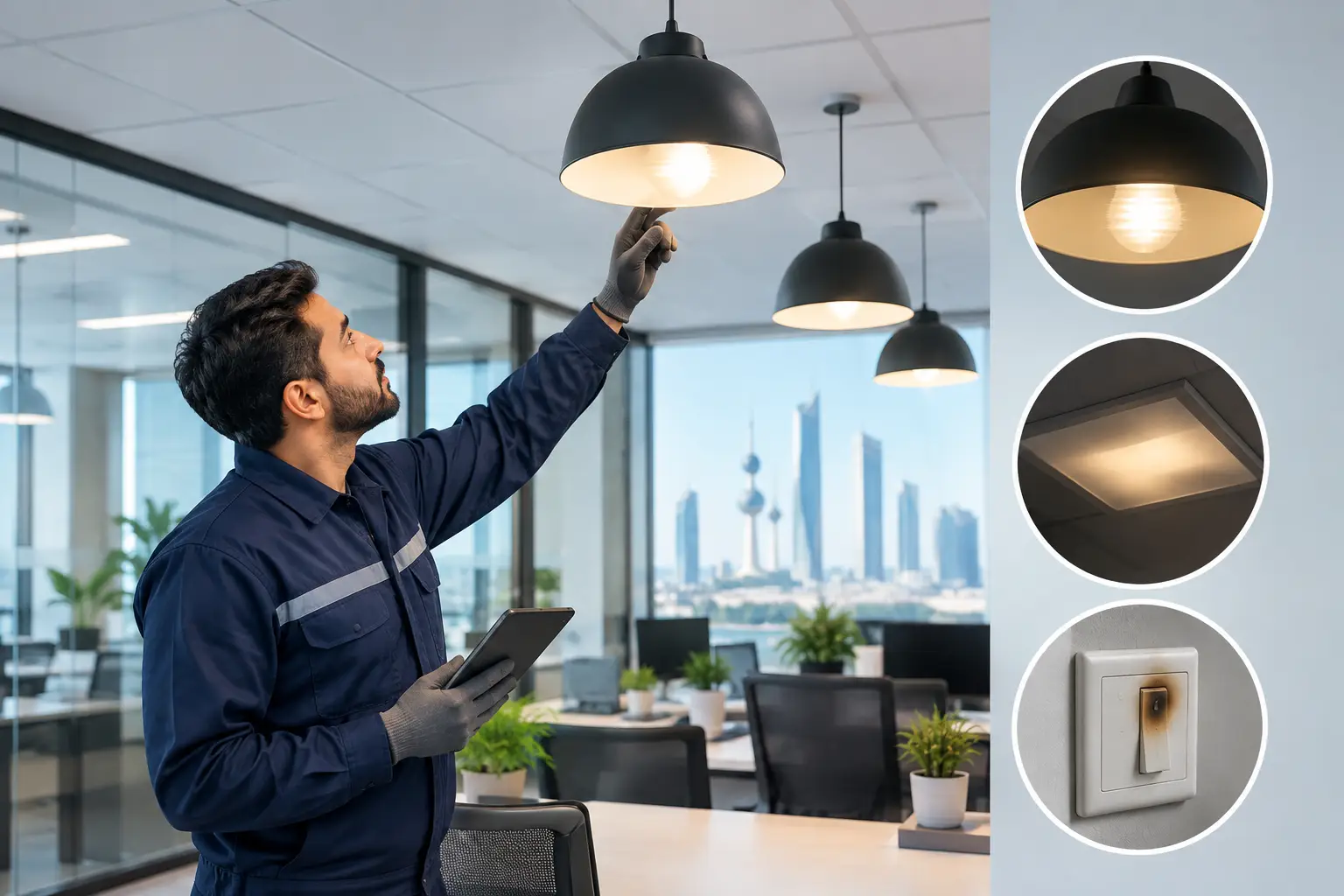
A row of lights starts flickering above the reception desk just before the workday begins. One fixture goes dark, then another, while the rest of the office remains powered. This office lighting fault example may look minor, but it can point to anything from a failed light fitting to a circuit issue that needs prompt professional attention.
For office managers, tenants, and property owners, lighting faults are not only an inconvenience. Poor lighting affects staff comfort, safe movement through corridors and stairs, customer-facing areas, and the ability to work without interruption. The right response depends on the pattern of the fault, the condition of the electrical system, and whether there are any signs of overheating or power instability.
A Common Office Lighting Fault Example
Consider a small office where several LED panel lights in one meeting room begin to flicker intermittently. The lights may work normally in the morning, then dim or flash later in the day. Replacing one lamp or panel does not solve the problem, and the switch sometimes makes a faint buzzing sound.
This can be caused by a fault inside one fitting, a failed LED driver, a problem with the switch or dimming control, or an issue in the wiring or circuit serving that area. A qualified electrical technician needs to inspect the full system rather than assume the visible light fixture is the only problem.
The same principle applies when lights repeatedly trip a breaker, turn off after a short period, or work only when another device is switched off. These patterns can indicate an electrical load, connection, or circuit issue. They should not be treated as a routine bulb replacement.
Why Lighting Faults Need Attention
A single failed lamp in an otherwise healthy fitting may be straightforward. Repeated flickering, multiple failed fixtures, or a burning smell is different. These signs can mean components are overheating, electrical connections are damaged, or the circuit is not operating as intended.
In an office, delays can create wider operational problems. Dim work areas can affect concentration and visibility. Unreliable lighting in hallways, entrances, washrooms, or emergency routes can also create a safety concern for employees and visitors. For businesses that receive clients, inconsistent lighting can make a professional space feel poorly maintained.
Kuwait's heat and dust can add pressure to building systems over time, particularly where fittings, ceiling spaces, or electrical panels have not been regularly inspected. This does not mean every fault is serious, but it is a reason to investigate recurring issues properly instead of waiting for a complete outage.
Warning Signs to Report
A lighting fault is easier to diagnose when the person reporting it provides clear observations. Note whether the issue affects one fitting, one room, or several areas. Also record whether it happens at certain times, after a switch is used, or when air conditioning and other equipment are running.
Request electrical support promptly if you notice any of the following:
- Lights that flicker, dim, pulse, or turn on and off without being switched
- Several fixtures failing on the same circuit or in the same section of the office
- A breaker that trips when lights are turned on
- Buzzing, crackling, heat, discoloration, or a burning odor near a switch, fixture, or electrical panel
- Water marks near ceiling lights, especially after a leak from an upper floor or HVAC drain line
- Light switches that feel loose, unusually warm, or do not operate reliably
Smoke, sparks, a burning smell, or visible damage should be treated as urgent warning signs. Keep people away from the affected area and arrange qualified electrical assistance. Do not open fittings, remove electrical covers, reset a repeatedly tripping breaker, or attempt to repair wiring.
What the Fault Pattern Can Suggest
The location and behavior of the fault help narrow down the likely cause, although only an inspection can confirm it. When one individual light fails, the fitting, lamp, driver, or local connection may be the issue. When all lights in one room fail together, the switch, circuit, protective device, or supply to that room may need attention.
Flickering LED panels are often linked to a failing driver or an incompatible control device, but they can also be affected by unstable supply or poor connections. Fluorescent fixtures may flicker because of aging components, but older fittings should still be assessed safely rather than handled by office staff.
If lights are dim only at certain times, the electrical load in the building may be relevant. For example, a fault may become noticeable when larger equipment is operating. This is why a technician may ask about recent changes such as new workstations, partitions, signage, or equipment added to the office.
Water exposure changes the situation. A ceiling light below a leak should not be ignored even if it still works. Moisture can affect fittings and concealed wiring, so the source of the leak and the electrical condition both need professional assessment.
What a Professional Electrical Visit Covers
A proper office lighting inspection is more than changing a lamp. The technician will first identify the affected fixtures and establish whether the issue is isolated or connected to a wider circuit problem. They may check switches, fittings, drivers, connections, protective devices, and the condition of the relevant electrical supply.
Where needed, the affected circuit can be safely isolated while the issue is investigated. The technician can then repair or replace the faulty component within the agreed scope and test the lighting operation after the work is completed. If the findings point to a larger electrical upgrade, damaged wiring, or a building-level supply concern, the property representative should receive a clear explanation of the next required step.
For tenants, it is useful to confirm who is responsible for the electrical installation before work begins. The office tenant may manage internal fittings, while the landlord or building management may be responsible for common electrical infrastructure, depending on the lease and the location of the fault. Clear reporting prevents delays and avoids repeated work on the wrong part of the system.
Information That Helps Resolve the Issue Faster
When requesting MEP Maintenance Services Kuwait, share the office location, the rooms affected, and whether the problem is ongoing or intermittent. Photos of the fitting from a safe distance can help show visible damage or water marks, but staff should not climb ladders, remove ceiling panels, or touch exposed parts to collect more information.
It also helps to mention whether a breaker has tripped, whether other electrical items are affected, and whether the fault started after maintenance work, a leak, or changes to the office layout. These details allow the electrical team to arrive prepared for the likely scope of work.
For larger offices, keep a simple record of recurring faults by room and date. A pattern of repeat failures in the same area may reveal an underlying circuit or fitting issue that a one-off replacement would not address.
Preventing Repeat Lighting Problems
Routine electrical maintenance reduces the chance that minor lighting issues become disruptive faults. This is especially useful in offices with many recessed panels, shared ceiling spaces, meeting rooms, reception areas, and extended operating hours. Planned checks can identify aging fittings, worn switches, loose components, and signs of heat damage before they cause a failure.
The practical approach depends on the office. A newly fitted workspace with one failed light may only need a targeted repair. An older office with regular flickering, repeated breaker trips, or several fixture types may need a broader electrical assessment. There is no value in replacing visible parts repeatedly if the supply or circuit behind them has not been checked.
Tasleeh can arrange professionally managed electrical maintenance for office lighting faults and related building-system concerns. A clear fault report, timely inspection, and safe repair process help keep the office usable while protecting staff and property. If the lights are behaving differently from normal, treat that change as useful information and have the cause assessed before it becomes a larger interruption.