
Vehicle Maintenance Guide for Kuwait Drivers
This vehicle maintenance guide helps Kuwait drivers spot warning signs, plan routine car care, and request the right service before a minor issue grows.
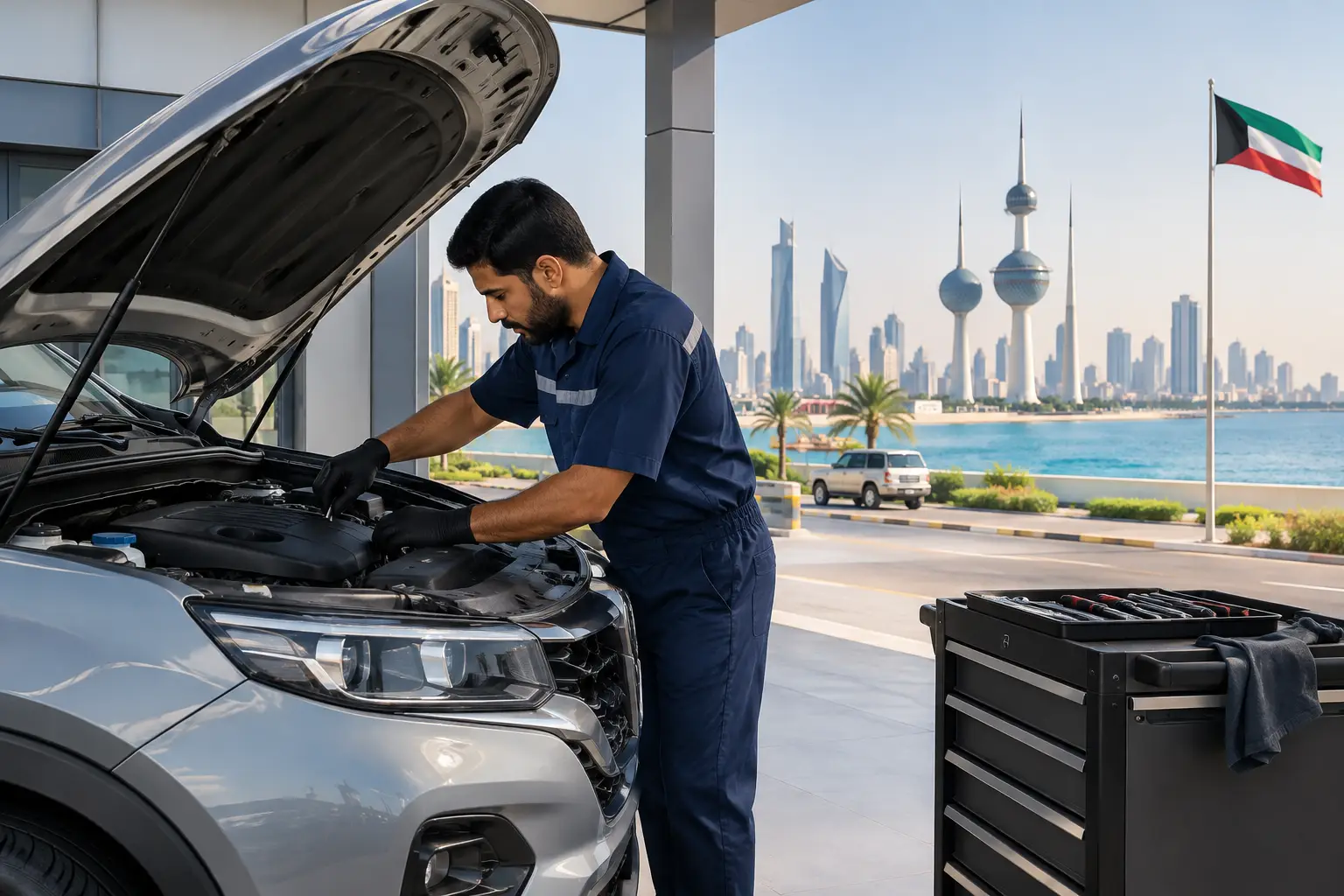
A vehicle that starts normally can still be developing a problem. In Kuwait, long periods of heat, dust buildup, stop-and-go traffic, and intensive AC use can place added strain on everyday car systems. This vehicle maintenance guide helps drivers and fleet managers recognize what needs regular attention, which warning signs should not wait, and when to arrange professional car maintenance.
The main rule is simple: maintain the car before a small performance change becomes a breakdown, missed appointment, or larger repair. Routine checks do not require technical knowledge, but diagnosis and repair should be left to a qualified car maintenance provider.
What routine vehicle maintenance should cover
Vehicle maintenance is not one single service. It is a planned set of inspections and care tasks based on the vehicle's age, mileage, condition, and how it is used. A car driven daily between home, work, school, and commercial areas will have different needs from a vehicle used occasionally or held as part of a company fleet.
A professional maintenance visit commonly begins with an assessment of the car's reported issue and general condition. Depending on the service scope, this may include checking fluid levels and visible leaks, the battery and charging condition, tires, brakes, lights, filters, engine performance, and air-conditioning operation. The right work depends on the vehicle and the symptoms, not just a fixed checklist.
For example, an oil and filter service may be appropriate at the manufacturer-recommended interval, while a weak battery, tire vibration, or reduced AC cooling needs a more focused inspection. If your vehicle manual provides a maintenance schedule, use it as the starting point. Severe heat, dusty driving conditions, short journeys, and frequent idling can justify closer attention between scheduled services.
Why Kuwait driving conditions affect car care
Heat can expose weak components quickly. A battery that appears acceptable in mild weather may struggle during hot months. Cooling and air-conditioning systems work harder, while tires operate on very hot road surfaces. Dust can also affect filters and build up around areas that need to stay clean for dependable performance.
That does not mean every issue is caused by the weather. A warning light, unusual sound, or fluid leak may have several possible causes. It does mean that delaying an inspection because the car still moves normally can be risky, especially before a long drive or during periods of heavy AC use.
For property managers and businesses with several vehicles, routine care also supports operations. A vehicle used for site visits, deliveries, or staff transport may need maintenance planning around working hours and driver availability. Keeping service records for each vehicle makes it easier to identify repeated issues and arrange work before a vehicle is urgently needed.
Warning signs that deserve professional attention
Some changes are easy to dismiss because they come and go. However, new or worsening symptoms are useful information for the technician and should be reported clearly when requesting service.
Arrange an inspection if you notice any of the following:
- A dashboard warning light stays on or appears repeatedly.
- The engine is difficult to start, starts slowly, or the battery seems weak.
- The car runs hotter than usual, loses coolant, or has a noticeable fluid leak.
- The AC is no longer cooling properly, has weak airflow, or produces an unusual smell.
- Braking feels different, the steering pulls, or the vehicle shakes while driving or braking.
- You hear knocking, squealing, grinding, or repeated clicking sounds.
- Tire pressure drops frequently or a tire shows visible damage or uneven wear.
Do not try to diagnose mechanical, electrical, or cooling-system faults by adding fluids, disconnecting parts, or continuing to drive through a serious warning. If the vehicle feels unsafe to operate, avoid using it and seek appropriate professional support.
AC concerns are more than a comfort issue
A car AC system is especially important in Kuwait, but reduced cooling is not always a simple refrigerant issue. It can relate to airflow, filters, electrical components, compressor performance, or another system fault. Mention whether the problem happens only at idle, during the hottest part of the day, or continuously. Those details help define the service request without asking you to diagnose the cause.
Tires and brakes need early action
Tire wear and brake changes affect how the car handles. Check tires visually for obvious damage and monitor whether the vehicle pulls to one side, vibrates, or needs more distance to slow down. These signs require professional assessment rather than guesswork. A service provider can determine whether the issue involves tires, wheel balance, alignment, brakes, suspension, or another component.
A practical vehicle maintenance schedule
The best schedule follows the vehicle manufacturer's recommendations, then accounts for actual driving conditions. There is no single interval that suits every car. A newer vehicle driven lightly may only need its scheduled service, while an older car or a heavily used business vehicle may benefit from more frequent inspections.
Between professional services, keep a simple monthly routine. Look for warning lights at startup, pay attention to changes in how the car starts or drives, and inspect tires for visible damage. Check that exterior lights work and watch for any fresh marks or fluid under the parked vehicle. These observations take little time and give you useful information to share with a provider.
Before summer and before longer road travel, it is sensible to book a broader maintenance review. Ask for the inspection to focus on the systems that will be under the greatest demand, including battery condition, tires, cooling, fluids, and AC performance. For company vehicles, scheduling these checks in stages can help avoid taking every vehicle out of use at once.
What to tell the car maintenance provider
A clear request helps the service team prepare and reduces back-and-forth. You do not need mechanical terms. Describe what you experienced, when it began, how often it happens, and whether the issue changes while driving, braking, idling, or using the AC.
Include the vehicle make, model, year, and approximate mileage if available. State whether any dashboard lights are active and whether the car is safe to drive. If it is a planned service, say when the vehicle was last serviced and whether there are specific concerns such as poor cooling, a battery issue, tire wear, or a noise.
For workplace or building locations, confirm the parking area, gate or security procedures, visitor access requirements, and the contact person who can release the vehicle. Tenants and employees may need approval from a landlord, office manager, or facilities team before the appointment. Sorting out access in advance helps the visit run more smoothly.
Choosing one-time maintenance or ongoing support
A one-time car maintenance request suits a specific concern, such as an AC problem, a warning light, a battery concern, or a routine service that is due. It is also useful when you have recently bought a used vehicle and want to understand its current condition.
Ongoing maintenance planning may be more suitable for businesses, landlords, or facilities teams responsible for multiple vehicles. The benefit is not that problems disappear. It is that servicing can be organized around operating needs, records can be kept in one place, and recurring concerns are less likely to be overlooked.
Tasleeh Network coordinates car maintenance through approved service providers, with customer communication and the service workflow managed around the request. This is distinct from Tasleeh Core, which handles in-house HVAC, plumbing, and electrical maintenance for properties. When requesting car service, provide the vehicle details and the type of maintenance required so the appropriate specialist scope can be arranged.
Prepare the vehicle without attempting repairs
Before a scheduled visit, remove personal valuables and make sure the provider can access the vehicle and its keys as agreed. Keep the service booklet or prior maintenance records available if you have them. A photo of an active dashboard warning light, a note of when a sound occurs, or a record of recent work can also help.
Avoid clearing warning messages, topping up unknown fluids, or attempting temporary mechanical repairs to make the symptom disappear. A technician needs an accurate picture of the problem. If the vehicle is used by more than one driver, collect their observations too. One person may notice a starting issue while another notices vibration at speed.
A well-maintained vehicle is easier to plan around and more dependable for daily life or business use. If your car is due for routine attention or showing a new warning sign, request car maintenance through Tasleeh Network and share the vehicle details, location, and concern for the right next step.