
Water Heater Kuwait: Signs You Need Service
Water heater Kuwait service: learn the warning signs, common faults, maintenance scope, and when to request qualified plumbing support for your property.
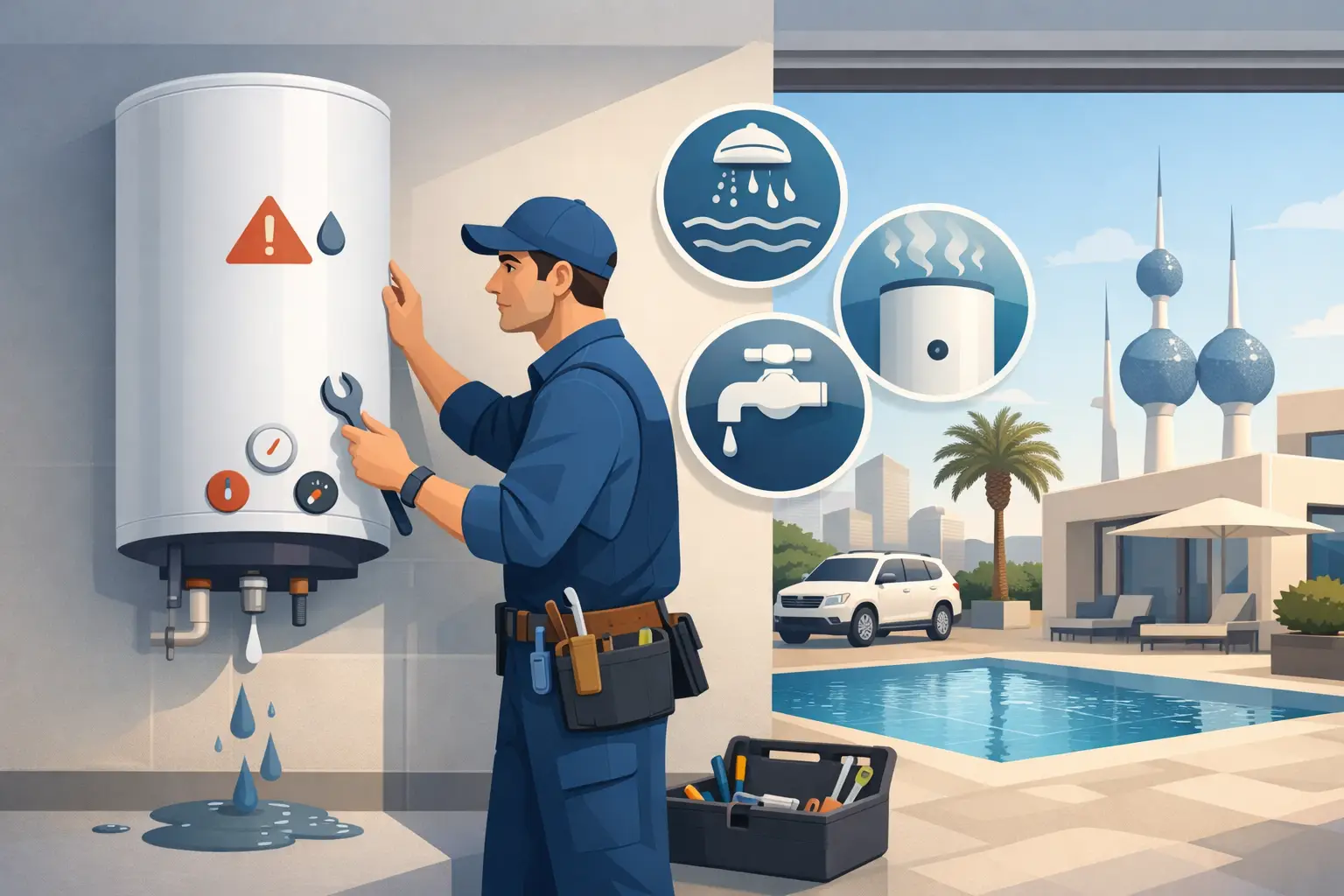
A cold shower is usually the first sign that a water heater Kuwait property relies on needs attention. But reduced hot water, water around the tank, discolored water, or a breaker that repeatedly trips can point to a developing plumbing or electrical issue. In a villa, apartment, office, or staff facility, leaving the problem untreated can disrupt daily use and cause avoidable damage.
Water heaters work quietly until they do not. Knowing what to watch for helps property owners and tenants request the right service before a minor fault becomes a leak, an electrical concern, or a complete loss of hot water.
Common Water Heater Problems in Kuwait
Most water heater calls begin with one of three complaints: there is no hot water, the water does not stay hot for long, or the unit is leaking. The cause can vary depending on the type of system, its age, water use, and whether the property has a storage tank, an instantaneous heater, or a central hot-water system.
In many homes, a storage water heater heats and holds a set volume of water. If the supply runs cold quickly, the heating element, thermostat, internal buildup, or tank capacity may be part of the issue. A larger household may simply be using more hot water than the unit was designed to provide, especially when several bathrooms are in use at the same time.
For offices and commercial spaces, the issue may appear at peak-use periods. Staff washrooms, kitchens, changing areas, and cleaning points can create demand that a poorly maintained or undersized system cannot meet. The right next step is an assessment of the existing system rather than repeatedly resetting it or assuming the unit needs replacement.
No Hot Water or Inconsistent Temperature
No hot water can result from a failed heating component, thermostat problem, electrical supply fault, or an issue with a central system. Water that shifts from hot to cool without warning may also indicate a control issue or a problem with the water flow through the unit.
Do not remove access covers, touch wiring, or attempt to reset electrical components repeatedly. A water heater combines water and electricity, so diagnosis should be carried out by a qualified technician who can check the unit and its connected plumbing and electrical supply safely.
Leaks, Drips, and Water Around the Unit
A small drip should not be ignored. It may come from a pipe connection, valve, pressure relief point, or the tank itself. If corrosion has affected the tank, repair options may be limited compared with a leak from an external connection.
Water near the heater can also damage nearby finishes, ceilings, cabinets, or electrical equipment. If there is active leaking, switch off the water heater only if it can be done safely from its normal external control, avoid the wet area where electrical components are present, and arrange professional support promptly.
Rusty Water, Odors, or Unusual Noise
Brown or rusty water that appears only when hot water is used can be a sign of corrosion inside the heater or connected pipework. A metallic smell, unpleasant odor, or particles in the water should also be checked, particularly if the issue is new.
Popping, rumbling, or banging sounds often indicate mineral buildup inside a storage tank. This can reduce heating efficiency and place additional strain on the unit. The sound alone does not confirm the cause, but it is a useful detail to report when requesting service.
Warning Signs That Should Not Wait
Some water heater issues are inconvenient. Others need prompt attention because they may involve electrical safety, water damage, or pressure within the system. Request qualified plumbing support without delay if you notice a burning smell, smoke, a hot electrical switch or panel, repeated breaker trips, visible corrosion with leaking water, or a rapidly growing pool of water around the unit.
A relief valve that is discharging continuously also needs inspection. The valve has a safety function, and repeated discharge can indicate a pressure or temperature concern. It should not be blocked, capped, or altered by an unqualified person.
For landlords and building managers, a reported water heater issue should be logged with the unit location, the time it started, whether hot water is still available, and whether there is visible leakage. This gives the technician a clearer starting point and helps prioritize any risk to the property.
What a Professional Water Heater Service Covers
A proper service begins with the symptoms, the heater type, and the condition of the surrounding plumbing and electrical connections. The technician should inspect the unit for visible leaks, corrosion, unusual operation, and signs that the system is not heating as intended.
Depending on the fault, the service may include checking the thermostat and heating components, inspecting valves and pipe connections, assessing pressure-related concerns, and confirming that the electrical supply and controls are operating correctly. For a central system, the assessment may extend beyond one heater to circulation, connected equipment, or distribution points.
The scope depends on what is found. A leaking connection and a corroded tank are different problems with different repair paths. Clear communication matters here: the customer should understand the fault, the recommended work, and whether repair or replacement is the more practical option before major work proceeds.
Tasleeh provides MEP Maintenance Services Kuwait customers can use for essential plumbing, electrical, and HVAC concerns through managed operations. For water heater faults, the goal is not a generic visit but a defined assessment and the appropriate work for the condition of the system.
Repair or Replacement: What Usually Determines the Decision
A technician may recommend repair when the fault is isolated to a serviceable component, valve, connection, or control. Replacement may be more sensible when the tank has extensive corrosion, there is a recurring leak from the body of the unit, the heater is no longer meeting demand, or repairs would not address the underlying condition.
Age is relevant, but it is not the only factor. A relatively new unit can fail early because of an installation issue, pressure concern, or electrical problem. Conversely, an older heater may continue to operate reliably if its tank, controls, and connections remain in good condition.
Capacity also matters. A water heater that technically works but cannot serve the number of bathrooms, users, or fixtures in a property will continue to create complaints. Before changing the unit, consider the pattern of use: how many people use hot water, whether demand happens at the same time, and whether the building has multiple hot-water zones.
Maintenance That Prevents Disruption
Water heaters benefit from periodic professional inspection, particularly in occupied rental properties, staff accommodations, villas, and commercial sites where a loss of hot water affects several people. Planned attention can identify early leaks, worn valves, corrosion, and reduced performance before they become urgent calls.
The suitable frequency depends on the unit type, its condition, water use, and the building's maintenance plan. Properties with high use or several heaters generally need closer oversight than a lightly used apartment. A building manager may also want water heaters included in a wider preventive schedule alongside plumbing checks and electrical maintenance.
Customers can help by reporting changes early and keeping the area around the unit accessible. Avoid storing items against the heater or covering access panels. If the unit is in a ceiling void, service cupboard, or utility area, ensure the technician can reach it safely without moving unsuitable materials.
When to Request Water Heater Service
Request service when hot water is unavailable, unreliable, discolored, noisy, or accompanied by a leak. It is also sensible to arrange an inspection after a tenant reports repeated temperature problems or when a property is being prepared for new occupants. Waiting until the system stops completely can make scheduling more difficult and may increase the chance of water damage.
When making a request, share the unit location, the symptoms, whether water is actively leaking, and whether the issue affects one bathroom or the whole property. If you know the heater type or have noticed a recent breaker trip, include that information as well. These details help direct the work appropriately.
A water heater should provide dependable hot water without leaks, electrical concerns, or daily guesswork. If yours is showing any of these warning signs, request a qualified plumbing service so the problem can be assessed properly and the next step is clear.